Regular dry-hair stylers
If you normally start with dry hair and want a sleek finish from a plate straightener, compare how the plates meet and move through hair, as well as the model’s approach to heat control.


Choose a conventional plate straightener if you start with dry hair and want control over a sleek finish; decide whether fixed or selectable heat better suits your routine. A dedicated wet-to-dry airflow tool is a different choice for combining drying and straightening, with a natural straight finish rather than the same styling method as hot plates. Check the exact model’s permitted starting hair condition, controls and electrical suitability before buying.
If you normally start with dry hair and want a sleek finish from a plate straightener, compare how the plates meet and move through hair, as well as the model’s approach to heat control.
If your preferred setting varies with your technique or the tool is shared, check the selectable temperature range and whether the exact model offers saved settings or automatic shut-off.
If combining drying and straightening matters more than conventional plate styling, look for a tool explicitly designed for wet-to-dry use and follow its model-specific instructions.
Start with your hair’s condition when you begin styling: a conventional plate tool for dry hair and a dedicated wet-to-dry appliance call for different use. Then decide how much heat-setting control you want.
Consider when: You style dry hair and prefer fewer temperature controls; ghd Platinum+ is one example.
Trade-off: A fixed setting gives you less manual heat choice than a variable-temperature model.
Consider when: You want to select heat or save preferences, particularly for a shared tool.
Trade-off: More controls mean choosing an appropriate setting; the highest available temperature is not a styling target.
Consider when: Combining drying and straightening is your priority; Dyson describes Airstrait as using directional heated airflow for this purpose.
Trade-off: Its stated natural straight finish and operating method differ from conventional plate styling.
| Concern | What to check | Who this matters to |
|---|---|---|
| Dry-hair sleek finish | Check plate construction and alignment; consider a rounded barrel if you also want to style waves. | I usually style dry hair and want the plates to move through it without snagging while I work towards a sleek finish. Around 45% of consumers put that conventional finish first. |
| Personal heat control | Compare the selectable temperature range and whether saved settings or automatic shut-off are offered. | When I share a straightener or change my styling technique, I want to choose the setting rather than rely on a fixed one. For around 33% of consumers, heat-setting control is the main concern. |
| Combined drying and straightening | Confirm explicit wet-to-dry use and follow the model’s preparation and operating instructions. | On wash days, I would rather combine drying and straightening than use two separate stages. Making that routine simpler comes first for around 22% of consumers. |
Electrical Safety First advises against using conventional straighteners on wet hair. A dedicated wet-to-dry airflow appliance has a different intended use.
Use a tool on wet hair only when its manufacturer explicitly permits it, and follow that model’s instructions.
A higher setting does not, by itself, establish a better sleek finish. Fixed and selectable-temperature tools offer different ways to control styling.
Compare the control system and your usual starting hair condition before deciding whether a particular temperature range is useful to you.
Electrical Safety First advises checking that a mains-operated straightener for UK use has a standard UK three-pin plug and fuse.
Check the exact appliance and plug details before purchase, and retain your proof of purchase.
A straightener remains hot after use and can present a burn or fire risk if left on an unsuitable surface or put away too soon.
Unplug it and let it cool on a heat-resistant surface before storage, even if the model has automatic shut-off.
The ghd Platinum+ is a conventional plate option for dry-hair straightening and occasional waves.
Remington’s PROluxe You is a plate straightener aimed at people who want selectable or personalised controls.
Dyson’s Airstrait offers a wet-to-dry airflow approach rather than conventional hot-plate straightening.
These options include an adjustable plate straightener, two straightening combs and an airflow-and-plate tool. They serve different styling routines: check each model’s permitted starting hair condition rather than assuming that a steam feature or combined drying function means wet-to-dry use.
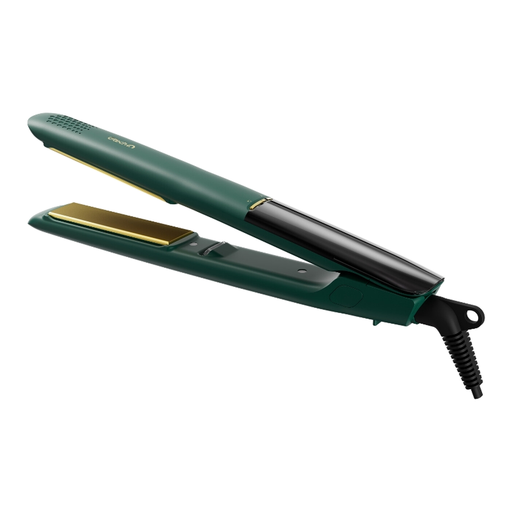 No image available
Consider this plate straightener if selectable heat matters for your dry-hair styling routine. Its named features include ten temperature settings and tourmaline-ceramic plates. Check the plate dimensions and UK plug and fuse details if those affect your choice.
 No image available
Choose this brush format only if comb-through straightening, rather than a conventional plate finish, suits your routine. The product name lists six settings from 130°C to 200°C and anti-scald comb teeth. Its instructions specify dry or slightly damp hair, not wet-to-dry use; check that the charging equipment suits UK use.
 No image available
Consider this comb if you want a steam feature for comb-through straightening and are willing to fill and empty its water tank. It is intended for dry or slightly damp hair, not wet-hair styling; the heating surface and steam become hot. Check the available temperature settings and UK plug and fuse details before buying.
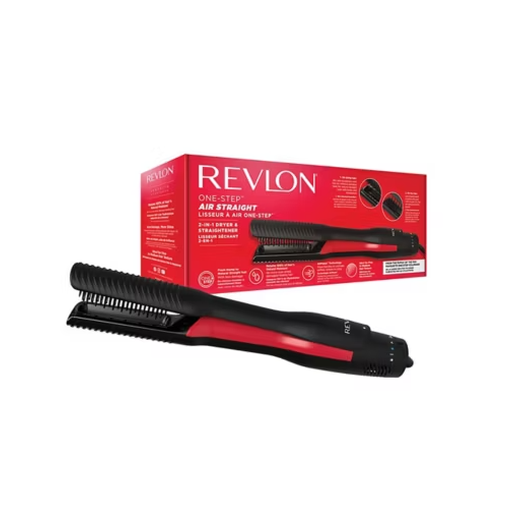 No image available
This airflow-and-plate tool may suit a routine that combines drying and straightening. Its named features include ceramic plates and digital controls, but confirm the permitted starting hair condition in the model instructions before using it on wet hair. Also check its heat range, shut-off behaviour and UK plug and fuse details.
No: Electrical Safety First advises against using conventional straighteners on wet hair or with wet hands. A dedicated appliance such as Dyson Airstrait is designed for wet-to-dry styling; follow that model’s own preparation and use instructions.
Choose a fixed-temperature plate model if its design suits your dry-hair routine and you prefer fewer controls. If selecting heat or saving settings matters more, compare variable or adaptive models by their actual range and controls rather than their maximum temperature alone.
For a mains-operated straightener, check the plug and fuse: Electrical Safety First specifies a standard UK three-pin plug and fuse. Automatic shut-off and heat-resistant accessories can be useful, but they do not replace careful handling.
Unplug it and let it cool on a heat-resistant surface before storage. Electrical Safety First also advises keeping it away from children, avoiding wrapping the cable around the appliance and checking the cable and plug for damage.