
24/7 Customer Support

Free returns

Same-day & Next-day Delivery

Quality Guaranteed

Unlock Your Welcome Offers: FREE Delivery | Up to 80% OFF | Free 30-day JoyPlus trial
Download the APP
For any serious mechanic or DIY enthusiast in the UK, precision is not just a preference; it's a necessity. When working on an engine, suspension or even just changing a wheel, applying the correct torque is critical for safety and performance. A 1/2 inch digital torque wrench offers a significant step up from traditional click-type models, but the market is filled with options that can be misleading. This guide will help you navigate the common pitfalls and identify the key features that truly matter.
As a Joybuy Product Recommendation Officer, my role is to help you see past the marketing clutter and focus on what makes a tool genuinely effective for your workshop or garage. Let's look at the frequent issues that lead to a poor purchase.
Many promising-looking tools fail to deliver where it counts. Before you invest, be aware of these common pitfalls that can turn a useful tool into a frustrating waste of money.
To ensure you get a reliable and effective tool, focus on these non-negotiable specifications.
A high accuracy torque wrench is the goal. Look for a stated accuracy of ±2% to ±3% for clockwise (CW) motion, which is the standard for tightening. For professional use, it's also beneficial to have a specified accuracy for counter-clockwise (CCW) motion, which is useful for verifying torque on reverse-threaded bolts or for specific disassembly procedures. A reliable tool will clearly state its accuracy ratings for both directions.
The 1/2 inch drive is the most versatile size for general automotive work, fitting the majority of sockets used for wheel nuts, brake calipers and suspension components. The next critical factor is the torque range, measured in Newton-metres (Nm). A versatile automotive torque wrench should ideally cover a range like 17-340Nm. This is broad enough for most car and light commercial vehicle tasks. For a dedicated motorcycle torque wrench or for more delicate engine work, a lower range might be more appropriate. Always check the manufacturer's specifications for the jobs you plan to do and ensure the wrench's range covers them comfortably.
A modern digital torque wrench should provide clear, unmissable feedback. The most effective systems use a triple-alert mechanism:
This combination ensures you never miss the target torque, regardless of the working environment.
Based on these practical criteria, here are some options suited to different user needs.
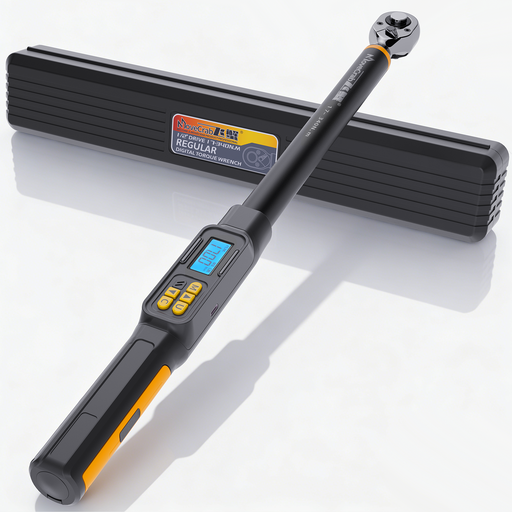
Why This Fits Their Persona: This is a workhorse tool for the busy garage. Its wide 17-340Nm range covers the vast majority of automotive tasks, from engine components to heavy-duty suspension and wheel lug nuts, making it an ideal all-in-one professional torque wrench.
It directly counters the "inaudible alert" flaw with a triple-alert system (vibration, sound and light), ensuring you get the signal even in a loud, professional workshop.
Features a ±2% accuracy and multiple measurement units (N.m, ft.lb, in.lb, kgf.cm). The preset mode allows for storing 10 common torque values, speeding up repetitive jobs.
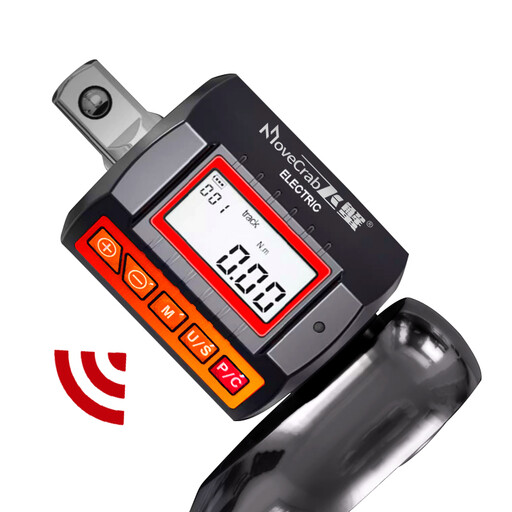
Why This Fits Their Persona: For the home mechanic who already owns a trusty 1/2" drive breaker bar or ratchet but wants to add digital precision to their toolkit without the expense of a full wrench. It's a smart, space-saving upgrade.
This avoids the "inaccurate on paper" trap by turning a high-quality manual tool you already trust into a precise digital instrument. It also includes adapters for 3/8" and 1/4" drives, preventing the "mismatched tool" issue for smaller jobs.
Offers excellent value and versatility. It features sound and light alarms, multiple working modes (real-time, peak, preset) and can store up to 1,000 data sets for review.
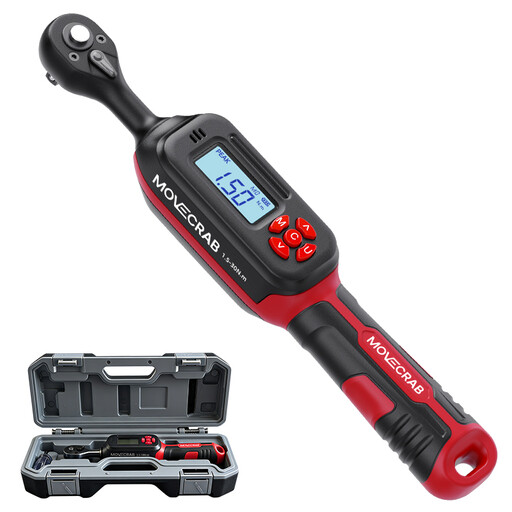
Why This Fits Their Persona: Ideal for those working on motorcycles, bicycles or intricate engine parts where lower torque values are common. The 4.2-85Nm range provides the necessary precision to avoid stripping threads or damaging delicate components.
This tool directly solves the "mismatched torque range" pitfall. Using a high-range automotive wrench on a motorcycle axle nut or bike crankset is a recipe for disaster; this provides the correct, lower-end sensitivity.
It shares the same reliable triple-alert system (vibration, beep and light) and ±2% accuracy as its higher-torque counterparts, but in a range optimised for more delicate, high-precision work.
For professional use in a commercial setting, it's good practice to have your digital torque wrench calibrated annually or after a significant drop. For the serious DIYer using the tool less frequently, calibration every two years or as recommended by the manufacturer is generally sufficient to maintain its accuracy.
While a 1/2 inch drive wrench can be used with adapters for some high-torque bicycle components like bottom brackets, it is generally not suitable for most bike repairs. The torque range of a typical automotive torque wrench is too high. Most bicycle components (stems, seatposts, derailleurs) require very low torque values (typically 4-15Nm). Using a high-range wrench for these tasks will almost certainly lead to damage. It is better to use a dedicated, low-range bike repair tool.
These are two common modes on an electronic torque wrench.