Families planning an occasional treat
Parents and carers can compare the sugar information and intended serving size, then check the current ingredient and allergen label before offering chocolate.


If a creamy white-chocolate flavour is the aim, choose white chocolate rather than a dark bar. For a darker flavour, a 70–72% cocoa bar is a starting point; consider 85% when the person eating it already enjoys a more pronounced cocoa taste. Compare sugar and allergen information on the current pack, and for food supplied by a state-funded school in England, check the applicable school-food standards rather than judging suitability by cocoa percentage.
The setting matters as much as flavour: a treat served at home and food provided to pupils call for different checks.
Parents and carers can compare the sugar information and intended serving size, then check the current ingredient and allergen label before offering chocolate.
Older children and adults who prefer a cocoa-forward taste can compare 70–72% bars with 85% bars. The declared cocoa percentage helps distinguish the options, but personal flavour preference still decides which to choose.
Staff buying food for pupils at state-funded schools in England need to consider the school-food standards and current school policy. A higher cocoa percentage does not change chocolate’s classification as confectionery under England’s 2014 school-food regulations.
Choose the flavour route first, then compare like-for-like nutrition figures and the current pack label. If the food is for a school, establish the rules for that setting before selecting a bar.
| Priority | What to check | Your needs |
|---|---|---|
| Flavour and cocoa | Decide whether you want white chocolate’s creamy profile or dark chocolate. For a dark bar, compare its declared cocoa solids: the cited Lindt and Waitrose bars state 70% and 72% minimum, while M&S Collection states 85% minimum. | I’m looking for a darker cocoa taste, but I don’t want to choose 85% simply because its number is higher. |
| Sugar and portions | Compare sugars per 100g on the exact products, then check the stated serving size. Lindt Shop UK lists 29g sugars per 100g for EXCELLENCE Dark 70%; Waitrose lists 24.4g for its Belgian Dark Chocolate 72%; Marks & Spencer lists 15.9g for its Collection 85% bar. These are different recipes, not a rule linking cocoa percentage to sugar content. | For an occasional treat, I want to know both how the bars compare on the same basis and how much I plan to serve. |
| Allergens | Read the current ingredients and precautionary allergen wording, even if a bar is described as vegan. Lindt says its EXCELLENCE Dark 70% is not suitable for people with milk allergy; Marks & Spencer gives milk and nut allergy exclusions for its Collection 85% bar. | Someone eating the chocolate has an allergy, so a vegan description or an older pack image is not enough for my choice. |
| Where it will be served | Distinguish a treat at home from food a school provides to pupils. England’s 2014 school-food regulations define chocolate in any form as confectionery, and the Department for Education says school-food standards are a legal requirement for state-funded schools. Check current school policy and the rules for the relevant UK nation. | Is this for my family at home, or am I buying food that a school or activity setting will provide? |
An 85% bar has a more pronounced cocoa profile than the 70–72% options described here. Someone who wants a creamy white-chocolate flavour may not want dark chocolate at all.
Choose by the eater’s flavour preference: consider 70–72% as a starting point for dark chocolate, and 85% when a stronger cocoa taste is welcome.
Cocoa percentage does not tell you the sugars in a serving. The Lindt 70%, Waitrose 72% and M&S 85% bars have different stated sugar figures per 100g.
Compare the exact products per 100g, then look at the pack’s serving information for the amount you intend to offer.
Both Lindt and M&S describe the cited dark bars as vegan, yet their product information includes milk-related allergy warnings or exclusions.
Check the current pack’s ingredients and precautionary statements against the eater’s specific allergies before serving it.
England’s school-food standards concern food provided to pupils; its separate food promotion and placement regulations concern specified products and qualifying retailers. Neither tells you that a particular chocolate bar is suitable for school provision merely because it has more cocoa.
For a home treat, make a choice based on flavour, portion and the label. For food supplied through a school, check its current policy and the rules applicable in that UK nation.
These examples help distinguish specific dark-chocolate lines; a brand name alone does not establish a bar’s cocoa content, nutrition or allergen suitability.
EXCELLENCE Dark 70% is a named 70% cocoa bar with product-specific nutrition information from Lindt Shop UK.
Its Collection Dark Chocolate 85% bar offers a higher declared cocoa percentage than the 70–72% examples here.
Waitrose Belgian Dark Chocolate 72% provides a dark-bar option between the cited 70% and 85% cocoa declarations.
Galaxy presents Dark Chocolate with 70% Cocoa separately from its blonde chocolate, making the flavour choice explicit.
Darkmilk and Bournville Classic offer different dark-style products for shoppers considering flavour.
These bars represent the dark-chocolate side of the half-term flavour choice, with declared cocoa percentages of 70%, 72% or 85%. Choose white chocolate instead if a creamy white-chocolate flavour is the priority.
 No image available
Consider this 85% cocoa bar for someone who already prefers a pronounced dark-chocolate flavour. It is a 100g bar; check the current pack for serving and allergen information before sharing it.
 No image available
This 72% cocoa bar is an option for someone exploring dark chocolate before choosing an 85% bar. The 100g size helps with planning servings; use the current pack to check ingredients and allergens.
 No image available
The stated 85% cocoa makes this a choice to consider when a stronger cocoa flavour is wanted. It is a 90g bar; compare its current sugar and allergen label with other exact products.
 No image available
For a first comparison with stronger dark bars, this 70% cocoa option has a lower stated cocoa percentage than the 85% bar above. The bar is 90g; check its current sugar and allergen information rather than treating 70% as a nutrition judgement.
 No image available
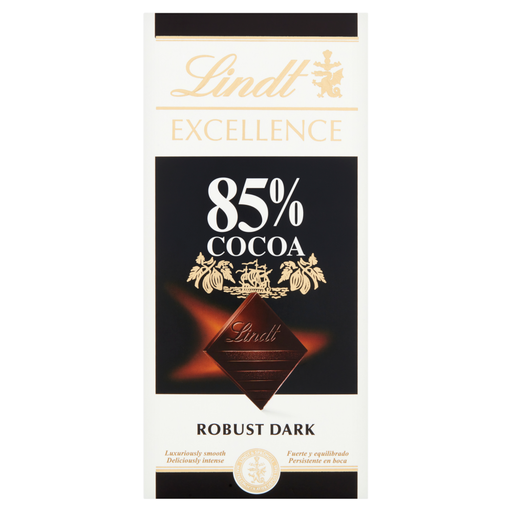
This 85% cocoa, 100g bar is another option when the eater wants a pronounced dark-chocolate taste. Check the current pack for portion, ingredient and allergen details; do not apply the figures for Lindt’s different 70% bar to this one.
No. Choose a bar with a declared dark-chocolate cocoa percentage if that is the flavour and composition you want. White chocolate is a separate choice for a creamy profile; Galaxy, for example, presents its blonde chocolate separately from its Dark Chocolate with 70% Cocoa.
No. Read the exact bar’s nutrition label. Marks & Spencer lists 15.9g sugars per 100g for its Collection 85% bar, while Waitrose lists 24.4g for its Belgian Dark Chocolate 72% and Lindt Shop UK lists 29g for EXCELLENCE Dark 70%. Those figures describe three different recipes, not every bar at those cocoa percentages.
Not automatically. Lindt describes its EXCELLENCE Dark 70% as made to a vegan recipe but says it is not suitable for people with milk allergy because it is made in a facility using milk. Check the current pack for the exact product and allergy.
Check the rules for the school and UK nation rather than assuming a high-cocoa bar qualifies. In England, the Department for Education says school-food standards are a legal requirement for state-funded schools, and the 2014 school-food regulations define chocolate in any form as confectionery. Ask the school what its current policy permits before buying food to provide to pupils.
No. England’s Food (Promotion and Placement) Regulations address promotion and placement of specified products by qualifying businesses; school-food standards govern a different setting. Neither framework makes cocoa percentage alone a test of school suitability, and a rule for food provided at school should not be treated as a ban on a family’s home treat.