
24/7 Customer Support

Free returns

Same-day & Next-day Delivery

Quality Guaranteed

Unlock Your Welcome Offers: FREE Delivery | Up to 80% OFF | Free 30-day JoyPlus trial
Download the APP
Hallway runner rugs can add warmth, reduce the echo of hard flooring and help protect busy walkways from everyday marks. However, a stylish photograph does not always reveal whether a runner will suit your floor, cleaning routine or available space.
Before buying, look beyond colour and pattern. The most common purchasing pitfalls include:
The right hallway runner should balance dimensions, material, maintenance and floor stability rather than relying on marketing language alone.
Measure the usable length and width of the floor, not simply the overall hallway. Leave enough space around the edges for a neat border and check that doors can open without catching the rug.
Common runner sizes include approximately 50cm to 70cm wide, with longer options around 150cm to 200cm. A 67x200cm runner may suit a long entrance hall, while a 50x150cm option can work in a compact flat hallway, beside a back door or in a short passage.
For long hallway rugs, also check whether the runner will sit across floor transitions. Raised edges or curled corners can become a trip concern, particularly where children, older residents or pets regularly pass.
Material affects appearance, comfort and upkeep:
If you need washable runner rugs, look for clear instructions covering washing temperature, whether the item should be washed separately and whether tumble drying is permitted. A washable design can be useful in households with pets, children or frequent wet-weather traffic, but it still needs to be dried fully before use.
A non-slip hallway runner should sit flat on a clean, dry surface. Non-slip backing can help reduce movement, but it does not remove the need to check compatibility with your flooring. Smooth tiles, laminate and vinyl may require particular care, while loose dust or moisture can affect stability.
For extra reassurance, inspect the edges after laying the runner. If corners do not settle, avoid placing the rug where it could catch footwear. Do not cover ventilation grilles, heating appliances or areas exposed to open flames. Most indoor runner mats are intended for internal use only.
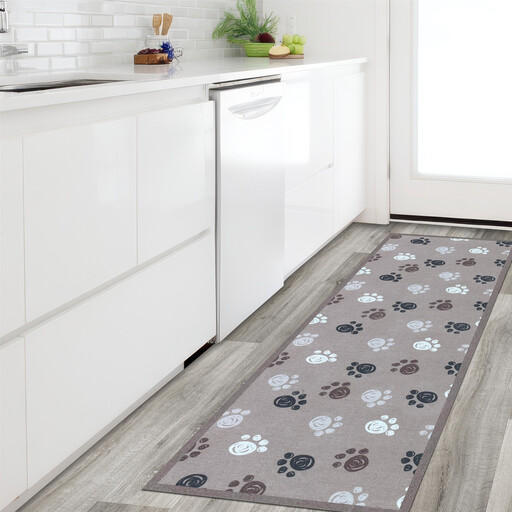
Why This Fits Their Persona: Its compact 50x150cm size suits shorter hallways, kitchens and entrance areas where a larger runner would be impractical. The pawprint design also adds character to pet-friendly homes.
The listed care instructions specify machine washing at 30°C, washing separately, line drying and avoiding tumble drying, so maintenance expectations are clear.
Made from 100% PET fibre produced from recycled plastic bottles; includes TPR slip-resistant backing and 30°C machine washing.
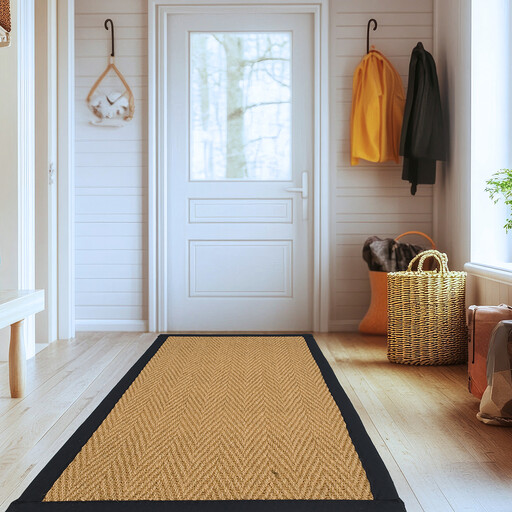
Why This Fits Their Persona: This handcrafted natural-fibre runner suits shoppers who prioritise texture and a tailored appearance in an entrance or transitional space.
The specification identifies coir as the main material and gives a defined 66x122cm format, making it easier to judge suitability instead of relying on styling photographs alone.
100% coir herringbone weave; cotton herringbone trim; natural brown and black colour combination.
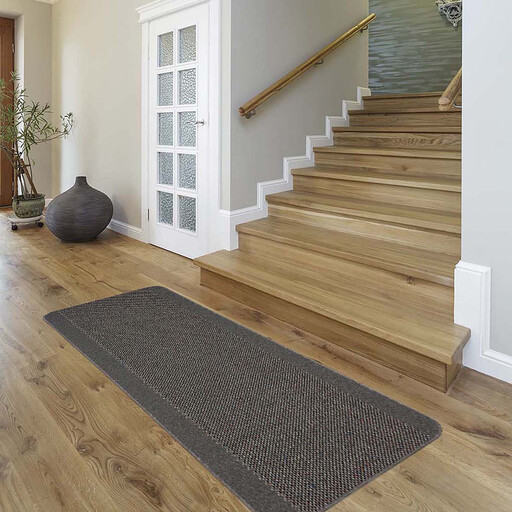
Why This Fits Their Persona: The 200cm length is suitable for a longer hallway, entrance or kitchen route that receives regular foot traffic and needs straightforward cleaning.
It specifies a polypropylene construction, machine-wash care and a non-slip backing, addressing common concerns about wear, upkeep and movement.
67x200cm size; grey flecked finish; polypropylene fibres; machine washable and supplied with non-slip backing.
We have compiled a complete, real-time list of products that fully satisfy these strict selection criteria and UK safety regulations.
Yes, many kitchen runner rugs are designed for indoor areas exposed to crumbs, splashes and frequent footfall. Polypropylene and other washable materials can be practical choices. Place the runner away from cooker flames and check that its backing is suitable for your floor.
Vacuum or shake out the runner according to the level of traffic. Homes with pets, children or outdoor footwear may need more frequent cleaning. For machine washable runners, follow the stated temperature and drying instructions. A runner should be completely dry before being returned to the floor.
Lifespan depends on foot traffic, fibre construction, backing, sunlight and maintenance. A firmly woven runner may cope well with a busy route, but edges, corners and high-wear zones should be checked regularly. Repositioning and cleaning the floor beneath can help maintain stability and appearance.