
24/7 Customer Support

Free returns

Same-day & Next-day Delivery

Quality Guaranteed

Unlock Your Welcome Offers: FREE Delivery | Up to 80% OFF | Free 30-day JoyPlus trial
Download the APP
A walk with your dog should be a relaxing and enjoyable experience for both of you. However, when your canine companion constantly pulls on the lead, it can quickly turn into a stressful and physically draining tug-of-war. This common issue not only puts a strain on your arm and shoulder but can also pose safety risks.
If you're searching for effective and humane dog walking solutions, you have likely come across the Halti range. As a Joybuy Product Recommendation Officer, my role is to help you navigate the options available. This guide will break down the key Halti products, explaining how they work and who they are suited for, so you can make an informed choice for more peaceful walks.
Before selecting a product, it's helpful to understand the different approaches to managing a pulling dog. The Halti range offers distinct designs, and choosing the right one depends on your dog's size, temperament and your personal preference.
The two main types of Halti no pull devices work in different ways.
Think about your individual dog. A confident, strong dog might respond well to the clear directional guidance of a headcollar. However, a more timid dog or one with a short snout (brachycephalic breed) may be more comfortable in a well-fitted harness. It is crucial to introduce any new training tool gradually with positive reinforcement to ensure your dog has a good experience.
Whichever option you choose, a correct fit is paramount for both comfort and effectiveness. Always measure your dog according to the manufacturer's guidelines. For added peace of mind, especially when using a headcollar, using a Halti safety link is highly recommended. This simple strap connects the headcollar to your dog's regular collar, providing a crucial backup should the headcollar ever slip off.
Here are our selected recommendations from the Halti range, chosen to address the common problem of how to stop a dog pulling on the leash.
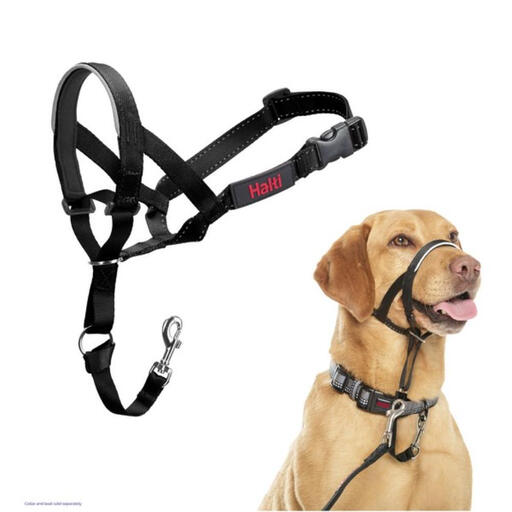
Why It Stands Out: The Halti Headcollar is a classic choice for a reason. Its design offers a high degree of control by gently steering the dog's head. This method works with the dog's natural instincts to redirect their movement, making it an effective training aid for strong pullers. The design has been refined for comfort, ensuring it doesn't interfere with your dog's ability to pant, drink or eat.
Pros:
Who is it for? This is a suitable option for owners of medium-to-large dogs who pull strongly and require more direct control during walks. It's particularly useful for owners who feel physically overpowered by their dog's pulling.
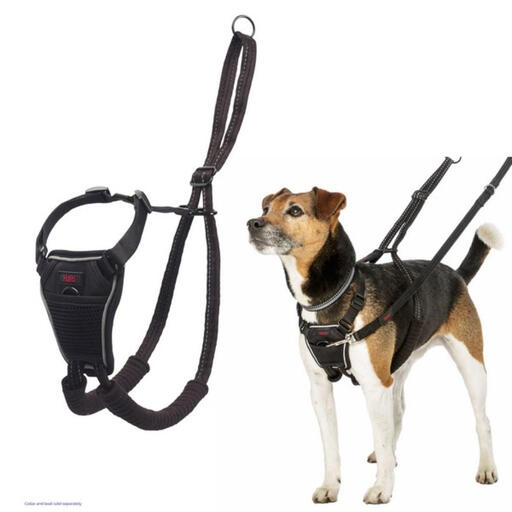
Why It Stands Out: For those who prefer a body harness, the Halti No Pull Harness offers a clever solution. It uses a unique system that applies a gentle "squeeze and lift" pressure when the dog pulls, which discourages the behaviour without causing discomfort. The combination of elastic webbing and a mesh chest panel allows for natural movement while maintaining control.
Pros:
Who is it for? This harness is ideal for owners looking for humane dog training tools that avoid any contact with the dog's head. It's a great all-round option for a wide variety of breeds and temperaments, from persistent pullers to those just needing a little guidance.
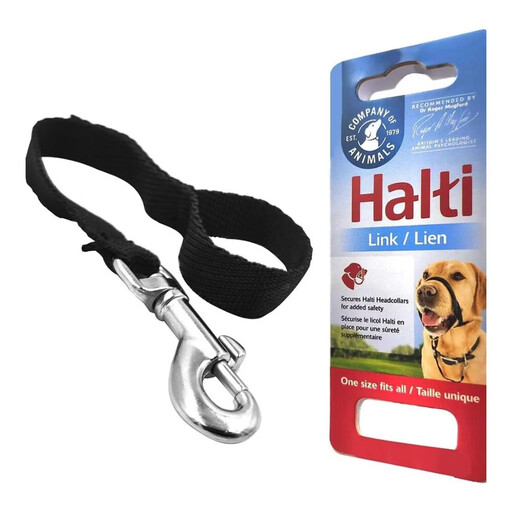
Why It Stands Out: This small accessory provides a significant amount of security and peace of mind. The Halti Link acts as a simple but essential bridge between a headcollar (or harness) and your dog's regular collar. It serves as a fail-safe, ensuring you remain connected to your dog even if they manage to slip out of their primary training aid.
Pros:
Who is it for? Frankly, this is for every dog owner who uses a headcollar. It's a non-negotiable safety feature that ensures a moment of distraction or a clever dog doesn't result in a loose pet.
The Halti range offers excellent, targeted solutions for pulling, but every dog is different. If you're exploring other styles of harnesses, different types of leads or simply want to see a wider variety of options, we can help.
Browse our complete collection of Dog Collars, Harnesses & Leads to find the perfect fit for you and your companion.
1. Is a Halti headcollar cruel or painful for the dog? When fitted and used correctly, a Halti headcollar is designed to be a humane training aid. It functions by guiding the dog's head, not by inflicting pain. The pressure is minimal and applied only when the dog pulls. It is vital to introduce it slowly with positive reinforcement and ensure it never yanks or jerks the dog's head.
2. How can I stop my dog from trying to pull the headcollar off? This is a common initial reaction. The key is creating a positive association. Introduce the headcollar for very short periods, offering high-value treats and praise. Ensure the fit is correct—not too tight, not too loose. Most importantly, always use a Halti safety link attached to the dog's regular collar. This provides a backup and prevents the dog from getting loose if they do manage to slip the headcollar.
3. Can I use a Halti no pull harness on a puppy? A Halti no pull harness can be a useful tool for teaching a puppy good lead manners from a young age. However, it is essential to choose the correct size and ensure it fits properly, as puppies grow quickly. Use it as part of a wider positive reinforcement training programme, keeping sessions short and fun. For very young puppies, it's always a good idea to consult with a qualified dog trainer.