
24/7 Customer Support

Free returns

Same-day & Next-day Delivery

Quality Guaranteed

Unlock Your Welcome Offers: FREE Delivery | Up to 80% OFF | Free 30-day JoyPlus trial
Download the APP
A hammer drill can handle far more than ordinary screwdriving, but choosing the wrong type may leave you with a tool that struggles on brickwork, drains batteries quickly or feels difficult to control. UK buyers should compare the drill’s power source, chuck system, impact performance and stated drilling capacities rather than relying on impressive-sounding marketing claims.
This guide explains the specifications that matter and matches different hammer drills to practical user profiles.
A high wattage or impact rate does not automatically make a drill suitable for every job. A 900W corded model may offer sustained mains power, while an 18V hammer drill provides easier movement around the home. However, the actual usefulness depends on the material, bit type, impact mechanism and maximum drilling capacity.
Impact rate, measured in BPM or beats per minute, indicates how frequently the hammer action strikes. It should be considered alongside rotational speed, impact energy and handling. A tool with a high BPM but limited impact energy may not be appropriate for repeated work in hard concrete.
A conventional hammer drill uses a standard chuck and is generally suited to lighter masonry drilling, timber, metal and screwdriving. A rotary hammer drill normally uses an SDS Plus chuck and may offer dedicated chiselling modes, making it more appropriate for heavier concrete, brick and stone work.
Using a standard power drill for demanding chiselling can cause unnecessary wear and poor results. Check whether the tool has drill-only, hammer-drill and chisel functions before purchasing.
A large accessory kit can be useful, but the number of pieces does not indicate their quality or suitability. Check whether the package includes the correct masonry drill bits, SDS Plus accessories, wood bits, metal bits and screwdriver attachments for your intended work.
For a cordless model, also confirm whether the battery and charger are included. A “bare unit” may appear lower-priced but requires a compatible battery platform before it can be used.
A corded hammer drill or electric hammer drill provides continuous mains power, which can be practical for long drilling sessions in a workshop or during renovation work. You will need a safe, suitable power connection and enough cable reach.
A cordless hammer drill is easier to carry between rooms, outdoors or around a property without trailing cables. Battery capacity affects working time, while a spare battery can reduce interruptions. Platform compatibility is also important if you already own compatible tools.
For occasional holes in brick or light blockwork, a conventional hammer drill may be sufficient. For harder concrete or chiselling, look for an SDS Plus hammer drill with a stated impact energy rating and dedicated operating modes.
Always compare the manufacturer’s maximum capacities for each material:
Maximum capacity is not a guarantee of performance in every surface. The condition and density of the material, the bit quality and the pressure applied all affect results.
A keyless or auto-lock chuck makes standard bit changes convenient, while a keyed chuck can provide a firm grip when using compatible bits. SDS Plus systems allow quick changes between SDS drill bits and chisels, but standard round-shank bits may require an adaptor or separate chuck.
Useful control features include a variable-speed trigger, two-speed gearbox, clutch settings, a side handle and a depth gauge. A side handle is particularly valuable when drilling masonry, as it gives more control over twisting forces and helps maintain alignment.
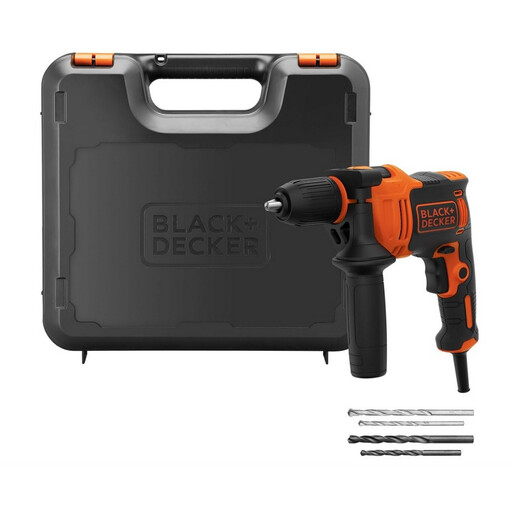
Why This Fits Their Persona: A practical choice for homeowners handling drilling in wood, metal, masonry and occasional concrete work near a mains socket.
Its stated 710W motor, variable speed trigger and side handle provide more useful control than selecting a drill by impact rate alone.
0–2,800 RPM variable speed, up to 47,600 BPM and a lock-on button for continuous drilling.
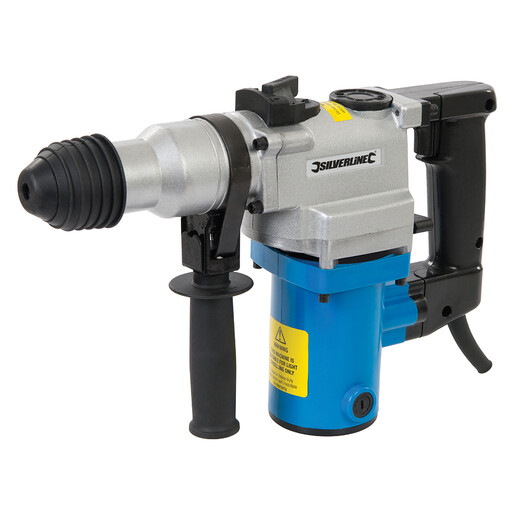
Why This Fits Their Persona: Suitable for users who want one corded tool for drilling and lighter chiselling, with a broader accessory setup.
The SDS Plus chuck and dedicated roto-stop chisel mode make its function clearer than a standard drill marketed for every task.
3.5J impact force, 800 RPM maximum speed, safety clutch and stated 26mm masonry capacity.
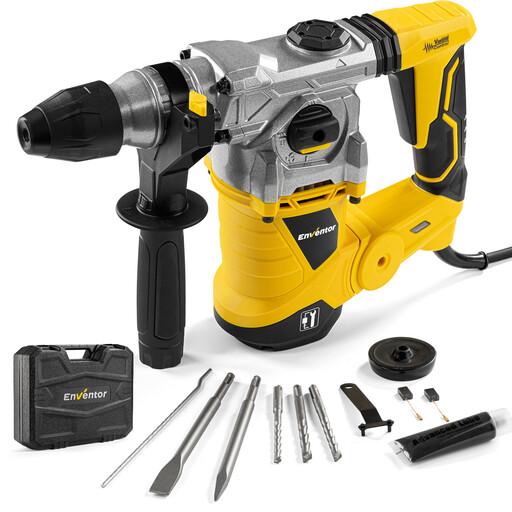
Why This Fits Their Persona: Designed for demanding renovation tasks involving concrete, masonry, brick and chiselling where a standard DIY drill may be insufficient.
Its four operating functions distinguish drilling from hammering and chiselling, while the SDS Plus chuck matches the intended heavy-material work.
1500W motor, stated 6J impact energy, 32mm concrete capacity and 360° auxiliary handle.
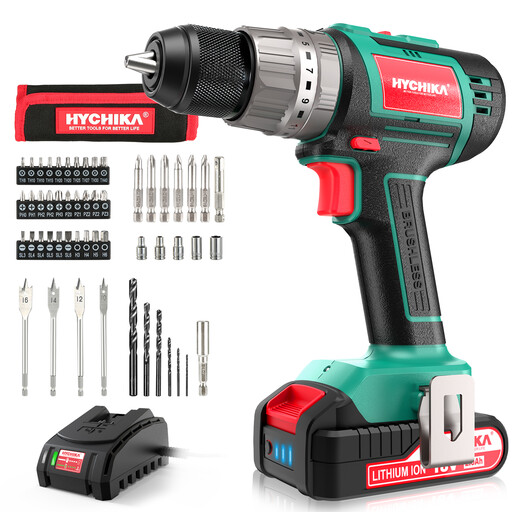
Why This Fits Their Persona: A flexible option for furniture assembly, screwdriving, timber, metal and occasional masonry work where portability matters.
It includes two 2.0Ah batteries and a charger, avoiding the inconvenience of purchasing the power source separately.
60Nm stated maximum torque, 21+3 clutch settings, dual-speed operation and a 13mm auto-lock chuck.
Before using any DIY drill or masonry tool:
We have compiled a complete, real-time list of products that fully satisfy these strict selection criteria and UK safety regulations.
A conventional hammer drill can handle some lighter concrete and masonry tasks with the correct bit, but larger holes or repeated work may require an SDS Plus hammer drill or rotary hammer drill. Check the stated concrete capacity and impact energy before buying.
A cordless model avoids direct cable use and offers portability, but batteries and chargers add to the purchase cost. A corded hammer drill can be practical for long sessions where a safe mains supply is available. Your running cost will depend on electricity use, battery replacement and how frequently the tool is operated.
Lifespan depends on workload, dust exposure, storage, bit quality and maintenance. Avoid forcing the tool, allow ventilation openings to remain clear and use the correct operating mode. For heavy concrete work, choose a drill with specifications suited to that task rather than continually operating a lighter model at its limit.