
24/7 Customer Support

Free returns

Same-day & Next-day Delivery

Quality Guaranteed

Unlock Your Welcome Offers: FREE Delivery | Up to 80% OFF | Free 30-day JoyPlus trial
Download the APP
A hand blender can save time when preparing soups, sauces, smoothies, purées and baby food. It can also replace several small kitchen tools when supplied with a whisk or chopper. However, choosing by wattage or attachment count alone can lead to disappointment.
Before buying an immersion blender, look beyond the headline specifications. A suitable model should match your cooking habits, available storage, preferred batch sizes and willingness to clean several separate parts.
A high wattage figure can look impressive, but it does not describe the whole blending experience. Blade design, motor control, shaft shape and the recommended operating cycle also affect results.
For example, a 450W hand blender may be suitable for smoothies, sauces and desserts, while a 1000W model may be more appropriate for frequent chopping, tougher ingredients or larger preparation tasks. Neither figure alone guarantees a particular texture.
Check the full specification for:
A hand blender with chopper, whisk, masher and several blades may seem versatile, but unused accessories add storage and cleaning requirements. Consider the tasks you regularly perform.
A whisk is useful for eggs, cream and light batters. A chopper can handle herbs, nuts, vegetables and other small portions. If you mainly blend soup directly in a saucepan, a simple stick blender may be more practical than a large multifunction set.
Food can collect around the blade guard, attachment joints and chopper lid. A dishwasher-safe hand blender can reduce cleaning effort, but always check which components are suitable for the dishwasher. The motor body, plug and cord should not be immersed in water.
Blades are sharp, and attachments should be removed only after unplugging the appliance. When blending hot food, use a deep, stable container and follow the manufacturer’s temperature guidance. The Braun MultiQuick 5 Pro MQ55755M instructions, for example, specify not processing hot liquids above 80°C in its beaker or mini chopper.
For occasional sauces, smoothies and soft vegetables, a compact electric hand blender with one speed may be sufficient. A variable speed hand blender gives more control when moving from delicate mixtures to thicker purées.
Useful controls include:
Also check the stated operating cycle. Some models recommend one minute of use followed by one minute of rest. This matters when preparing several portions for a family meal.
A stainless steel shaft is generally straightforward to wipe clean and is suited to frequent food preparation. Stainless steel blades are also common across entry-level and higher-powered models.
A bell-shaped guard or splash-control feature can help reduce mess, particularly when blending soup in a deep pan. It remains important to keep the blade head fully immersed before switching on and to move the blender slowly through the ingredients.
A beaker marked in millilitres and fluid ounces is useful for portion control. Common capacities in this selection range from 500ml to 800ml, while chopper bowls are often smaller and intended for compact batches.
For UK kitchens, check:
The right choice depends less on a marketing label and more on how you plan to use the appliance. These options cover straightforward blending, more controlled preparation and multifunction cooking.

Why This Fits Their Persona: A practical option for UK households that mainly prepare smoothies, sauces, desserts and small portions without needing several attachments.
It avoids paying for unused accessories by focusing on one-speed blending, a compact build and a 600ml beaker.
450W motor, stainless steel blades, EasyTwist shaft removal and dishwasher-safe removable parts.
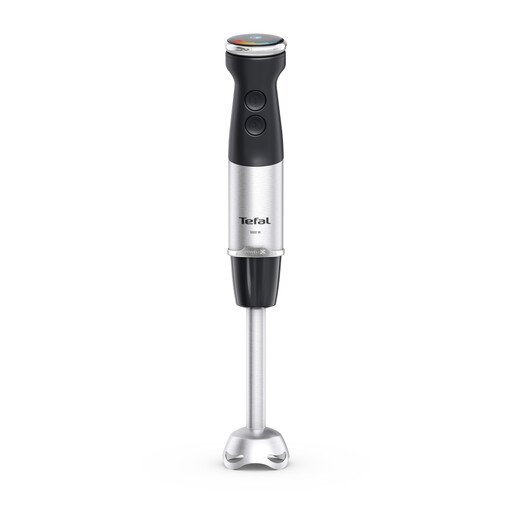
Why This Fits Their Persona: Suitable for cooks who want adjustable control for soups, sauces, purées and smoothies, together with a larger 800ml beaker.
The 20-speed dial provides more control than a basic one-speed model, while the anti-splash guard addresses mess during blending.
1000W motor, 20 variable speeds plus Turbo, stainless steel shaft and dishwasher-safe removable parts.
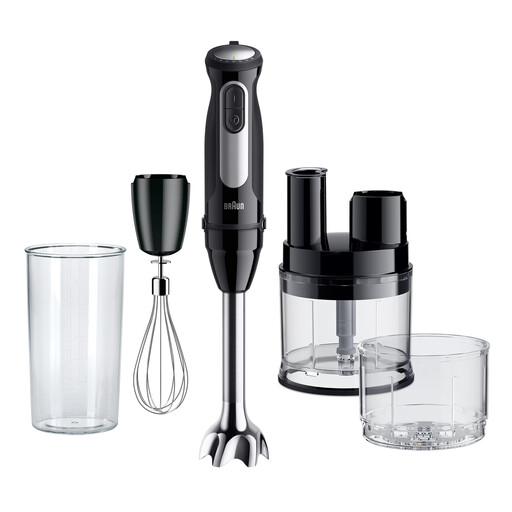
Why This Fits Their Persona: A multifunction choice for busy families and baking enthusiasts who want blending, chopping, slicing, grating and whisking from one system.
The attachment list is clearly defined, so shoppers can assess whether the mini processor and whisk justify the extra storage and cleaning.
1000W motor, 25-speed control wheel plus Turbo, mini food processor, metal whisk and 500ml BPA-free beaker.
We have compiled a complete, real-time list of products that fully satisfy these strict selection criteria and UK safety regulations.
Yes, many models can blend soup, but use a deep pan or suitable container and follow the product’s temperature instructions. Avoid sealing hot liquids in a small container, as steam pressure can build up. Keep your face and hands away from the surface while blending.
Lifespan depends on frequency of use, operating within the recommended cycle and cleaning correctly. A model with detachable, replaceable or dishwasher-safe accessories may be easier to maintain over time. Check the supplied warranty and manufacturer care instructions before purchase.
A hand blender is generally used for short periods, so its total electricity consumption depends on wattage and operating time. A 1000W model running for one minute uses approximately 0.017kWh, before accounting for standby or repeated cycles. Your household tariff determines the actual cost.