
24/7 Customer Support

Free returns

Same-day & Next-day Delivery

Quality Guaranteed

Unlock Your Welcome Offers: FREE Delivery | Up to 80% OFF | Free 30-day JoyPlus trial
Download the APP
Choosing between a hand blender, food processor or combined appliance can be surprisingly difficult. Product listings often highlight wattage, attachment counts and phrases such as “all-in-one”, but these details do not always show how well an appliance will suit your kitchen or routine.
The right choice depends on what you prepare most often: soups and sauces, family-sized batches, smoothies, chopped vegetables, baking mixtures or baby food. This guide explains the main buying traps, the specifications worth checking and our top recommendations for different UK households.
A 1000W hand blender may offer more power than a 400W food processor, but wattage alone does not determine the finished texture. Blade design, container shape, speed control and the type of ingredients being processed also matter.
For example, a stick blender is convenient for puréeing soup directly in a saucepan, while a worktop food processor is generally more practical for slicing, shredding or processing larger quantities. Compare the complete system rather than choosing the highest number on the product page.
A multifunctional food processor may include a whisk, chopping blade, slicing disc, grating disc, masher, grinder and several bowls. That sounds useful, but attachments require storage and cleaning. If your regular tasks are smoothies and soup, a compact immersion blender may be more convenient than a large appliance.
Check whether the accessories match your recipes. A hand blender with whisk is useful for eggs, cream and light batters, whereas a food processor blender with a feed chute is better suited to vegetables, cheese and batch preparation.
Advertised bowl capacity is not always the same as usable capacity. Thick mixtures and liquids need room to circulate, and some appliances have separate maximum levels for dry and liquid ingredients.
Cleaning is another common source of disappointment. Look for dishwasher-safe blender components, removable blades and attachments that can be rinsed without trapping food. The motor body should generally be wiped with a damp cloth rather than immersed.
For everyday blending, chopping and puréeing, the stated motor rating provides a useful point of comparison, but it should be read alongside the control system. Variable speeds or a pulse function help you move from coarse chopping to smoother textures.
A hand blender with several speed settings can offer better control for sauces and dressings. A food processor with pulse control is practical when you want chopped onions or herbs without turning them into a paste. Also check the recommended operating cycle; some models require a cooling period after about one minute of continuous use.
Small kitchens may benefit from a compact hand blender set or a processor with cord storage. A 500–830ml beaker is suitable for individual smoothies, dips and smaller portions. Bowls around 1.4–1.8 litres are more suitable for family meals, while 2–3 litre food processor bowls support larger batches.
Remember to measure cupboard and worktop space, including room for the lid and attachments. A large jug may be useful for batch cooking but inconvenient if it cannot be stored easily.
Stainless steel blades are common for food preparation and should be handled carefully. Check that the lid, bowl and safety interlock must be correctly fitted before operation. This is particularly important for worktop food processors with exposed slicing and shredding discs.
For hot soup, follow the manufacturer’s temperature guidance. Do not blend boiling liquid in a container that is not designed for it, and keep hands away from moving blades. UK users should also check the supplied plug, voltage information, warranty terms and the instruction manual before use.
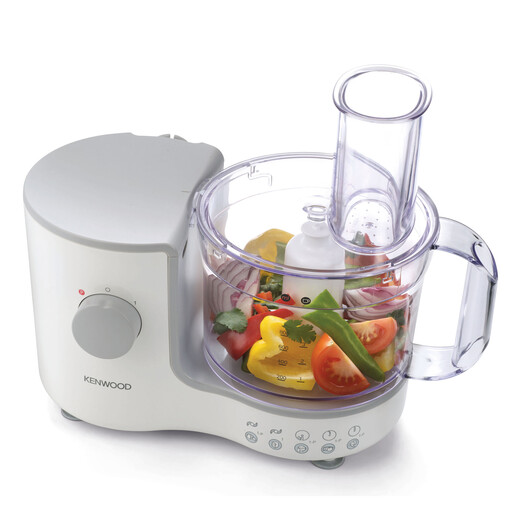
Why This Fits Their Persona: A compact option for tenants, students and smaller UK kitchens needing basic chopping, shredding and emulsifying functions without a large footprint.
Its specification clearly identifies a 1.4L bowl, one speed plus pulse and a 400W motor, helping shoppers avoid paying for unused programmes.
Includes a stainless steel chopping blade, shredder disc, safety interlock, non-slip feet and dishwasher-safe parts.

Why This Fits Their Persona: Suitable for cooks who want one handheld food preparation appliance for soups, sauces, smoothies, chopping and whisking.
The included attachments are specified rather than implied: blending shaft, 450ml chopper, whisk and 600ml beaker.
Features a 1000W motor, variable intelligent speed control, anti-splash design, stainless steel drive system and dishwasher-safe attachments.
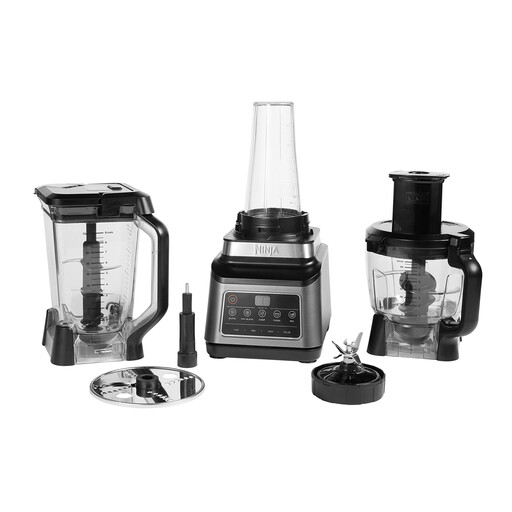
Why This Fits Their Persona: A practical match for meal-prep households making drinks, doughs, dips and family portions with one worktop system.
Its capacities and functions are clearly separated: a 1.8L processor bowl, 2.1L jug and 700ml cup, rather than one overloaded container.
Provides a 1200W motor, five automatic programmes, slicing and grating tools, and dishwasher-safe parts.
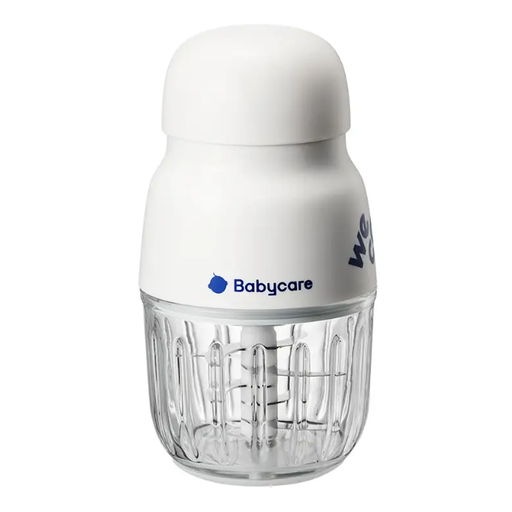
Why This Fits Their Persona: Designed for parents making small portions and purées, with a compact 10 fl oz capacity and one-button operation.
The smaller bowl discourages preparing oversized batches and makes portion planning more straightforward.
Features one-button use, a stated 26,000 RPM motor speed, six-layer grinding and an auto-stop safety function.
We have compiled a complete, real-time list of products that fully satisfy these strict selection criteria and UK safety regulations.
A soup maker blender or immersion blender is convenient when you want to purée soup directly in a saucepan. A food processor is better for chopping ingredients before cooking, but many standard models are not designed to heat or process very hot liquid. Always check the manual and temperature limits.
Lifespan depends on frequency of use, ingredients, cleaning and whether the motor is overloaded. Follow the recommended operating and cooling cycles, avoid hard items outside the manual’s guidance, and do not immerse the motor unit. Warranty length and the availability of replacement parts are useful ownership factors.