
24/7 Customer Support

Free returns

Same-day & Next-day Delivery

Quality Guaranteed

Unlock Your Welcome Offers: FREE Delivery | Up to 80% OFF | Free 30-day JoyPlus trial
Download the APP
A hand blender can save time when making soup, smoothies, sauces and baby food, but the wrong model may become an awkward cupboard item. A high wattage figure alone does not guarantee useful performance, and a long list of attachments may create more washing-up than convenience.
By Joybuy Product Recommendation Officer
A 1,000W motor may offer more power than a 450W model, but the practical result also depends on blade design, speed control, the shape of the blending guard and the ingredients being processed. A basic smoothie blender can be suitable for soft fruit, sauces and cooked vegetables, while hard or fibrous ingredients require more careful preparation.
For everyday UK cooking, consider how often you make thick soup, frozen drinks or large batches rather than selecting a motor rating in isolation.
A hand blender with whisk and chopper accessories can replace several kitchen mixing tools, but only if those attachments match your routine. A mini food processor may be useful for herbs, vegetables and small quantities, while a hand blender with whisk is more suitable for eggs, cream and light batters.
If your main requirement is coffee foam, a dedicated milk frother may be more convenient and easier to clean than a full food preparation blender.
Food residue can collect beneath a blade guard or around a whisk adapter. Check which parts are dishwasher safe and whether the motor unit must only be wiped with a damp cloth. Also read the continuous-use guidance. Several models in this category specify a maximum running period of one minute at a time, with cooling breaks between cycles.
When processing hot soup, use a deep pan, keep the shaft upright and follow the product’s temperature guidance. Do not assume that a supplied beaker or chopper is suitable for boiling liquids.
A 450W electric hand blender with one-touch operation can suit sauces, desserts, soft fruit and cooked vegetables. Models with two or more speeds offer more control when starting slowly to reduce splashing, while a Turbo function can help with short bursts of extra power.
For frequent soup preparation or tougher ingredients, look for a higher-rated motor and a pulse or Turbo setting. Avoid running any motor continuously beyond the instructions, as this can increase heat and wear.
A bell-shaped guard can help contain ingredients and reduce splashing. Some designs also help prevent the blade from pressing directly against cookware. This is useful when blending in a non-stick saucepan, although the shaft should still be handled gently rather than forced against the base.
A metal blending shaft may appeal to frequent cooks who want a robust-feeling attachment. Plastic shafts can be lighter and easier to handle, particularly for short preparation tasks.
A 500ml beaker is convenient for dressings, sauces and individual smoothies, while an 800ml beaker gives more space for drinks or purées. A small chopper is suitable for modest quantities of herbs, nuts or vegetables; it is not a substitute for a large food processor.
Check that attachments lock securely and can be removed without tools. For a hand blender with chopper, confirm whether the set includes only a chopping blade or also slicing and grating discs.

Why This Fits Their Persona: A straightforward option for students, first-time buyers and smaller households preparing sauces, smoothies or chopped ingredients without needing numerous controls.
It keeps the controls simple with one-speed operation and includes a chopper rather than relying on a long list of rarely used accessories.
The 450W motor, 600ml BPA-free beaker and EasyTwist attachment system provide a compact everyday setup.
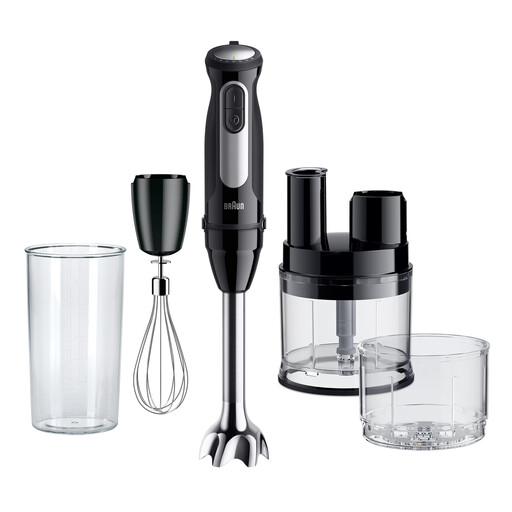
Why This Fits Their Persona: Suits regular home cooks and baking enthusiasts who want adjustable control for soups, sauces, whisking and broader food preparation.
The 25-speed wheel allows gradual adjustment instead of forcing every recipe into a single high-speed setting, and the Splash Control design addresses mess during blending.
It includes a 1,000W motor, metal shaft, whisk, 500ml beaker, mini processor and slicing/grating disc.
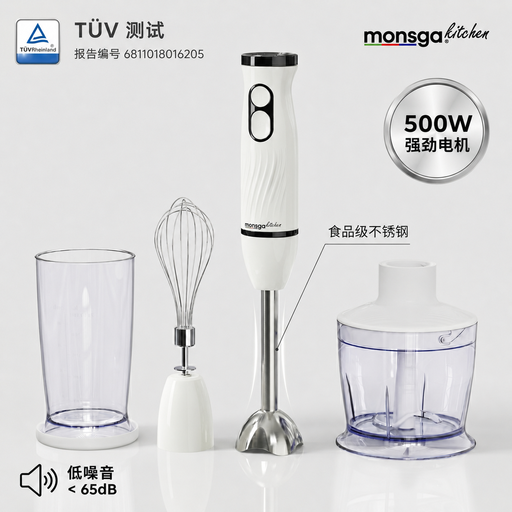
Why This Fits Their Persona: A practical match for busy families and cooks working with deep pots, smoothies, soups and baking mixtures.
Its stated 36.5cm extended reach helps access deeper pots, while the pan-protection design is intended to reduce direct blade contact with cookware.
The set includes Normal and Turbo modes, a whisk, 500ml chopper and 500ml beaker, with detachable dishwasher-safe accessories.
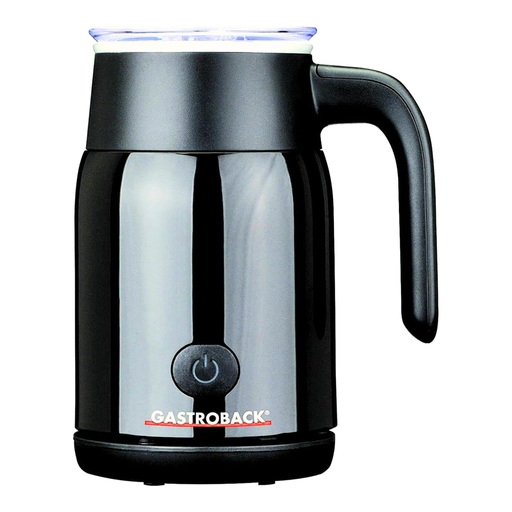
Why This Fits Their Persona: Better suited to people whose priority is hot or cold milk foam for lattes, cappuccinos, milkshakes and hot chocolate rather than blending soup.
It uses a dedicated frothing system instead of making a general-purpose stick blender perform a specialist coffee task.
It can produce up to 350ml of froth or heat up to 250ml of milk, with automatic shut-off and a removable froth spiral.
A mini whisk is useful for small quantities such as salad dressing, scrambled eggs, sauces and milk toppings. The Tala Stainless Steel Mini Whisk is dishwasher safe and designed for direct use in a cup, small bowl or saucepan.
For DIY users, a kitchen appliance is not suitable for plaster, mortar or paint. A dedicated mixing paddle, such as the Silverline 140 x 600mm model, is designed for an electric drill with a 10mm or larger chuck and a maximum operating speed of 500rpm. Wear protective eyewear and gloves, and disconnect the drill before fitting the paddle.
It can be, provided the instructions allow it and you use a deep, stable pan. Keep the shaft upright, avoid splashing and never process hot liquids in a container that is not rated for them. The Braun MQ55755M guidance specifies not exceeding 80°C in its beaker or mini chopper.
Lifespan depends on frequency of use, ingredients, cleaning and whether the motor is operated within its stated limits. Cut tough ingredients into smaller pieces, add sufficient liquid, avoid bones and hard frozen items, and use short pulses where instructed.
Running cost depends on the appliance’s wattage and usage time. For example, a 600W model used for five minutes consumes approximately 0.05kWh. Actual cost varies with your electricity tariff, so short preparation cycles generally have a smaller energy impact than prolonged operation.
We have compiled a complete, real-time list of products that fully satisfy these strict selection criteria and UK safety regulations.