Small-kitchen watermelon-drink makers
Consumers making fresh watermelon drinks who want to contain splashes without adding much to their washing-up or cupboard storage.


For occasional watermelon drinks, start with a compact hand blender and a suitably tall vessel; a simple one-speed model may be enough if you do not need to adjust the blending intensity. Consider variable speed and a detachable shaft if control and washing-up matter more, or an attachment bundle only if you will use the extra tools and have room to store them. A splash-control design still calls for careful blending technique.
Consumers making fresh watermelon drinks who want to contain splashes without adding much to their washing-up or cupboard storage.
Consumers who also make sauces or use chopping and whisking attachments, and need to decide whether those tools earn their storage space.
Consumers who would rather begin gently with a watery mixture and adjust the blending intensity than use one fixed speed.
For watermelon drinks in a small kitchen, work out how you will contain splashes and store and wash the blender before deciding whether extra attachments are worth keeping.
| Concern | What to check | Who this matters to |
|---|---|---|
| Splash control | Check whether you have a suitably tall vessel and whether the model offers adjustable speed or a splash-control design. Neither feature guarantees a spill-free drink. | I want to start gently so a watery mixture stays in the vessel; around 33% of consumers put splash control first. |
| Storage and cleaning | Check the space needed for the whole kit, whether the shaft detaches and which individual parts the manufacturer permits in a dishwasher. | With little cupboard space and limited room for washing-up, I want a kit I can put away and clean without fuss. Roughly 33% of consumers make storage and cleaning their main concern. |
| Other food preparation | Check the exact attachments supplied and whether you have a regular use and storage spot for each one. | If the blender will also take on chopping or whisking, I need those tools to justify the space they occupy; around 17% of consumers prioritise broader food preparation. |
| Simple operation | Compare a one-speed model with adjustable-speed options, focusing on whether you would use the extra controls. | For occasional soft-fruit drinks, I would rather keep the controls straightforward than add functions I rarely touch. Approximately 17% of consumers put simplicity first. |
A whisk or chopper can serve other cooking jobs, but neither is needed simply to blend watermelon. Unused parts take up the cupboard space you hoped to save.
If drinks are the main job, consider a wand-and-beaker setup first. Choose attachments for tasks you already do regularly.
A larger kit also means more separate components to store and clean.
A splash-control design cannot make a shallow vessel or an exposed blending head spill-proof.
Use a suitably tall vessel, keep the blending head submerged while it runs and start at a lower setting if the model provides one.
Manufacturer wattage ratings describe the motor, not the result of blending a watermelon drink. Speed control, the vessel and the amount of kit to store may matter more for this job.
Compare the controls and accessories you will use rather than assuming a higher wattage will produce a better drink.
Detachable parts do not all have the same cleaning instructions, and the motor unit must be kept away from water and spills.
Electrical Safety First advises following the manufacturer’s instructions, unplugging the appliance when it is not in use and checking which parts are dishwasher-safe. Inspect the plug and cable before use.
Braun’s MultiQuick range includes simple hand blenders and models with adjustable speed and accessory bundles.
Bosch offers UK hand-blender models with adjustable speeds and detachable mixing feet.
Kenwood’s Triblade XL family is another hand-blender option for consumers considering a blending wand and accessory variants.
These hand blenders cover straightforward soft-fruit drinks, adjustable-speed blending and kits with tools for other food-preparation jobs. Choose by the controls and components you will actually use, then check where the full kit will fit.
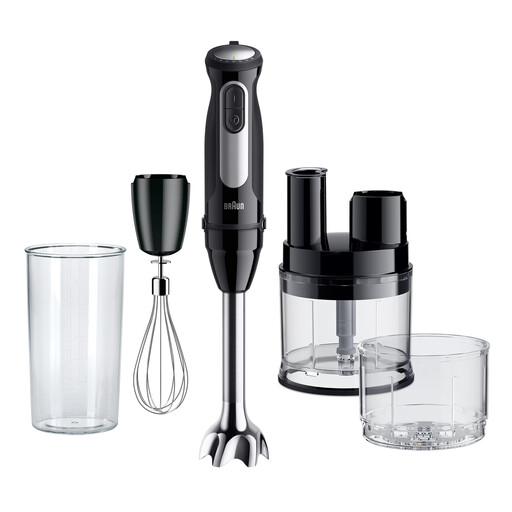 No image available
Consider this kit if you will use the food-preparation attachments as well as blending watermelon drinks. The product name specifies a 1000 W motor and PowerBell Plus. Allow space for the accessories and check the dimensions of the complete kit before buying.
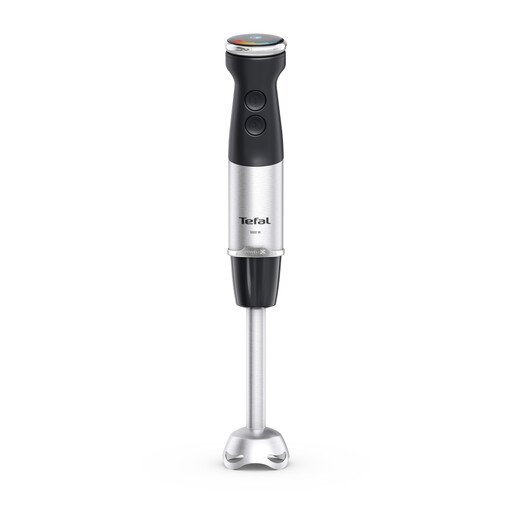 No image available
The 20 listed speeds make this a model to consider if you want to adjust blending intensity for a watery drink. Check that your vessel is tall enough for the portion you plan to make and that you have room to store the blender.
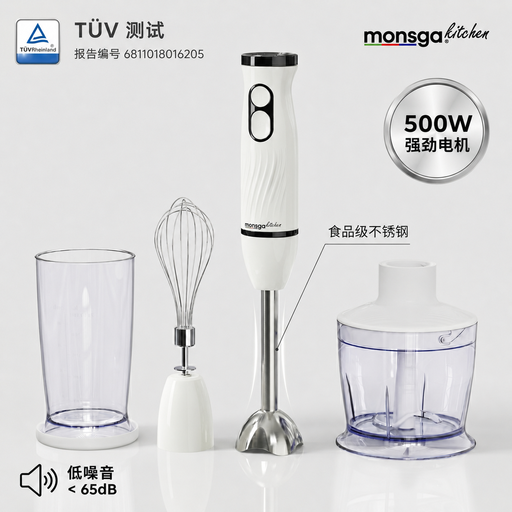 No image available
This set is worth considering if you want to blend drinks and occasionally whisk or chop. Its product name lists normal and turbo modes, a 500mL chopper, a 500mL beaker and a 1.5m cable; those two modes should not be mistaken for progressive speed adjustment. Check space for the whole set and follow the product instructions on short operating periods.
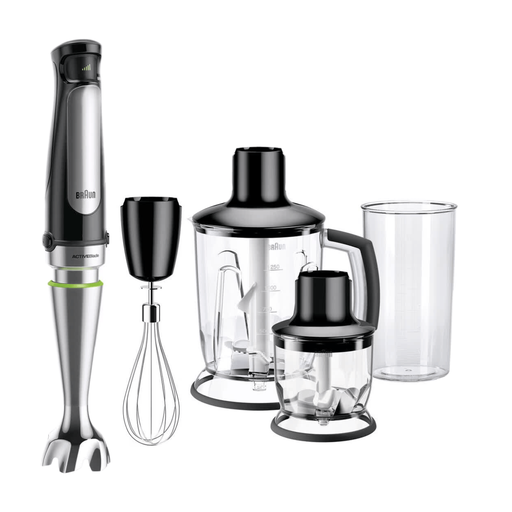 No image available
Consider the MQ7045 if adjustable control and the listed Splash Control design matter to you. Its product name also identifies EasyClick Plus. Check the exact included accessories and whether you have a suitably tall blending vessel; splash control does not remove the need to keep the blending head submerged.
 No image available
This is a simpler route to consider for occasional soft-fruit drinks if adjustable speed is not important to you. The product name includes a beaker and chopper, so plan storage for both. Use a suitably tall vessel and check the instructions for cleaning each part.
Yes, a hand blender is an option for watermelon drinks when a handheld appliance better fits your kitchen. Use a sufficiently tall vessel and keep the blending head submerged while it runs; adjustable speed can help if you want to begin gently.
Not necessarily for this soft-fruit job. Decide whether you need adjustable speed, a suitable vessel or tools for other preparation tasks rather than using the motor’s wattage as a promise of drink quality.
Unplug it before cleaning and follow the instructions for your model. Electrical Safety First advises checking which parts are dishwasher-safe; keep the motor unit away from water and spills rather than assuming every detachable component can be washed the same way.
Check your local authority’s electrical-recycling arrangements or an available retailer take-back route rather than putting the appliance in ordinary household waste. GOV.UK sets out the waste electrical and electronic equipment framework, while local collection options depend on where you live.