Small-batch dressing makers
If you mainly make modest amounts of yoghurt dressing, dips or sauces, you can blend in a suitable beaker or bowl and put the appliance away afterwards. Check that the vessel works for the quantities you usually prepare.


For occasional yoghurt dressing with little worktop space, choose a compact hand blender you can use in a suitable vessel and put away, rather than a countertop jug blender. If you blend frequently or want more control over splashing, look for adjustable speed and an anti-splash foot; choose a whisk or chopper bundle only if you will use those tools enough to justify storing and washing them.
If you mainly make modest amounts of yoghurt dressing, dips or sauces, you can blend in a suitable beaker or bowl and put the appliance away afterwards. Check that the vessel works for the quantities you usually prepare.
When a thinner mixture might splash across a cramped worktop, speed control and the position of the blending head matter. Tefal’s hand-blender guidance advises placing the head in the mixture before starting.
A whisk or chopper attachment may be useful if you regularly do those jobs as well as make dressing. Count the extra pieces you would need to store and wash before choosing a bundle.
Start with the space available for the blender and its blending vessel. Then decide whether adjustable speed or extra attachments will be useful often enough to earn their space.
| Concern | What to check | Who this matters to |
|---|---|---|
| Compact storage | Check whether the shaft detaches and where both the blender and a suitable vessel will fit. | If I make dressing occasionally, I want a small setup I can put away after each batch. Around 42% of consumers put compact storage and straightforward small-batch use first. |
| Splash and texture control | Look for adjustable speed and an anti-splash foot on the exact model; neither replaces keeping the head immersed while blending. | With a thinner dressing, I want to start gently without splashing the nearby worktop. Roughly 33% of consumers prioritise that control. |
| Useful attachments | Check the exact bundle contents and cleaning instructions against the whisking or chopping jobs you actually do. | If I also prepare herbs or whisk ingredients regularly, I want one motor unit to cover those tasks without collecting redundant tools. About 25% of consumers place that versatility first. |
A whisk and chopper add separate pieces to store, even if most batches only need the blending wand.
Choose a bundle when you can identify other recurring jobs for its attachments; otherwise, consider a simpler setup.
Extra pieces also take time to wash and put away.
A motor rating does not tell you how gently a particular model starts or how its blending foot handles splashes in a small batch.
Compare the exact model’s speed controls, foot design and instructions alongside its wattage.
Removing a moving blending head from a dressing can throw mixture onto the worktop.
Follow the model’s instructions: position the head in the mixture before starting and switch off before lifting it out.
Cleaning instructions can distinguish detachable tools from the motor unit and gears.
Unplug the blender before cleaning and follow the instructions for each part of your exact model; do not immerse the motor unit unless its instructions expressly permit it.
Braun’s UK MultiQuick range includes simple hand blenders and models with more controls and attachments.
Kenwood presents its Triblade range as compact, with basic and attachment-based variants.
Tefal’s UK hand blenders include models with variable-speed controls, anti-splash design and accessory bundles.
Bosch’s UK hand-blender range spans simpler models and models with additional speed controls or attachments.
These hand blenders cover simpler dressing preparation and models to consider if you also want adjustable controls or tools for other kitchen tasks. Check each model’s included parts against the space you have.
 No image available
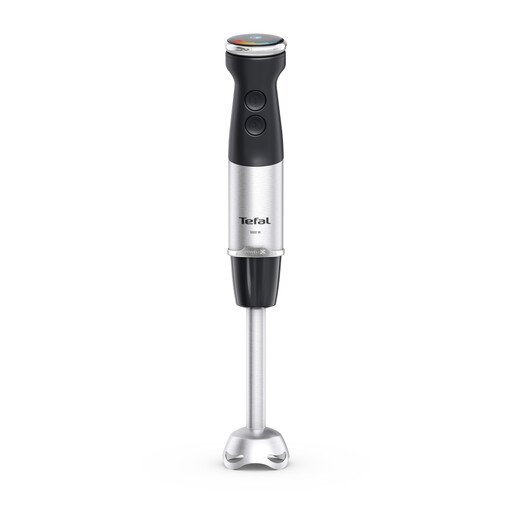
Consider this model if you want to adjust speed while blending dressing. Its title specifies 20 speeds; check that the blending vessel you plan to use suits your usual batch and storage space.
 No image available
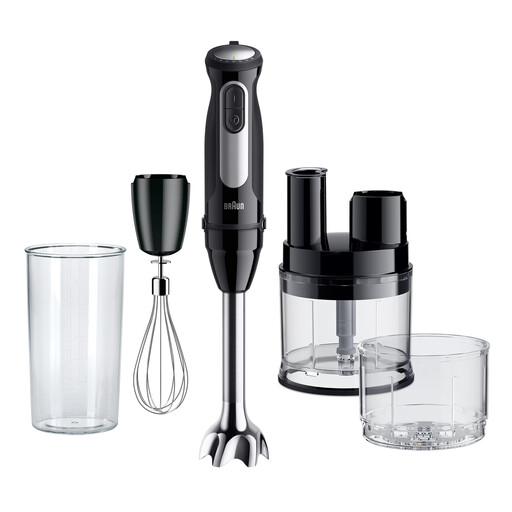
Consider the whisk and mini food processor named in this bundle if you will use them for jobs beyond dressing. Its title specifies a 1000W motor, beaker and PowerBell Plus; the additional tools need storage and washing.
 No image available
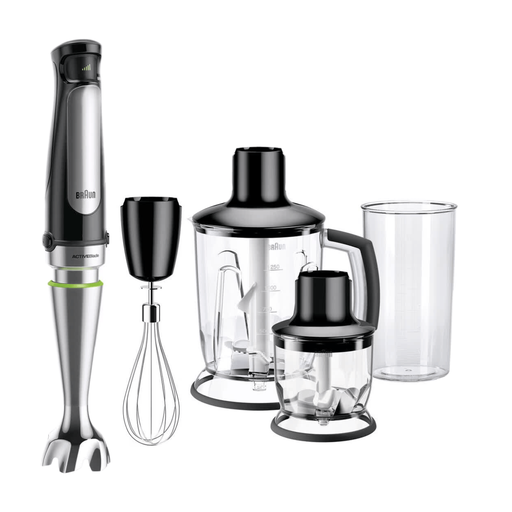
This model is worth considering if control around a crowded worktop is a priority. Its title names Splash Control and EasyClick Plus; check the exact bundle for a suitable blending vessel and follow its instructions for cleaning each part.
 No image available
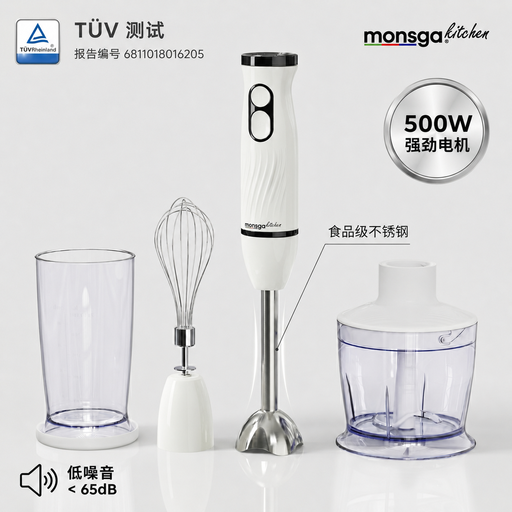
Consider its Normal and Turbo controls if those settings meet your dressing-making needs. The product name also lists a 500mL beaker and chopper, but describes the set as 2-in-1; confirm the exact supplied accessories before planning storage for them.
 No image available
For occasional dressing, consider this simpler model if you do not need extra speed settings. Its title specifies one-speed operation and EasyTwist; that fixed speed offers less adjustment when starting a thin mixture.
Usually not if you make small batches and have little worktop space: a hand blender can work in a suitable vessel and be put away afterwards. Choose a vessel that accommodates the amount you normally make.
Put the blending head into the dressing before starting, begin at a lower speed if your model allows it, and switch off before lifting the head out. An anti-splash foot can help, but does not replace those steps.
Do not assume you can: Tefal’s cited hand-blender guidance says not to use the appliance in a pan on the hob. Remove the pan from active heat and check the instructions for your exact model before blending hot food.
It depends on the model and attachment. Tefal’s cited guidance distinguishes dishwasher-safe detachable parts from the motor unit and gears, which must not go in the dishwasher; follow the cleaning instructions for your exact appliance.