If your workplace permits a personal hand blender and there is a suitable kitchen socket, a mains-powered model with adjustable speed and a detachable blending foot is a practical choice for making one avocado smoothie and cleaning up afterwards. Consider cordless instead when socket access or a trailing cable is the main obstacle, provided you can keep the battery charged; neither motor wattage nor an unmeasured quiet-operation claim establishes how a model will perform or sound in your office.
Who this is for
Office-policy-first smoothie maker
You need to know whether a personal appliance is allowed before choosing a model. Workplace controls differ: the Health and Safety Executive describes employers’ duty to maintain equipment to prevent danger, while Bingley Town Council’s policy requires prior approval for personal portable appliances.
Quick clean-up office-kitchen user
You want to make one drink without leaving food on a shared counter or equipment in the sink. A detachable blending foot and a suitable vessel matter more to this routine than a large set of attachments.
Socket-limited mobile worker
You prepare drinks away from a convenient kitchen socket or want to avoid a lead across the work surface. A cordless model addresses that constraint, but you will need a workable charging routine.
What matters when choosing
Mains-powered hand blender
Choose it when: Your workplace allows the appliance and you can blend beside a suitable kitchen socket.
Accept: You must position and manage the cable in a shared space.
Cordless hand blender
Choose it when: Socket access or a trailing lead regularly gets in the way of preparation.
Accept: Blending depends on a charged battery; cordless operation does not bypass workplace appliance rules.
| Concern |
What to check when buying |
Who this matters to |
| Office permission and electrical safety |
Ask whether personal kitchen appliances need approval, inspection or a designated place of use before choosing a model. |
If I cannot use my own appliance at work, its features will not help me make a lunchtime smoothie. Around 31% of consumers put permission and safe use first. |
| Clean-up and spills |
Check whether the blending foot detaches, how its food-contact parts must be washed and whether a suitable beaker is included. |
When I have only a short turn in the shared kitchen, I need to leave the counter and sink ready for the next person. For around 25% of consumers, easy clean-up is the primary concern. |
| Blending control |
Look for adjustable speed and a vessel suited to the amount you plan to make; do not use wattage alone as a texture test. |
I want to adjust the blend as I add liquid to my avocado drink, rather than rely on a single setting. Around 25% of consumers primarily care about control. |
| Socket access |
For cordless models, check the battery, charging method and stated runtime; for corded models, consider where the lead will run. |
If the preparation area has no convenient socket, I need a way to blend without a mains lead across it. Socket independence comes first for around 19% of consumers. |
Buying pitfalls
-
Buying before checking the office rules
A suitable blender is still unusable for this purpose if your employer does not permit it. Bingley Town Council’s personal-appliance policy, for example, requires prior approval and inspection; your workplace may set different conditions.
Ask the person responsible for facilities or workplace safety what is permitted before you buy or bring in an appliance.
-
Assuming every office appliance needs an annual PAT test
The Health and Safety Executive says annual portable appliance testing is not automatically required for every appliance in a low-risk office. Employers must still maintain electrical equipment to prevent danger.
Follow your employer’s inspection and approval process rather than assuming either an annual test or no checks at all.
-
Reading wattage as a smoothie or noise result
A rated motor wattage does not, by itself, tell you the texture of an avocado smoothie or how disruptive a blender will sound in a shared room.
Choose speed controls and cleaning features for your routine, and compare noise only where measurements use a comparable basis.
-
Choosing cordless without a charging plan
A cordless blender removes the mains lead during preparation but still needs charging. KitchenAid states up to 30 minutes of use before recharging for its Go 5KHBRV75BM; that is its stated runtime, not a promised number of drinks.
Check that the battery is included and decide when and where you would charge it.
Brands to consider for these hand-blender routes
Bosch
Bosch’s mains-powered MS6CA4150G is an example for users who want fixed speed choices, a detachable foot and supplied chopping and whisking accessories.
- Bosch lists 800 W, 12 speed settings plus turbo and a detachable metal blending foot for this model.
- It needs a suitable socket, and its AntiSplash feature is not a guarantee of mess-free preparation.
Braun
Braun’s mains-powered MQ7045X offers pressure-based variable speed and a beaker, chopper and whisk bundle for users who also want those attachments.
- Braun lists 850 W, seamless variable speed and a 1.2 m cord for the MQ7045X.
- Its listed 1.791 kg product weight and accessory bundle may be less convenient to carry or store at a desk.
KitchenAid
KitchenAid’s cordless Go 5KHBRV75BM addresses preparation away from a convenient socket.
- KitchenAid lists an interchangeable 12 V battery, removable blending arm and 1 L lidded jar; its stated runtime is up to 30 minutes before recharging.
- The battery needs recharging, so this route trades cable management during blending for battery management.
Joybuy hand blenders for this setting
These hand blenders offer corded options for an office smoothie routine where personal appliances are permitted and a suitable socket is available. Compare their controls, supplied accessories and clean-up requirements for the way you will make one drink.
 No image available
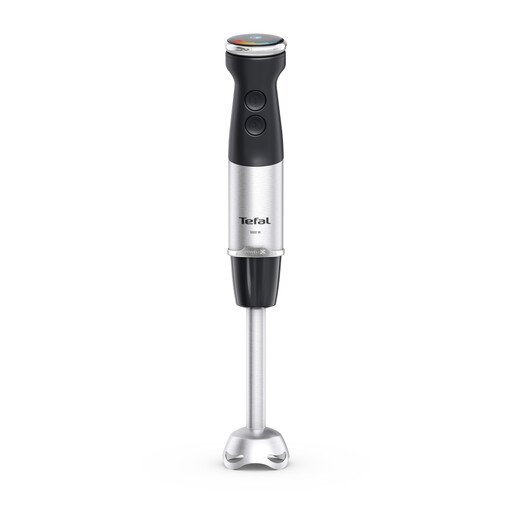
Tefal Quickchef+ HB6718G0 hand blender, 20 speeds
Consider this model if adjustable speed is important when preparing your drink. Its product name specifies 20 speeds; check the permitted place of use and allow time to clean the blending equipment afterwards.
View on Joybuy
 No image available
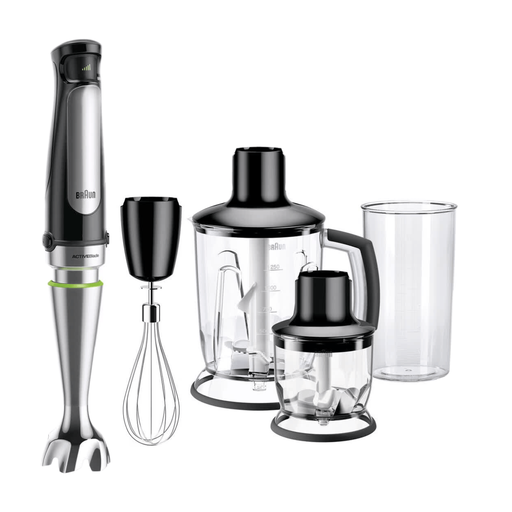
Braun MultiQuick 7 MQ7045 hand blender, ActiveBlade
Consider this model if you want pressure-adjusted speed while blending in the shared kitchen. Its product name identifies ActiveBlade, EasyClick Plus and Splash Control; confirm which blending vessel comes with this exact MQ7045 bundle before relying on one for a single drink.
View on Joybuy
 No image available
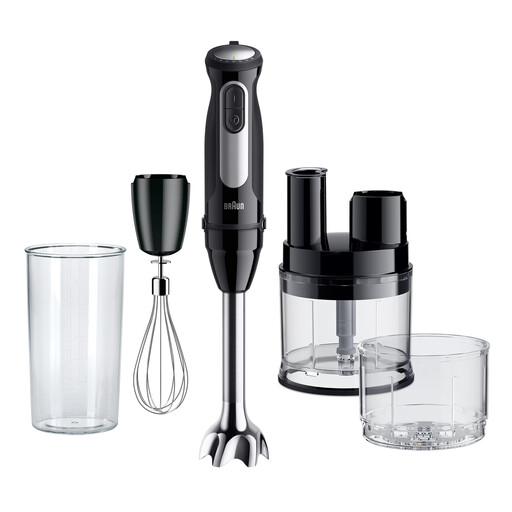
Braun MultiQuick 5 Pro MQ55755M, 1000 W with beaker
The supplied beaker makes this a model to consider when you want a dedicated container for one drink. Its product name also specifies a mini food processor and whisk; follow the model’s instruction not to operate it continuously for more than one minute.
View on Joybuy
 No image available
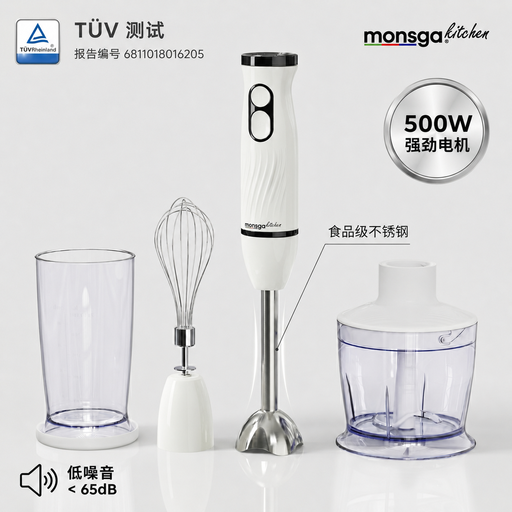
Monsga S100 hand blender and whisk, 500 ml beaker
Consider this bundle if you want a supplied vessel for your drink and a whisk for other tasks. Its product name specifies normal and turbo modes, a 500 ml chopper, a 500 ml beaker and a 1.5 m cable; plan where that cable will run, and follow the one-minute limit on continuous operation.
View on Joybuy
 No image available
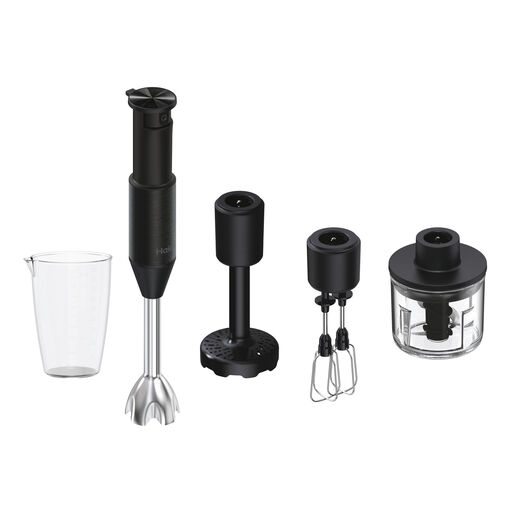
Haier Series 5 HHB5B5 hand blender, 1000 W
Consider this model if trigger-style speed adjustment and attachments for other kitchen tasks suit your routine. Its product name specifies dishwasher-safe parts; confirm whether a suitable blending vessel comes with the bundle, and follow the instructions for the electrical supply and operating time.
View on Joybuy
Common questions
Does a hand blender in a UK office need an annual PAT test?
Not automatically: the Health and Safety Executive says it is a myth that every portable appliance in a low-risk office needs annual portable appliance testing. Employers must maintain electrical equipment to prevent danger, and your workplace may have its own inspection or approval process.
Can I bring my own hand blender to work?
Check your employer’s rules before bringing it in; the blender’s specifications do not establish permission. Bingley Town Council, for example, requires prior approval and inspection for personal portable appliances, but the process at your workplace may differ.
What product-safety information should I check when buying for use in Great Britain?
Check the exact model’s instructions and seller details rather than assuming that a model name establishes its suitability for your workplace. Office for Product Safety & Standards guidance dated 25 March 2025 explains that the Electrical Equipment (Safety) Regulations 2016 set requirements for electrical equipment placed on the Great Britain market; your employer’s rules about using a personal appliance are a separate check.


