Small-batch lunchbox bakers
If you usually make one cake or a modest batch, a conventional hand mixer lets you mix without finding space for a separate stand and bowl.


For one small almond cake batter, start with a compact hand mixer that offers selectable speeds and removable beaters. A mixer with a rotating bowl makes more sense if you regularly prepare several batches or want mixing to continue while you work on other ingredients, but it needs more storage space.
If you usually make one cake or a modest batch, a conventional hand mixer lets you mix without finding space for a separate stand and bowl.
If flour, ground almonds or sugar escape when mixing begins, the first speed setting or a stated soft-start feature deserves particular attention.
If you make several cakes or cupcakes at a time, a rotating-bowl format may let you prepare other ingredients while the mixer runs. Allow for the bowl and stand when planning storage and washing-up.
For a small lunchbox cake, consider how much batter you normally make before deciding whether hands-free mixing is worth the extra equipment. Then look at how the mixer starts when dry ingredients are in the bowl.
| Concern | What to check | Who this matters to |
|---|---|---|
| Small-batch control | Check the exact model’s selectable speeds and supplied removable beaters. A handheld mixer still needs you to hold and guide it. | If I usually make one cake, I want a mixer I can guide and put away without a separate stand and bowl; around 42% of consumers put compact small-batch control first. |
| Gentle starts | Look for a documented low first speed or soft start, and use a bowl suited to the batch size. | When dry flour or ground almonds scatter as I begin, I want to start gently before raising the speed; roughly 33% of consumers prioritise keeping ingredients contained. |
| Hands-free mixing | Check whether the bowl rotates, its capacity and where the stand and bowl will be stored. | If I bake several batches, I want mixing to continue while I prepare other ingredients and can accommodate a separate bowl; about 25% of consumers put hands-free batch preparation first. |
A motor rating does not, by itself, tell you how well different brands’ mixers will handle your batter. The Kenwood QuickMix HMP30.A0WH and Bosch MFQ4020GB each list five speeds plus turbo, while KitchenAid lists nine speeds and soft start for the 5KHM9212.
Compare speed control, the supplied beaters, handling and cleaning instructions for the exact model rather than treating wattage as a performance ranking.
Kenwood GB lists a rotating 3.5 L bowl and a 2.612 kg weight for the Chefette HMP54.000SI, compared with 1.05 kg for its conventional QuickMix HMP30.A0WH. The bowl format offers hands-free help but takes more room to store.
Choose it when repeated batches or mixing while you prepare other ingredients is part of your routine; otherwise, consider a compact handheld format.
The separate bowl and stand also add parts to put away and clean.
Shared mixing tools need particular attention when almond ingredients and food for someone with a nut allergy are prepared in the same kitchen.
Check the intended eater’s needs and the cleaning instructions for the mixer’s tools and food-contact surfaces. If cakes are supplied through a food business, follow the allergen controls applicable to that activity.
Kenwood GB lists both conventional QuickMix hand mixers and the Chefette bowl-and-stand format, so the relevant choice is between compact handling and a separate rotating bowl.
Bosch GB lists the MFQ4020GB as a conventional handheld option for buyers comparing speed control and supplied mixing tools.
KitchenAid UK presents the 5KHM5110 for small everyday jobs including cake batter, while the 5KHM9212 offers more speed settings and accessories.
These conventional handheld models suit shoppers considering a mixer for a small cake batter. Check the exact variant’s controls and cleaning instructions before deciding which fits your routine.
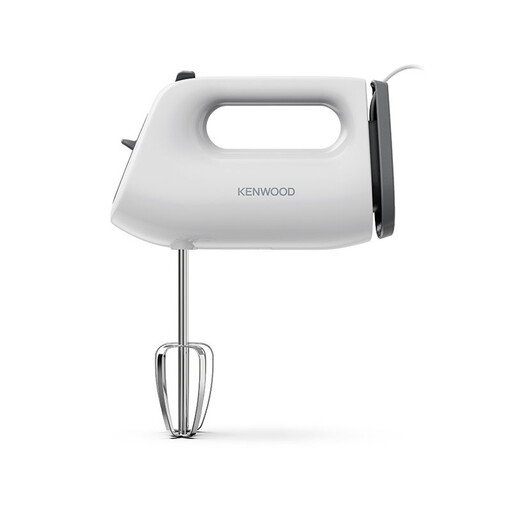 No image available
For a small cake batter when a handheld mixer with several settings suits your routine.
The listed variant has a 300 W rating, three speeds and twin beaters. Confirm which removable parts can go in the dishwasher: the cleaning information for the main body is inconsistent, so follow the instructions for the exact unit rather than assuming it can be immersed.
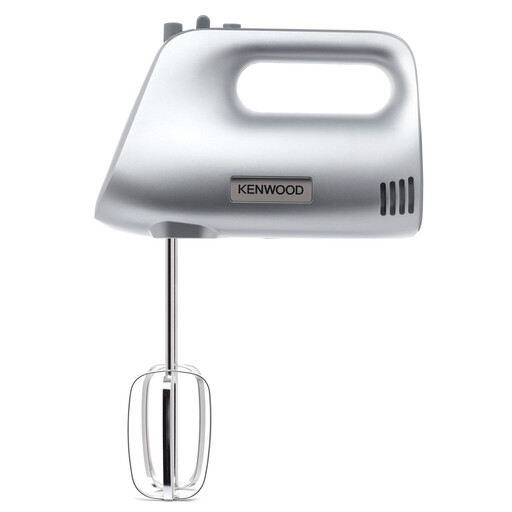 No image available
For a small cake batter if you prefer a conventional handheld mixer.
If a gentle start matters when adding ground almonds or flour, check this exact variant’s speed settings before buying. Confirm the supplied attachments and their cleaning instructions too.
No particular wattage follows from making one small cake batter. Compare the exact mixer’s speed control, supplied beaters and handling instead of using motor ratings from different brands as a measure of finished-batter quality.
Begin with the beaters in the bowl on the lowest available setting, then increase speed once the dry ingredients are incorporated. KitchenAid says the 5KHM9212’s soft start is intended to reduce ingredient clouds; Kenwood describes the Chefette HMP54.000SI’s slow-speed start as a way to reduce flour scatter.
Check the instructions for the exact beaters and model before putting them in the dishwasher. Kenwood GB lists dishwasher-safe status for the QuickMix HMP30.A0WH, but that does not establish how to clean another variant, its accessories or the motor body.
GOV.UK’s allergen guidance addresses food businesses in England, Northern Ireland and Wales; it does not establish labelling duties for a private household lunchbox. If cakes are sold or supplied through a food business, check the requirements for your location and sales format. The guidance identifies almonds among the tree nuts covered by food-business allergen rules.