Occasional birthday-cake host
You mainly want to whip cream and perhaps mix one cake batter. Straightforward speed control, useful supplied attachments and storage space may matter more than hands-free mixing.


For an occasional birthday cake, choose a compact hand mixer with several speeds and attachments suited to whipping cream; start slowly in a stable, high-sided bowl. A dedicated wire whisk, finer speed control or a comfort-focused handle matters more if you also bake regularly or mix batter. Consider a stand mixer if you routinely need larger batches or hands-free mixing.
You mainly want to whip cream and perhaps mix one cake batter. Straightforward speed control, useful supplied attachments and storage space may matter more than hands-free mixing.
You expect to make cream, meringue, frosting or batter throughout the year. A wider choice of speeds and a dedicated whisk may be worth checking against the accessories supplied with a simpler model.
You will also mix cake batter and want a secure grip while moving the mixer around the bowl. Controlled acceleration and a stable bowl matter because a hand mixer still needs to be held and guided.
Start with the cream you need to whip, then decide whether future baking justifies extra attachments or finer controls. For occasional cream and cake batter, compare the exact box contents before treating a higher wattage figure as an upgrade.
| Concern | What to check | Who this matters to |
|---|---|---|
| Cream without unnecessary bulk | Check that the model is described for cream, offers several speeds and supplies an attachment suitable for your recipe. | If cream for one party is my main task, I want a mixer I can use for the cake and put away afterwards. Around 50% of consumers put that occasional-use need first. |
| Control for other recipes | Compare speed settings and the exact attachments supplied, particularly if you want a dedicated wire whisk; do not compare wattage alone across motor types. | When I make meringue, frosting or batter as well as cream, I want controls and tools that fit those different tasks. That broader baking need comes first for around 30% of consumers. |
| Handling and splatter | Look for a secure grip and a controllable low-speed start; use a stable, high-sided bowl. | If I will hold the mixer through several preparations, I care about keeping a steady grip and the ingredients in the bowl. Around 20% of consumers make handling and mess control their primary concern. |
A wattage figure does not, by itself, tell you how suitable a mixer is for cream or make different motor designs directly comparable. KitchenAid’s buying guidance also treats wattage as only one indicator of power.
Check the exact model’s speeds, motor type where stated and supplied attachments before using wattage to distinguish two candidates.
Cream and loose ingredients can splash, adding to clean-up and bringing food close to the appliance body or cable.
Set a stable, high-sided bowl on a secure surface, begin at a low speed and increase it once the ingredients are contained.
For a mixer intended for UK domestic use, plug suitability and clear retailer details are practical checks before purchase. Electrical Safety First advises buying from a reputable retailer and checking the plug and fuse.
Confirm the plug information for the exact appliance and keep the retailer and manufacturer support details.
Included tools vary: Kenwood lists beaters and kneaders with the QuickMix Go HMP40.000GY, while the KitchenAid 5KHM9212 range lists a 16-wire whisk.
Read the box contents for the precise model and variant, especially if a dedicated whisk is important to your recipes.
If the supplied tools do not meet that need, you may have to change models or find a separately available accessory permitted for your mixer.
These models illustrate different features to compare; the details apply to the named ranges, not every mixer made by each brand.
The QuickMix Go HMP40.000GY is a compact, 350 W, five-speed option with a clip-on storage case. Kenwood describes its speed control as suitable for cream and small or simple tasks.
The MultiMix 3 HM3100WH offers five variable speeds, turbo and a soft-grip handle for buyers who also prepare batter.
The 5KHM9212 range has nine speeds, soft start and a supplied 16-wire whisk, alongside beaters, dough hooks and a mixing rod.
These Kenwood hand mixers are options to examine for occasional cream whipping and cake preparation. Check the precise attachments and plug information for the model you choose.
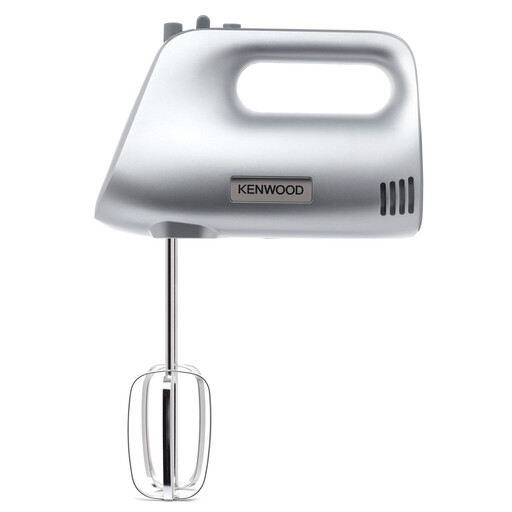 No image available
Consider this hand mixer if the party cake calls for whipped cream and you may also mix batter. Check the exact speed settings and box contents before choosing it, particularly if you want a dedicated wire whisk.
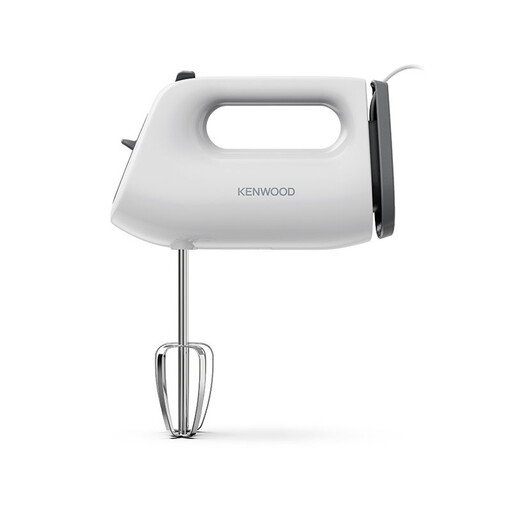 No image available
For occasional cream preparation, this model offers three speeds and twin beaters, with a stated 300 W rating. Check whether those beaters suit your recipe; confirm the precise contents and care instructions before relying on a splash guard or dishwasher cleaning.
Yes, a hand mixer is suitable for a small-to-moderate batch of whipped cream; Electrical Safety First identifies cream whipping as a use for this type of appliance. If you regularly prepare larger batches or want to mix hands-free, consider a stand mixer instead.
Use a stable, high-sided bowl and start at a low speed before increasing it. This gives loose ingredients time to settle into the bowl rather than sending them over its edge.
Unplug the mixer before cleaning and do not immerse its body in water. Check the model’s manual before putting detachable parts in a dishwasher, and stop using the appliance if you notice smoke, sparking, unusual smells or visible damage.
For use in Great Britain, confirm that the mixer is intended for UK domestic use and check its plug and fuse information before purchase. GOV.UK guidance distinguishes the electrical-equipment rules applying in Great Britain from those applying in Northern Ireland; if delivery is to Northern Ireland, confirm the applicable product information with the retailer or manufacturer.
Registration can help the manufacturer contact you about a recall. You can also check product alerts and recalls through the UK Office for Product Safety and Standards.