What matters when choosing?
Decide whether you need the freedom to select your own bowl or would rather use a supplied rotating bowl for repeated batches. Then consider how you will add ingredients and how long you will hold the mixer.
| Concern |
What to check |
Who this matters to |
| Batch size and bowl choice |
Compare your planned batter volume with usable bowl space, leaving headroom. A conventional hand mixer lets you select the bowl; a bowl combination uses its supplied bowl. |
If I’m making several bowls of batter, I need each batch to fit without crowding the bowl; around 37% of consumers put bowl flexibility first. |
| Controlled mixing |
Look for a usable low setting and, if important to you, a documented soft-start feature. Check that beaters are supplied for batter. |
When I add flour, I want to bring it in gently rather than send it over the rim; around 27% of consumers make controlled incorporation their main concern. |
| Hand comfort |
Check the exact model’s stated weight, handle and whether you can adjust its controls while holding it. |
If I’m guiding the mixer through several batches, I want a grip I can manage comfortably; around 18% of consumers prioritise hand comfort. |
| Compactness and useful features |
Compare storage needs, supplied tools and speed settings against the baking tasks you actually plan to do. |
I want a mixer I can store easily without collecting tools I rarely use; around 18% of consumers put compactness and a simpler feature set first. |
Brands to consider for these mixer features
These brand ranges offer different bowl arrangements, controls and supplied tools. Check the exact model: a feature documented for one mixer does not apply to every product from its maker.
Kenwood
Kenwood’s hand-mixer range includes conventional QuickMix models and the Chefette hand-mixer-and-bowl arrangement.
- Kenwood lists stainless-steel tools on selected QuickMix models and a 3.5 L rotating bowl for the Chefette.
- Power, supplied tools and usable bowl arrangement vary by model; match the exact variant to your batch plan.
Bosch
Bosch offers documented differences in speed settings and handling across its hand-mixer models.
- Bosch lists four speeds plus turbo, stainless-steel turbo whisks and dough hooks, and a 0.9 kg net weight for the MFQ2420BGB. Its MFQ4020GB has five speeds plus turbo and a soft-touch handle.
- Those features belong to different models. Check the exact model’s current availability and supplied tools.
KitchenAid
The KitchenAid 5KHM9212 is a feature-rich hand-mixer option for bakers who want graduated speed control.
- KitchenAid documents nine speeds, soft start, turbo beaters, a whisk, dough hooks and a soft-grip handle for this model. It identifies speed 5 as a cake-batter setting.
- Extra settings and tools do not establish how much of your carrot cake recipe will fit in a bowl or how the mixer will feel during repeated batches.
Smeg
The Smeg HMF01 is an option for buyers comparing gradual speed control and included accessories.
- Smeg documents nine speeds, turbo, Smooth Start, three stainless-steel accessory types and an anti-slip handle for the HMF01.
- Those specifications do not establish its capacity for a particular batter quantity; check how its tools and controls fit your planned batches.
Joybuy hand mixers for your own bowl
These conventional hand mixers suit a workflow where you choose the mixing bowl and divide buffet carrot cake batter into manageable batches. Check the recommended batter quantity and running guidance for the exact model before settling on a batch plan.
 No image available
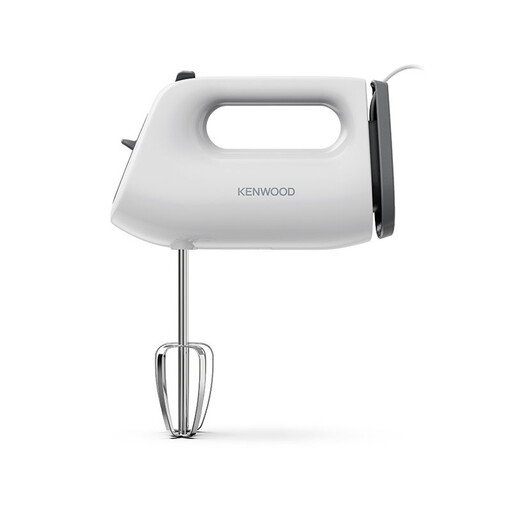
Kenwood QuickMix Lite HMP10.00WH hand mixer, white
Consider this model for mixing successive batches in a bowl you choose, particularly if you want a low setting when adding flour.
Its product name specifies 300 W, three speeds and twin beaters, and describes the beaters as dishwasher-safe. Check the recommended batter quantity, continuous running guidance and supplied electrical variant for your use.
View on Joybuy
 No image available
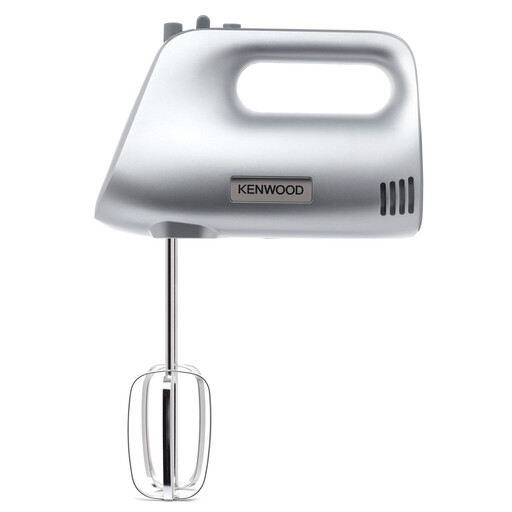
Kenwood QuickMix HMP30.A0SI hand mixer, silver
Consider this conventional hand mixer if you want to use your own bowl for successive buffet batches.
Check which beaters and speed settings come with the HMP30.A0SI variant. Before planning a particular batch size, also confirm its recommended batter quantity, running guidance and supplied electrical variant.
View on Joybuy
Frequently asked questions
Can I use a hand mixer for buffet carrot cake batter?
Yes, if you divide the recipe into batches that fit your bowl and can comfortably guide the mixer through them. Which? reports that the hand mixers it tested eventually made sponge cake batter, although mixing time, noise and handling differed; that result does not establish a maximum quantity for your carrot cake recipe.
Should I use dough hooks for carrot cake batter?
Use the supplied beaters for cake batter unless your recipe calls for a different tool. KitchenAid identifies beaters and speed settings for cake batter, while dough hooks are intended for kneading dough.
What should I check before using an electric hand mixer in Great Britain?
Confirm the exact supplied model, plug, voltage and accompanying product information rather than relying on an image of a similar variant. The Office for Product Safety & Standards explains that the Electrical Equipment (Safety) Regulations 2016 set requirements before electrical equipment is placed on the Great Britain market.
Does a catered carrot cake buffet need allergen information?
If the buffet is run by a food business, check the allergens in the actual recipe and provide information appropriate to how the cake is served or packaged. GOV.UK guidance requires food business operators to provide allergen information for prepacked and non-prepacked food and manage allergens during preparation. For food prepacked for direct sale, Food Standards Agency caterer guidance calls for the food name and a full ingredients list with allergens emphasised on the packaging.


