Frequent buttercream bakers
If you mix buttercream regularly, controllable speeds and a comfortable grip may matter more than choosing the smallest mixer. You will still need to hold and guide a hand mixer throughout each batch.


For buttercream in a shared kitchen, choose a hand mixer you can start slowly and increase gradually, with beaters suited to the mixture. If you make it often, consider how comfortable the mixer is to hold throughout a batch; whatever your frequency, check how its removable tools are cleaned and where it will be stored.
If you mix buttercream regularly, controllable speeds and a comfortable grip may matter more than choosing the smallest mixer. You will still need to hold and guide a hand mixer throughout each batch.
If other people use the worktop, a gentle start helps you incorporate icing sugar before increasing speed. A deep bowl and prompt cleaning still matter, even with a soft-start feature.
If you make icing, cakes or cream occasionally, a hand mixer can be put away between jobs rather than occupying a permanent place on the worktop. Check that its tools have somewhere practical to go too.
Start with control while incorporating icing sugar, then weigh up handling, cleanup and whether you will use any extra attachments.
| Concern | What to check | Who this matters to |
|---|---|---|
| Buttercream control | Check for a low starting speed and enough selectable settings to increase speed gradually. Compare beaters for the exact model. | If I make buttercream regularly, I want to work through butter and sugar without relying on one high setting; around 36% of consumers put controlled mixing first. |
| Containing mess | Look for a genuinely slow initial setting or a documented soft-start feature; use a deep bowl when adding icing sugar. | When others share the worktop, I want to keep sugar and butter in the bowl rather than leave a cleanup job for them; roughly 29% of consumers prioritise keeping mess contained. |
| Cleaning and storage | Check how the removable tools are washed and how much cupboard space the mixer and attachments need. | I need to clear the shared space after mixing and put everything away without leaving tools behind; around 21% of consumers make cleanup and storage their main concern. |
| Other baking tasks | Check which beaters or whisks are included and whether extra tools match the jobs you actually do. | If I bake only occasionally, I want the supplied tools to cover my likely recipes without storing accessories I will not use; approximately 14% of consumers put versatility first. |
Sugar or softened butter can escape the bowl, leaving communal surfaces to clean.
Start on the lowest practical setting, add sugar gradually and raise the speed once the ingredients have begun to combine. KitchenAid describes the soft start on its 5KHM9212 as intended to limit icing-sugar clouds.
A dishwasher-safe description does not, by itself, tell you how to clean the electrical motor housing.
Follow the instructions for the exact model, checking removable tools and the motor body separately before washing either.
A motor rating is a model specification, not a like-for-like buttercream test across different mixers.
Compare the exact speed controls, supplied beaters and handling features alongside the stated rating.
Buttercream residue on tools and shared surfaces creates a practical handover problem. If the kitchen operates as a food business, cleaning also needs to fit its procedures.
Agree who cleans the beaters, housing and work surface after use. GOV.UK advises food businesses to set up and record a cleaning schedule and demonstrate that cleaning is effective.
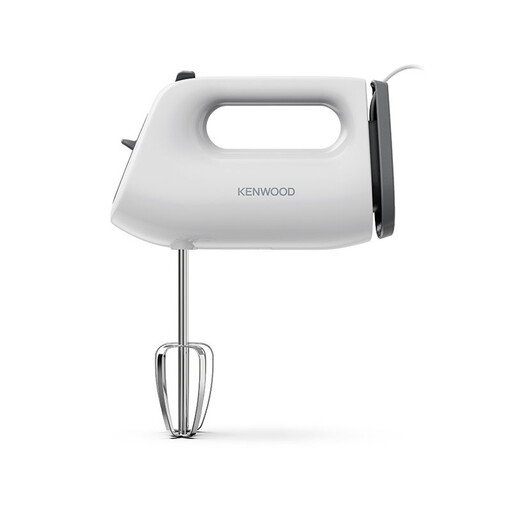
Kenwood has hand-mixer models with different motor ratings and tool sets, including the QuickMix HMP30.A0WH.
KitchenAid offers a five-speed 5KHM5110 and a nine-speed 5KHM9212 with different controls and supplied tools.
Bosch’s MFQ4020GB is a five-speed hand mixer with turbo control and a soft-touch handle.
This hand mixer is relevant if you want to make buttercream in a shared kitchen and put the appliance away afterwards. Compare its three speed settings with the level of control you want for your usual batches.
 No image available
A hand-held option for making buttercream where the mixer needs to be put away after use.
The product title specifies 300W, three speeds and twin beaters. Check the instructions for this exact model before cleaning its removable tools or motor body.
Start with controllable speeds and the beaters supplied for the exact hand mixer, then consider its stated motor rating alongside those features. A wattage figure alone is not a comparable buttercream performance test.
Begin on the lowest practical speed, add sugar gradually and use a deep bowl before increasing speed. KitchenAid says the soft start on its 5KHM9212 is intended to limit icing-sugar clouds, but bowl choice and technique still matter.
Check the cleaning instructions for the exact model and treat its removable tools and electrical motor body as separate questions. A dishwasher-safe description should not be taken as permission to put the entire appliance in the dishwasher.
If the kitchen operates as a food business, GOV.UK advises setting up and recording a cleaning schedule and demonstrating effective cleaning. Do not assume that every shared domestic, workplace or community kitchen has the same classification.
Consider a stand mixer if holding and guiding a hand mixer through your usual batches becomes tiring, provided you have room to store it. For occasional batches, a hand mixer avoids committing permanent worktop space; there is no single batch size at which everyone needs to switch.