Occasional cheesecake bakers
If you make one cheesecake and bake only occasionally, focus on beaters, usable speed settings and a mixer you are comfortable holding. A dedicated bowl may add more equipment than your routine calls for.


For occasional cheesecake filling, choose a hand mixer with beaters and a low setting you can use before increasing the speed. If you are preparing several recipes, also consider how comfortable it is to hold and how readily you can clean its tools; a wider accessory set or a dedicated rotating bowl is worth considering only if it suits the rest of your baking and the size of your batches.
If you make one cheesecake and bake only occasionally, focus on beaters, usable speed settings and a mixer you are comfortable holding. A dedicated bowl may add more equipment than your routine calls for.
If you are preparing several recipes in one session, consider handle comfort, attachment changes and cleaning between recipes, particularly when ingredients differ.
If the mixer will also be used for whipping or recipes that call for other tools, check the attachments supplied with the exact model rather than choosing on its speed count alone.
For bake-sale cheesecake filling, start with the speed and beaters you need for the recipe, then weigh up comfort, cleaning and any other baking you plan to do.
| Concern | What to check | Who this matters to |
|---|---|---|
| Mixing control | Check the available low settings and whether the exact model has a slow-start function; make sure beaters are supplied. | If I want to bring cheesecake ingredients together gradually, I need a setting I can begin with before increasing speed. Around 36% of consumers put that control first. |
| Batch comfort | Consider the mixer’s weight and handle, or compare a bowl-combi’s stated capacity with your recipe yield. | When I have several batches to prepare, holding a mixer repeatedly or working with a dedicated bowl becomes a practical choice. Comfort and capacity come first for around 29% of consumers. |
| Cleaning between recipes | Check how the tools detach and which parts the instructions permit you to wash or put in a dishwasher. | If my bake-sale recipes contain different allergens, I need a workable way to clean tools and keep utensils separate. Around 21% of consumers prioritise that workflow. |
| Use beyond the bake sale | Confirm which whisk, hooks or other attachments come with the exact variant and whether you will use them. | If I will also make recipes that call for other mixing tools, the supplied attachments affect what I choose. That broader use is the main concern for around 14% of consumers. |
A motor’s electrical rating does not, by itself, tell you how a hand mixer will handle cheesecake filling. Manufacturer ratings for different designs are not a like-for-like measure of mixing results.
Compare speed controls, start behaviour and the supplied beaters for the exact model before using wattage to narrow your choice.
Kenwood lists a 3.5 L rotating bowl for its Chefette HMP54.000SI. A dedicated bowl may suit repeated batches, but its capacity and the space it occupies still need to work for your recipes and kitchen.
Compare your recipe yield with the bowl capacity, and decide whether using your own bowls with a handheld mixer would be more practical.
For community and charity events in England, Northern Ireland and Wales, GOV.UK and the Food Standards Agency say food supplied must comply with food law and be safe to eat. A mixer choice does not replace careful handling of ingredients and equipment.
Keep ingredient information clear, clean food-contact tools and surfaces between recipes, and check with the relevant local authority when you need guidance for your sale. Anaphylaxis UK advises using hot water and detergent on surfaces and separating utensils for allergy-friendly bakes.
Kenwood’s range includes straightforward handheld mixers and the Chefette hand-mixer-and-bowl format.
KitchenAid offers hand mixers with different speed counts and attachment sets for home baking.
Bosch’s MFQ4020GB is a conventional hand-mixer option with variable speeds and removable tools.
These handheld Kenwood models are options for mixing cheesecake filling with beaters. Compare their controls and the cleaning instructions for the exact variant; neither is a dedicated rotating-bowl model.
 No image available
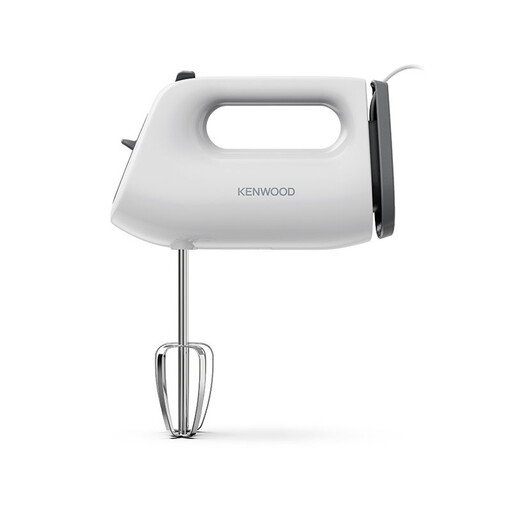
Consider this handheld model if you want beaters for cheesecake filling and can work with three speed settings.
The listing describes twin beaters, a slow-speed start and a splash guard. Check the instructions for which detachable parts are dishwasher safe; do not immerse the motor body.
 No image available
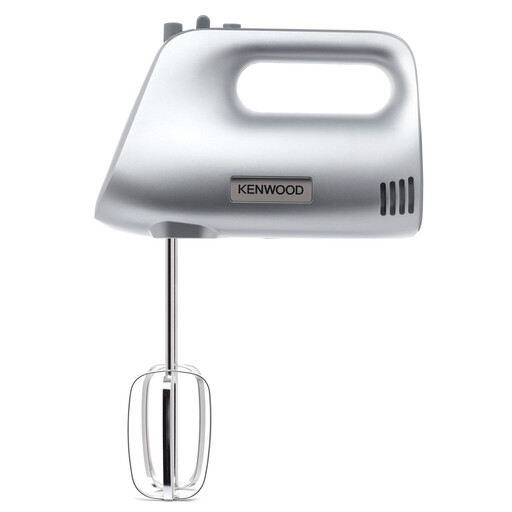
Consider this handheld model for cheesecake filling and other baking if its controls and supplied tools suit the recipes you make.
Its listing describes multiple speed settings, turbo pulse and beaters. If a gradual start or additional attachments matter to you, confirm the controls and included tools for the HMP30.A0SI specifically; also check its cleaning instructions.
Choose a mixer that lets you begin on a low setting and increase speed as needed. Kenwood lists five speeds plus turbo for its HMP30.A0WH and Bosch lists the same number of speeds for its MFQ4020GB; KitchenAid also lists a soft-start function for the nine-speed 5KHM9212. Check the controls of the precise model you intend to buy.
No: a handheld mixer may suit a single cheesecake or batches made in your own bowls. If repeated batches make a dedicated rotating bowl useful, compare the recipe yield with the 3.5 L capacity Kenwood lists for its Chefette HMP54.000SI and allow for its storage space.
Clean tools and food-contact surfaces between recipes, and keep utensils for allergy-friendly bakes separate where possible. Anaphylaxis UK advises cleaning surfaces with hot water and detergent and providing allergen information to helpers; no choice of hand mixer alone prevents cross-contact.
Keep ingredient and allergen information clear for the food you provide, and check which duties apply to your event. GOV.UK and the Food Standards Agency say food at community and charity events in England, Northern Ireland and Wales must be safe; their guidance for food businesses sets out allergen-information duties where those rules apply. For a Scotland-specific conclusion, consult Food Standards Scotland or your local authority.