Occasional cheesecake makers with limited storage
You want a straightforward mixer for cream cheese, sugar and cream, with beaters that can be removed, cleaned and put away after use.


For occasional cheesecake filling, choose a hand mixer with detachable beaters, several speeds and a straightforward way to remove the attachments. If several people will use it regularly, finer speed control and comfortable handling may matter more than extra accessories; everyone will still need a clear routine for cleaning and storing the shared equipment.
You want a straightforward mixer for cream cheese, sugar and cream, with beaters that can be removed, cleaned and put away after use.
Several people may use the mixer regularly, making accessible speed controls, a comfortable grip and simple attachment changes worth considering.
You need a cleaning and allergen-control routine for the equipment and work area. If the kitchen operates as a food business, check registration requirements separately from the mixer purchase.
For cheesecake filling in a shared kitchen, start with the cleaning routine, then consider control at low speeds, handling during repeated use and space for storage.
| Concern | What to check | Who this matters to |
|---|---|---|
| Cleaning and allergen control | Check how the beaters detach and how the model instructions say to clean each part. For a food business, fit the mixer into the kitchen’s allergen-control procedures. | When others will use the same equipment, I need a repeatable way to clean it between recipes and avoid allergen cross-contact. Roughly 36% of consumers would put that shared-equipment routine first. |
| Controlled starts | Look for selectable lower speeds; check the exact model for soft start if keeping loose ingredients in the bowl is a priority. | I want to begin combining the filling without sending loose ingredients over a shared worktop. Around 29% of consumers would make controlled mixing their primary concern. |
| Comfort during use | Consider the listed weight, grip and position of the speed controls. Treat unmeasured noise descriptions cautiously. | If I use the mixer repeatedly, I need it to feel manageable while I hold it over the bowl. Approximately 21% of consumers would prioritise comfortable handling. |
| Simple storage | Check the mixer’s size and whether the attachments you would use have a practical place to go. | I make cheesecake occasionally and need to put the mixer away without keeping track of unnecessary pieces. About 14% of consumers would put compact, uncomplicated storage first. |
Bosch Home UK gives connection ratings for its MFQ2420BGB and MFQ4020GB, while KitchenAid UK describes a DC motor in its 5KHM9212. Those figures do not establish a comparable ranking for mixing cheesecake filling.
Check speeds, beaters, handling and the cleaning instructions against your own routine rather than treating the largest wattage figure as a result.
The mixer body, bowls and work surfaces also form part of a shared cleaning routine. Food Standards Agency guidance for food businesses calls for controls that protect food from allergen cross-contamination.
Agree how equipment and surfaces will be cleaned and managed between recipes; where food is sold, follow the business’s allergen-control procedures.
More attachments give shared-kitchen users more pieces to identify, clean and return to the right place.
If cheesecake is the main task, decide whether beaters and usable speed control cover your needs before choosing a larger accessory set.
Features and availability can differ between exact model numbers, even within one manufacturer’s hand-mixer range.
Confirm the model number, included attachments and availability before ordering rather than substituting a similar name.
Bosch Home UK lists straightforward hand mixers with detachable attachments and selectable speeds.
Braun Household GB’s HM 3100 WH is relevant when several users want adjustable speeds and a soft-grip handle.
KitchenAid UK lists both a compact five-speed hand mixer and a nine-speed model with a broader accessory set.
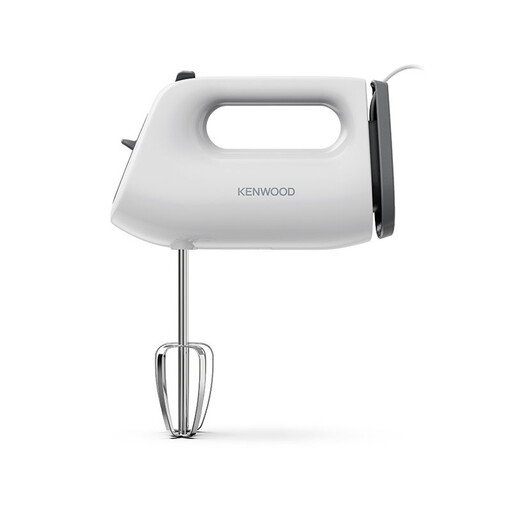
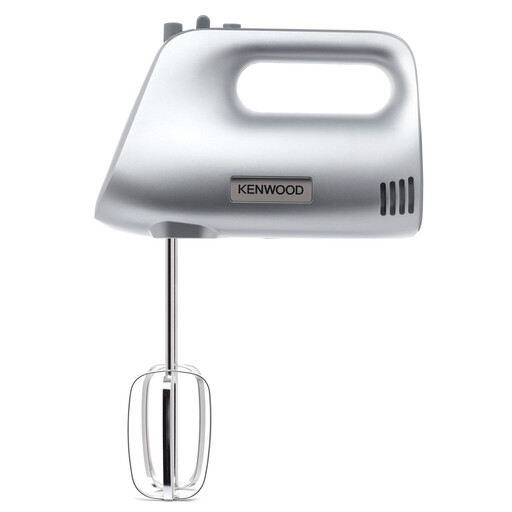
These Kenwood hand mixers are choices to assess for cheesecake filling in a shared kitchen. Compare their stated controls and attachments with the cleaning and storage routine you need.
 No image available
For occasional cheesecake filling, assess whether its three speeds give you enough control when starting the mixture.
The white model is listed at 300 W with twin beaters. For shared cleaning, follow the instructions to wipe the mixer body with a damp cloth and not immerse it; check the exact model instructions before putting any detachable parts in a dishwasher.
 No image available
For a mixer that several people will use, check whether this model’s speed controls and attachment-release method suit each user.
Before setting a shared cleaning and storage routine, confirm the instructions for its attachments and decide where each piece will be kept.
Not necessarily: controllable speeds, suitable beaters and comfortable handling are more useful checks for this task than wattage alone. KitchenAid UK’s DC motor rating and Bosch Home UK’s connection ratings do not provide a common test of cheesecake-mixing performance.
Begin on the lowest available speed and increase it as the ingredients combine. If a gradual start matters to you, check the exact model for soft start; KitchenAid UK describes this feature on the 5KHM9212.
A shared mixer needs a cleaning and allergen-control process, not just removable beaters. For food businesses, Food Standards Agency guidance calls for controls against contamination and protection of non-allergenic food; manage the beaters, mixer body and work surfaces under the kitchen’s procedures.
If you start or take over a food business in the UK, the Food Standards Agency says to register with the local authority at least 28 days before trading or food operations begin. Sharing a kitchen for private cooking does not, by itself, mean you are operating a food business.