Buffet baker making repeated batches
You need a workable way to mix several bowls of cake batter, with control over each batch, without committing to a full-size stand mixer.


For manageable batches of chocolate cake batter, a handheld mixer lets you work in a bowl you choose and stores compactly. If you expect to mix several batches, a hand mixer with a rotating bowl offers a more contained workflow but takes up more space. Whichever format you choose, follow the recipe’s mixing instructions and check the exact model’s supplied tools.
You need a workable way to mix several bowls of cake batter, with control over each batch, without committing to a full-size stand mixer.
You also make icing or whipped toppings, but want a mixer that can go back into a cupboard or drawer after use.
You want to compare beater designs and speed controls because stopping to scrape the bowl interrupts your batter or icing preparation.
For buffet baking, decide whether you would rather guide a compact mixer in your own bowl or make repeated batches with a bowl-combi model. Kenwood lists a 3.5L rotating bowl for its Chefette HMP54, but the recipe quantity still determines how much to mix at once.
| Concern | What to check | Who this matters to |
|---|---|---|
| Controlled batter mixing | Look for variable speeds and a gentle starting setting; follow the recipe rather than judging mixing time by the wattage rating. | When adding dry ingredients to cake batter, I want enough control to follow the recipe without mixing indiscriminately; around 36% of consumers put controlled mixing first. |
| Repeated-batch workflow | Check whether a bowl is included, its stated capacity and whether it rotates. | If I have several cakes to prepare, holding a mixer for every bowl becomes my main consideration; roughly 29% of consumers prioritise the repeated-batch workflow. |
| Comfort and storage | Compare stated weight, handle design and the space needed to store the mixer. | When I must guide the mixer myself and put it away afterwards, handling and storage matter most; about 21% of consumers make these their primary concern. |
| Tools and cleaning | Confirm the attachments supplied with the exact model and which removable parts its instructions permit you to put in a dishwasher. | If I also make icing or whipped toppings, I want the right tools without a difficult clean-up; around 14% of consumers put attachments and cleaning first. |
Electrical Safety First describes hand mixers as suitable for thinner, softer doughs and batters, while distinguishing stand mixers as an option for thick dough.
Choose for the chocolate cake batter you plan to make. If heavy dough is also a regular task, compare stand mixers separately rather than treating a turbo setting as a substitute.
A rated power figure does not tell you how closely the finished cake will follow the recipe. King Arthur Baking notes that both undermixing and developing too much gluten can affect cake texture.
Compare speed control and supplied beaters, then use the mixing method and stopping point given by your recipe.
Beaters, whisks and dough hooks vary by model, as do instructions for cleaning removable parts.
Check the exact model’s contents and cleaning instructions before buying. Electrical Safety First advises unplugging a mixer before changing attachments or cleaning it.
A damaged cord, plug or appliance needs attention before mixing, particularly when working around bowls and a sink.
Electrical Safety First advises checking for scorch marks and stopping use if you notice sparking, smoke, unusual smells, cracks or damage. For UK use, check for a UK three-pin plug and fuse, and keep the appliance dry.
Kenwood lists both conventional handheld mixers and the Chefette hand-mixer-and-bowl format.
The Bosch MFQ4020GB provides a model-specific reference for comparing handheld controls and weight.
KitchenAid lists five- and six-speed hand mixers with different supplied beater designs.
These handheld Kenwood models suit shoppers planning to mix manageable chocolate cake batches in a separate bowl. Compare their stated controls and tools with your recipe and storage needs.
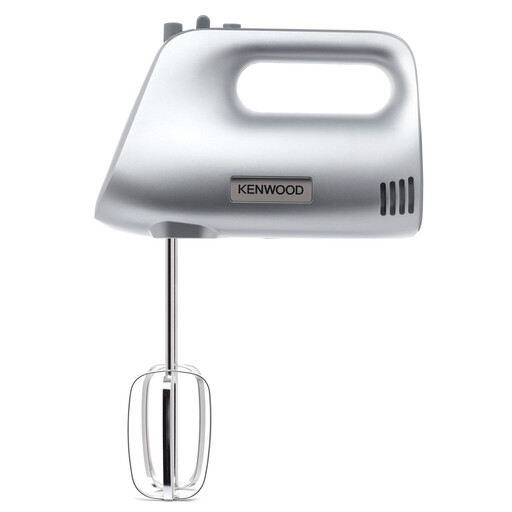 No image available
Consider this handheld model if you prefer to choose your own bowl for each manageable cake-batter batch. Before comparing power ratings or planning around particular attachments, confirm the specifications and supplied tools for the exact HMP30.A0SI variant.
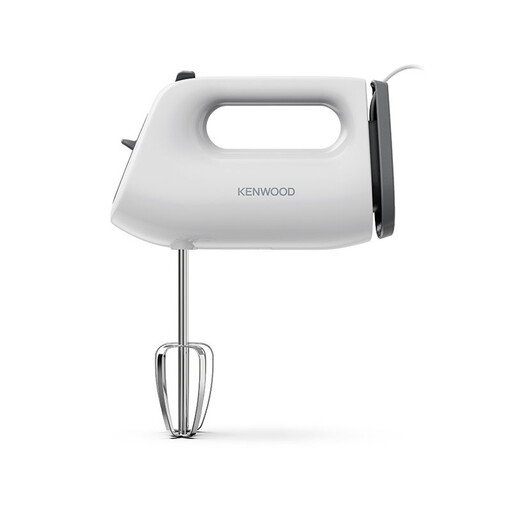 No image available
Consider this model for cake-batter batches when three speeds and twin beaters meet your mixing needs. Its stated rating is 300W; that figure alone does not establish cake results. Check the exact cleaning instructions for the beaters, and do not immerse the motor body.
Yes, for manageable cake-batter quantities, making separate batches when the recipe and bowl call for them. Electrical Safety First describes hand mixers as suitable for softer batters; do not assume that a larger guest list means all the batter should go into one bowl.
Follow your recipe’s method and use the mixer’s speed settings to carry out each step. King Arthur Baking notes that undermixing and excessive gluten development can both affect cake texture, so a power rating is no substitute for the recipe’s stopping point.
Check the plug, cord and appliance condition, and follow the manufacturer’s instructions. Electrical Safety First advises looking for a UK three-pin plug and fuse, checking for scorch marks and stopping use if electrical warning signs or damage appear.
No: keep the motor body out of water, unplug the mixer before cleaning and check the exact model instructions for removable parts. A dishwasher-safe description for an attachment does not mean the complete appliance can be washed that way.