First-time choux bakers
If you are learning when to stop adding egg, controllable mixing matters more than a high-power setting. Sous Chef UK advises adding egg a little at a time and incorporating each addition before adding more.


For an occasional lunchbox-sized batch of choux, start with a hand mixer that has controllable speeds and supplied beaters, so you can add egg gradually and stop when the dough reaches the right texture. If holding the mixer is uncomfortable, consider grip and balance; a bowl-and-stand format makes more sense when you bake repeatedly or want to spend less time holding the appliance. A wattage figure alone cannot tell you how the choux will turn out.
If you are learning when to stop adding egg, controllable mixing matters more than a high-power setting. Sous Chef UK advises adding egg a little at a time and incorporating each addition before adding more.
For occasional, modest batches, you may prefer a conventional hand mixer that you can use with your own bowl and put away after baking, rather than a separate bowl-and-stand appliance.
If you make repeated batches or find it tiring to hold a mixer, pay closer attention to grip and balance. A stand with a rotating bowl is another format to consider if you have room to store it.
For lunchbox-sized choux, decide which matters most to you: controlling egg addition, putting the mixer away easily, holding it comfortably or mixing with less hands-on effort.
| Concern | What to check | Who this matters to |
|---|---|---|
| Adding egg gradually | Look for controllable speeds and confirm that beaters are supplied. Judge the dough’s consistency rather than relying on a speed setting. | If I am new to choux, I want to incorporate each addition of egg without making the dough too loose; around 40% of consumers put consistency control first. |
| Storage for small batches | Check the appliance’s weight and storage dimensions against the space you have. | When I bake a small batch only occasionally, I want a mixer I can put away without finding space for a separate stand; roughly 30% of consumers prioritise compact ownership. |
| Comfort while mixing | Consider the handle, balance and control placement, particularly if you expect to hold the mixer through repeated batches. | If holding a mixer becomes tiring, I care about how securely and comfortably I can guide it; about 20% of consumers make hand-held comfort their primary concern. |
| Less hands-on mixing | For a bowl-and-stand model, check bowl capacity, total weight and whether you can remove the mixer for hand-held use. | When I bake several batches, I would rather spend less time holding the mixer, provided I can accommodate the stand; around 10% of consumers put this format first. |
A motor rating does not tell you when the choux has taken enough egg. Speed control, supplied beaters and a format you can handle comfortably all matter to this task.
Compare those features first, then use the dough’s appearance to decide when to stop mixing in egg.
Sous Chef UK advises adding egg little by little; adding too much can leave choux pastry prone to collapse.
Beat the egg first, add it in increments and stop when the dough is smooth, slightly glossy and falls from a spatula in a V-shaped ribbon.
A collapsed batch also uses up ingredients intended for the bake.
Kenwood GB lists a 3.5 L rotating bowl for the Chefette HMP54.000SI, but the complete appliance weighs 2.612 kg, compared with 1.05 kg for its HMP30.A0WH hand mixer.
Check whether repeated batches or reduced hand-held work justify the extra counter and storage space.
Braun’s reduced-effort claim for the MultiMix 3 comes from its own cake-batter comparison, not a choux-pastry test.
Assess the grip, balance and controls for your own use, and continue to judge the pastry by its texture.
Kenwood GB offers conventional hand mixers alongside the Chefette hand-mixer-and-bowl format.
Bosch UK lists the MFQ4020GB as a conventional hand mixer with dedicated whisks and dough hooks.
Braun’s MultiMix 3 HM 3100 WH is a hand-held option with a soft grip and five variable speeds plus turbo.
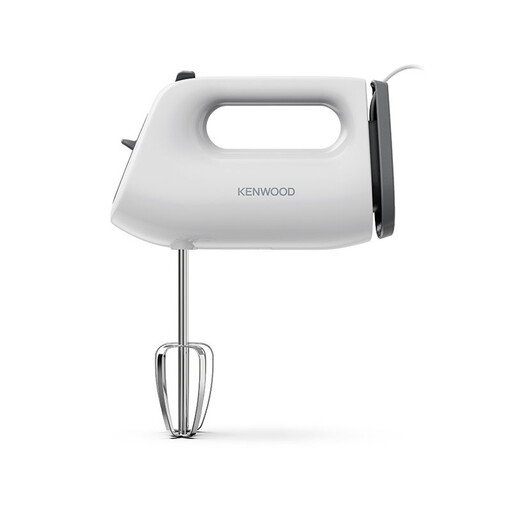
This compact hand-held option is relevant if you make occasional lunchbox-sized choux batches and want to add egg in stages using beaters.
 No image available
For an occasional lunchbox batch, this hand-held format lets you add egg in stages while mixing in your own bowl.
The listed model has a 300 W rating, three speeds and twin beaters. Check its weight and dimensions if handling or cupboard space will decide your choice; the motor rating alone does not establish choux results.
No: a hand mixer with controllable speeds can help you incorporate egg gradually into the cooked dough. A bowl-and-stand format is mainly worth considering if you bake repeated or larger batches, or want to spend less time holding the mixer.
Stop when the dough is smooth, slightly glossy and falls from a spatula in a V-shaped ribbon, rather than when you reach a particular mixer setting. Sous Chef UK advises adding egg a little at a time so you can assess the dough after each addition.
Sous Chef UK says choux dough can be prepared up to 24 hours ahead and kept well covered in the fridge to prevent a skin forming. Follow separate storage guidance for your chosen filling, particularly if it contains ingredients that need chilling.