Occasional bake-sale cake maker
You are making one or a few batches and want a handheld mixer with beaters and speeds you can adjust as ingredients are combined.


For one or a few coconut cakes, a hand mixer with beaters and controllable speeds is a practical choice for combining the batter without taking up the space of a stand mixer. If you bake repeatedly, soft start and a comfortable grip become more useful; if you regularly need larger batches or hands-free mixing, consider whether a stand mixer better suits the workload.
You are making one or a few batches and want a handheld mixer with beaters and speeds you can adjust as ingredients are combined.
You make cakes often enough to consider how the mixer feels to hold, how gently it starts and whether its attachments suit other baking tasks.
You need to decide whether holding and guiding a mixer through repeated batches is comfortable, or whether a hands-free stand mixer would better fit your routine.
For coconut cake batter, check the beaters and starting speed first. Then consider how long you will hold the mixer and how many batches you expect to make.
| Concern | What to check | Who this matters to |
|---|---|---|
| Controlled mixing | Check for supplied beaters and a low setting you can use while adding dry ingredients. Follow the chosen model's speed guidance as the batter comes together. | If flour and coconut are going into the bowl in stages, I want to start gently rather than scatter them. Around 45% of consumers would make controlled mixing their primary concern. |
| Comfort and versatility | Compare the grip, stated weight, speed range and included attachments on the exact model; extra tools matter only if you will use them. | When I bake repeatedly, holding the mixer comfortably and using it for other recipes matter more than they do for one cake. For around 33% of consumers, repeat-use comfort and versatility would come first. |
| Repeated-batch workload | Consider how many batches you will make and whether you want to hold the mixer throughout. Compare the space a stand mixer needs if hands-free mixing is important. | Several batches would keep me at the bowl for longer, so I need to decide whether handheld mixing still suits the job. Around 22% of consumers would put workload and hands-free use first. |
KitchenAid identifies its beaters as suitable for cake batter and its dough hooks for yeast dough. A thicker-looking batter does not, by itself, call for kneading tools.
Check that the exact mixer includes beaters, and follow its manual when choosing an attachment for your recipe.
A stated motor rating does not tell you on its own how the mixer handles, how its speeds behave or how cleanly you can start mixing.
Compare the exact models' beaters, speed controls and grip alongside their stated power ratings rather than treating the largest wattage figure as the answer.
Soft start and additional attachments may be useful across frequent baking tasks, but they are not a requirement simply because the batter contains coconut.
Decide which other recipes you expect to make before choosing a mixer for its additional tools or controls.
Kenwood GB lists the white HMP30.A0WH at 450 W, while a Joybuy listing for the silver HMP30.A0SI states 300 W and says that model is no longer available. Their similar names do not make them interchangeable.
Check the full model code, colour, stated power, supplied tools and availability on the product page you intend to use.
Kenwood's UK hand-mixer range includes straightforward handheld models that may suit occasional cake making.
The MFQ4020GB is relevant if the feel of a handheld mixer matters during repeated use.
The 5KHM9212 offers more speed settings and attachments for consumers who bake beyond an occasional cake.
The HMF01 range is an option to compare if start-up control and a broader set of tools matter to you.
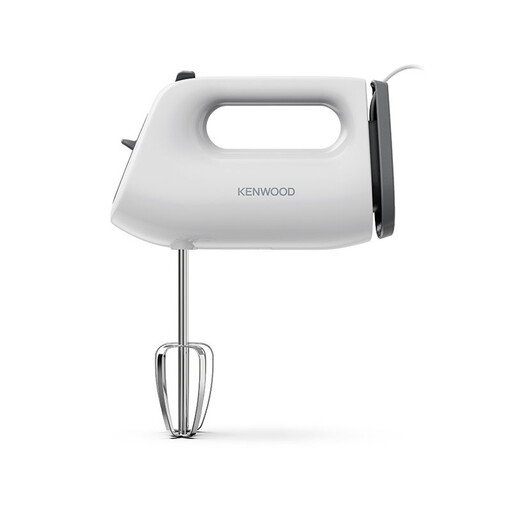
This handheld option is relevant to making one or a few cake batches. Compare its three speeds with the level of starting control you want, and check the care instructions for its parts before buying.
 No image available
A handheld choice to consider for one or a few cake batches, provided its controls suit the way you add ingredients.
300 W; three speeds; twin beaters. Confirm the washing instructions for each component rather than assuming the whole mixer is dishwasher-safe.
Use the beaters specified for cake batter by your mixer's manufacturer, rather than choosing dough hooks because the batter seems thick. KitchenAid's guidance identifies its beaters for cake batter and its dough hooks for yeast dough; check your exact model's manual for its attachment set.
Begin on your mixer's lowest suitable setting while incorporating the dry ingredients, then adjust the speed as directed for cake batter. KitchenAid's guidance starts slow stirring at speed 1, but speed numbers vary between models, so follow the instructions for yours.
A hand mixer is a practical option for one or a small number of cake batches if you are comfortable holding it throughout mixing. For recurring larger batches or hands-free work, compare a stand mixer's capacity and the space it will occupy instead of expecting a handheld model to suit every workload.
Check that the product information identifies the equipment and its supplier, and look for the applicable conformity marking. GOV.UK guidance for England, Scotland and Wales says Great Britain continues to recognise CE marking alongside or in place of UKCA marking for applicable products. Northern Ireland has different arrangements, so do not apply that GB guidance to a purchase there without checking the applicable requirements.