Occasional shared-kitchen cake baker
You mainly mix cake batter and want an appliance that fits in a shared cupboard, with tools you can remove and clean before someone else uses them.


For occasional coconut cake batter, a compact hand mixer with beaters and selectable speeds is a practical starting point; begin slowly when adding dry ingredients. If you regularly make other mixtures, extra attachments may be worth the cleaning and storage space, while a mixer with a bowl makes more sense when bowl-supported mixing is a recurring need. In a shared kitchen, choose tools you can remove and clean as part of the kitchen’s wider cross-contact routine.
You mainly mix cake batter and want an appliance that fits in a shared cupboard, with tools you can remove and clean before someone else uses them.
You share equipment with someone who avoids particular ingredients, so a clear routine for cleaning and storing removable tools matters alongside the mixer’s controls. If the kitchen prepares food for sale or service, its food-business procedures also matter.
You also whisk, make small dough batches or blend other mixtures, making the supplied attachments and how they are stored more relevant to your choice.
Start with control and cleaning for the cake batter, then decide whether handling, cupboard space or other recipes justify a different tool set.
| Concern | What to check | Who this matters to |
|---|---|---|
| Batter control | Look for beaters and selectable speeds so you can start gently when incorporating dry ingredients. Check the exact model’s controls. | If I am mainly making coconut cake, I want to bring ingredients together without immediately running the mixer at full speed; around 31% of consumers put batter control first. |
| Cleaning and separation | Check how the tools detach and which parts the maker says can go in a dishwasher. Plan cleaning and separate storage where ingredient cross-contact is a concern. | When other people use the equipment, I need to inspect and clean the tools before putting them away; cleaning and separation are the primary concern for around 31% of consumers. |
| Storage and handling | Compare the mixer’s listed weight and grip, then allow cupboard room for its tools. A bowl-supported model needs space for its bowl too. | If cupboard space is tight or I find a mixer tiring to hold, I would favour a manageable handheld design; around 23% of consumers prioritise storage and handling. |
| Other recipes | Match the supplied whisk, dough hooks or other accessories to tasks you actually do, accounting for the extra tools to clean. | For regular baking beyond cake batter, I may want one mixer to cover several preparation tasks; wider versatility comes first for around 15% of consumers. |
Kenwood lists a 450 W motor for the HMP30.A0WH, and Bosch lists 450 W for the MFQ4020GB. That shared rating does not tell you which controls, tools or handle will suit your kitchen.
Compare the complete model numbers, supplied beaters, speed settings, grip and cleaning instructions before using motor power to distinguish them.
Cleanable attachments do not, on their own, prevent ingredient cross-contact. Coventry City Council’s guidance for preparing an allergen-free meal calls for separate, clean and sanitised equipment and utensils.
If an allergy is relevant in your kitchen, agree how the mixer and tools will be cleaned and stored, and whether dedicated equipment is needed.
Kenwood lists a 3.5 L rotating bowl for the Chefette Compact HMP54.000SI. The bowl and its associated parts need storage and cleaning space that a handheld mixer alone does not.
Consider that format when bowl-supported mixing is a regular priority and there is a practical place to keep its parts.
The Kenwood HMP30.A0WH manufacturer specifications do not automatically describe the silver HMP30.A0SI. A similar range name is not enough to establish identical tools or controls.
Match the complete model number and confirm the included accessories before relying on another variant’s specifications.
Kenwood’s hand-mixer range includes compact models and the bowl-supported Chefette format.
Bosch offers hand mixers with model-specific controls and handling features.
KitchenAid’s hand-mixer range includes the nine-speed 5KHM9212 with several supplied accessories.
These handheld Kenwood models are choices for mixing cake batter where a separate bowl and compact appliance suit the shared kitchen. Check each variant’s included tools and cleaning instructions rather than applying specifications from another QuickMix model.
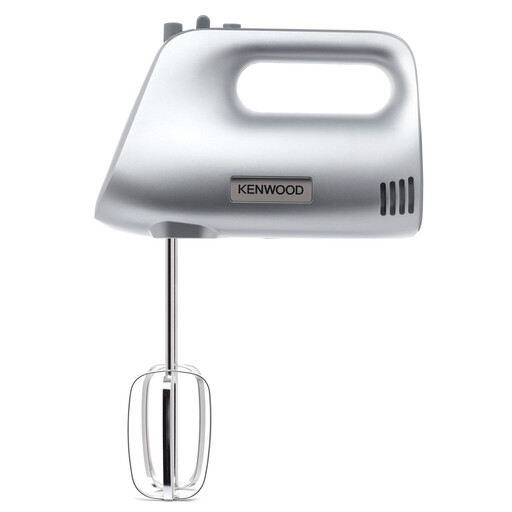 No image available
A handheld option for cake batter when you want to put the appliance away after use. Confirm the speed settings, included beaters and cleaning instructions for this silver variant before choosing it for a shared kitchen.
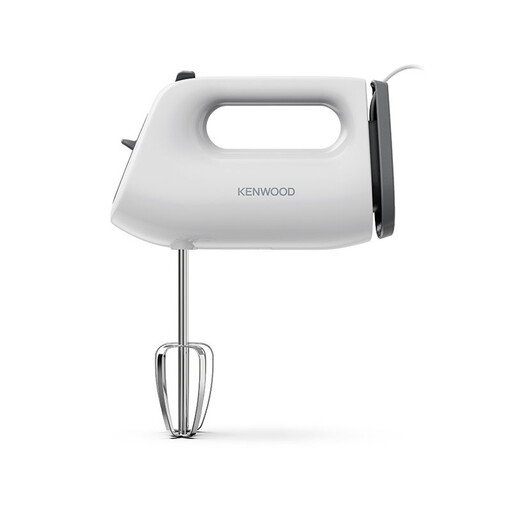 No image available
A handheld option for occasional cake batter if three speeds meet your control needs. Its product name specifies 300 W and twin beaters. Check which individual parts are dishwasher-safe and follow the instructions for cleaning the motor body.
A handheld mixer with beaters and several selectable speeds is enough for ordinary coconut cake batter. Start gently when adding dry ingredients; extra accessories matter chiefly if you also prepare other mixtures.
No, standard beaters are the relevant tools for cake batter. Dough hooks are worth considering if you also make dough; Bosch lists them with the MFQ4020GB, and KitchenAid lists them with the 5KHM9212.
Remove and clean the tools according to the exact model’s instructions, and check for batter residue before storage. If someone using the kitchen has a relevant food allergy, agree how equipment will be cleaned and kept separate; dishwasher compatibility alone is not a complete cross-contact routine.