Shared-kitchen crepe makers
If you make thin batter and regularly put equipment away after use, starting-speed control and convenient storage are worth considering alongside the supplied beaters.


For crepe batter in a shared kitchen, choose a hand mixer with selectable speeds, suitable beaters and a manageable cleaning routine rather than judging by motor wattage alone. A compact model makes sense if crepes are its main job; extra attachments are more useful when they will serve other tasks, but they also need shared storage and cleaning.
If you make thin batter and regularly put equipment away after use, starting-speed control and convenient storage are worth considering alongside the supplied beaters.
When several people use the same utensils, easy tool removal, attachment-care instructions and an agreed washing and storage routine matter.
If the mixer will also be used for whisking or light dough work, compare the attachments supplied with each exact model rather than assuming every variant has the same set.
For crepes made in a shared kitchen, decide how much control, clean-up ease, cupboard space and additional use matter to you before comparing models.
| Concern | What to check | Who this matters to |
|---|---|---|
| Mixing control | Look for selectable speeds and beaters suited to batter; check how gently the exact model starts. | I want to begin mixing thin batter gently and increase the speed as the ingredients combine. Around 31% of consumers put mixing control first. |
| Cleaning and cross-contact | Check how each attachment is cleaned and released, and whether separate tools or storage are needed for allergen management. | When others share the tools, I need a clear way to wash and put them away without transferring food residues. Roughly 31% of consumers make cleaning and cross-contact their primary concern. |
| Storage and handling | Compare the listed weight, cord arrangement and space needed for the mixer and its tools. | If I have to retrieve and put away the mixer each time, I need it to fit the space I can use. Around 23% of consumers place storage and handling first. |
| Uses beyond crepes | Confirm which whisk, hooks or other tools come with the exact model and how they must be cared for. | I also want to whisk or make light dough, so the included tools need to suit those jobs. For roughly 15% of consumers, versatility is the leading concern. |
The Bosch, KitchenAid and Dualit models cited here have different manufacturer-stated motor ratings. Those figures alone do not establish which will produce smoother crepe batter or less splash.
Compare the exact model's speed settings, supplied beaters, handling and cleaning instructions before using wattage as another specification to consider.
Attachment-care instructions do not replace a cleaning and storage routine for shared equipment. For food-business settings, Food Standards Agency guidance calls for systems that prevent, control and detect contamination.
Follow the care instructions for each tool and, where an allergy-management plan calls for them, use separately identified tools or storage.
Dough hooks and other extras add possible uses, but they may offer little value if the mixer is regularly used only for thin crepe batter.
Choose the accessory set around tasks the household will actually do, and check where every tool will go after use.
Additional tools also take up shared storage space and need cleaning after use.
The MFQ2420BGB is a reference point for a straightforward hand mixer with selectable speeds and tool ejection.
Its cited five-speed and nine-speed models offer different accessory sets, so the model number matters when comparing them.
Dualit's cited hand mixer is worth comparing if the household expects to use more than batter beaters.
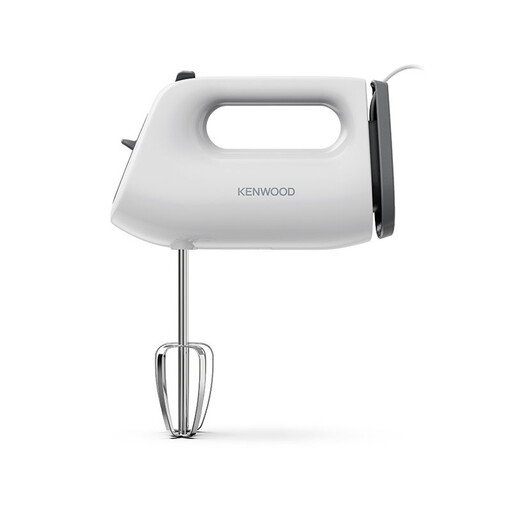
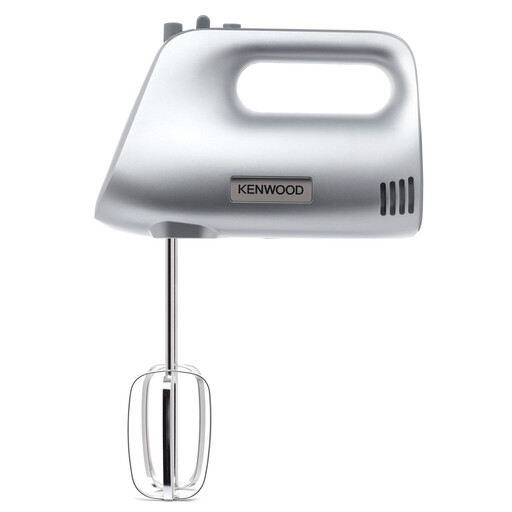
These Kenwood hand mixers offer two choices to consider for shared-kitchen crepe making: compare the clearly listed controls of the HMP10.00WH with the HMP30.A0SI's exact speed settings and accessory bundle before choosing.
 No image available
For crepe batter when you want a choice of starting speeds, this model lists three speeds and twin beaters.
Its stated motor rating is 300 W. Check the care instructions for each part before shared use: the main body should be wiped, not immersed, even though the product name describes the mixer as dishwasher-safe.
 No image available
Consider this model if the household wants to use a hand mixer for tasks beyond crepes, provided its supplied tools suit those jobs.
Confirm the speed settings and how gently it starts if controlled mixing of thin batter is important; check the included attachments and their storage needs too.
No particular wattage follows from the crepe-batter task alone. Compare selectable speeds and the supplied beaters first; the Bosch UK and KitchenAid UK model specifications cited here do not provide a like-for-like test showing that a higher motor rating makes smoother batter.
Agree how the tools will be cleaned and stored, and use separately identified equipment where your allergy-management arrangements require it. For food businesses, Food Standards Agency guidance calls for contamination-control systems; a dishwasher-safe label on an attachment is not, by itself, a complete allergen-control plan.
If you start or take over a food business, the Food Standards Agency says to register with the local authority at least 28 days before trading or food operations start. If you plan to supply food commercially from a shared kitchen, check how that requirement applies to your arrangement with the local authority.
Check that the exact mixer is intended for the GB market and review its supplied product information and care instructions. GOV.UK's Office for Product Safety & Standards explains that the Electrical Equipment (Safety) Regulations 2016 set requirements before electrical equipment is placed on the Great Britain market.