Small-batch lunchbox decorators
If you decorate a few biscuits or small cakes at a time, a mixer you can set up, store and wash without much fuss may suit you better than a bowl-supported appliance.


For occasional small batches of royal icing, choose a hand mixer with supplied beaters and a low setting you can control while adding icing sugar. A larger or bowl-supported mixer makes more sense if you also prepare bigger batches or mix frequently; wattage alone does not tell you how easily you can control the icing.
If you decorate a few biscuits or small cakes at a time, a mixer you can set up, store and wash without much fuss may suit you better than a bowl-supported appliance.
If you need to add sugar gradually and adjust the mixture for piping, look closely at low-speed control and the supplied beaters. Food Network UK and delicious. magazine both give gradual or low-speed mixing directions in their royal-icing recipes.
If you also make cake batters or other mixtures regularly, consider the mixer's grip, weight and range of settings alongside what you need for icing.
Start with the mixing control your icing recipe needs, then consider the space, handling and food preparation involved in your usual batches.
| Concern | What to check | Who this matters to |
|---|---|---|
| Controlled mixing | Check for a usable low setting and supplied beaters; compare speed steps rather than wattage alone. | If I add icing sugar in stages, I want to control the mixture without whipping in too much air. Around 37% of consumers put icing consistency first. |
| Storage and setup | Check the mixer's dimensions, listed weight and how its attachments are stored. | For occasional lunchbox decorations, I want a mixer that is easy to put away between batches. Roughly 27% of consumers prioritise compact storage and setup. |
| Handling and clean-up | Look at the grip, listed weight, beater release and care instructions for the exact model. | If I mix regularly, holding the appliance and washing icing-coated beaters matter to me. Around 18% of consumers put handling and clean-up first. |
| Ingredients and packing | Follow the chosen recipe's egg-product, storage and drying instructions before packing the bakes. | When icing is going into a lunchbox, I need to know how its ingredients should be handled and when it is ready to pack. Approximately 18% of consumers prioritise those preparation decisions. |
A motor rating does not replace the low-speed control needed when incorporating icing sugar. Food Network UK recommends gradual additions, while delicious. magazine advises low-speed electric mixing to avoid too much air.
Compare the exact model's settings and supplied beaters before using wattage to distinguish mixers for other baking tasks.
High speed can send loose sugar out of the bowl and work more air into the icing than the recipe calls for.
Begin at the lowest practical setting, add sugar in stages and change speed as your recipe directs.
Escaped sugar also means extra clean-up.
A bowl-supported mixer may be useful for repeated larger batches, but it takes more room to store than a compact handheld model.
Consider bowl support if larger batches are a regular task; otherwise, check whether a handheld mixer fits your usual bowl and storage space.
Mixing does not determine how an egg-based icing should be stored or when decorated food can be packed.
Choose the egg product specified by your recipe and follow its handling, refrigeration and drying directions for lunchbox bakes.
Kenwood's hand-mixer range includes compact QuickMix models and a Chefette format with bowl support.
Bosch lists hand mixers across its CleverMixx and Styline lines.
Braun's MultiMix 3 range combines variable-speed controls with a handling-focused design.
Russell Hobbs offers hand mixers with adjustable settings and attachments for baking tasks.
These handheld Kenwood mixers are options to consider for small royal-icing batches. Check each model's low-speed behaviour against your recipe and mixing bowl.
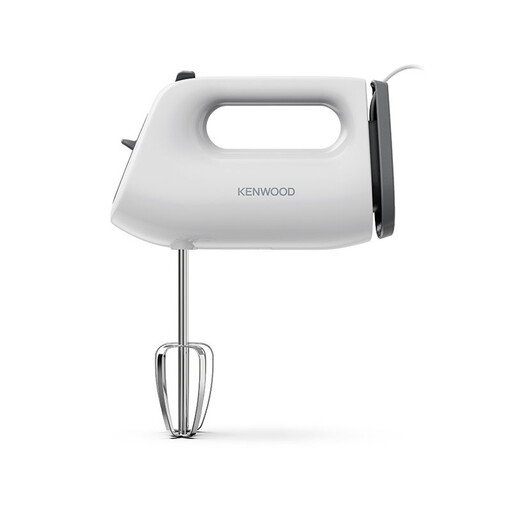 Image unavailable
Consider this handheld model for occasional small batches if its starting speed suits your recipe and bowl.
The listed variant is white, rated at 300 W, with three speeds and twin beaters. You will need to hold and guide it while mixing.
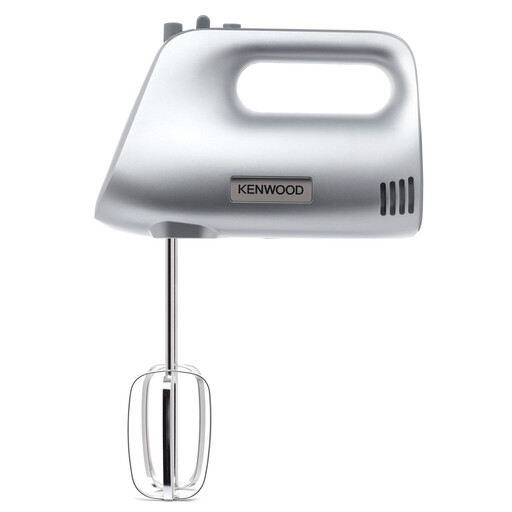 Image unavailable
Consider this handheld model for small-batch mixing if its settings and supplied attachments meet your icing recipe's needs.
Check the exact speed settings before buying if a gentle start is important. As a hand mixer, it needs to be held and guided through the batch.
A controllable low setting and supplied beaters are the starting points for royal icing. Food Network UK directs gradual sugar additions, and delicious. magazine advises low-speed electric mixing to avoid too much air; check the chosen mixer's settings against your recipe.
Not necessarily: wattage alone does not tell you how well you can control a small icing batch. Prioritise a usable low setting for the recipe, then consider motor rating and other features if you also make thicker mixtures or bake frequently.
Follow the storage instructions for the exact recipe and ingredients you use. Food Network UK's pasteurised-egg-white recipe allows prepared icing in an airtight container in the fridge for up to five days, while delicious. magazine gives up to one week for its recipe; neither period is a universal rule.
The answer depends on the eggs and recipe, so do not treat all raw egg whites alike. The Food Standards Agency's 2023 risk profile describes the risk from UK-produced shell eggs under recognised assurance schemes, such as the Lion Code or equivalent, as very low; that assessment does not extend to eggs outside those conditions. Follow the recipe's ingredient, allergen and storage directions, or choose a recipe specifying a pasteurised egg product.
Check that the mixer is suitable for your electrical supply and that its plug and cable show no visible damage. The Health and Safety Executive advises checking electrical equipment's suitability for the supply and switching it off and unplugging it before inspection.