Repeat-batch buffet baker
If you are making several batches, a hand mixer with a supplied bowl may mean less time holding the appliance. Compare your recipe volume with the bowl capacity before planning the batches.


For repeated almond-cake batter batches, consider a hand mixer with a rotating bowl if the recipe fits its stated capacity. A conventional handheld mixer lets you use your own bowl but needs guiding throughout; if the buffet menu also involves thick dough or sustained heavier mixing, consider a stand mixer and allow for its greater bulk.
If you are making several batches, a hand mixer with a supplied bowl may mean less time holding the appliance. Compare your recipe volume with the bowl capacity before planning the batches.
If you prefer mixing in your own bowl, compare handheld models' speed settings and how gently they start when you add dry ingredients.
If the almond cake is served by a food business, choose equipment you can clean according to its instructions as part of your allergen-control process. The Food Standards Agency identifies almonds as tree nuts for food-allergen information.
Choose when: You have repeated batter batches that fit the supplied bowl. Kenwood GB specifies a 3.5 L rotating bowl for the Chefette HMP54.000SI.
Trade-off: The fixed bowl may not suit every recipe volume or bowl shape.
Choose when: You want to mix softer cake batter in your own bowl and guide the beaters yourself.
Trade-off: You must hold and move the mixer throughout each batch.
Choose when: Your wider buffet preparation includes thick dough or sustained heavier mixing. Electrical Safety First distinguishes this work from the softer batter suited to a hand mixer.
Trade-off: Allow more counter or storage space for the bulkier appliance.
For almond-cake batter, decide whether batch size, control in your own bowl or cleaning for buffet service is your primary concern.
| Concern | What to check | Who this matters to |
|---|---|---|
| Batch capacity and handling | Compare the recipe yield, with mixing headroom, against the supplied bowl. Kenwood GB gives the Chefette HMP54.000SI a 3.5 L bowl and a reference of batter for up to 24 cupcakes. | If I have several buffet batches to make, I want a workable bowl size without holding the mixer for every minute of mixing. Around 36% of consumers put batch capacity and reduced hands-on work first. |
| Speed control | Check the starting speed and supplied beaters for the exact model. Bosch GB specifies five speeds for the MFQ4020GB; KitchenAid UK lists nine speeds and soft start for the 5KHM9212. | When I add dry ingredients, I want to start gently and control how the batter mixes in my bowl. Around 36% of consumers prioritise that mixing control. |
| Cleaning and almond allergens | Check the cleaning instructions for each removable part. For food-business service, plan allergen information and controls separately from the appliance choice, as advised by the Food Standards Agency. | If I am serving almond cake through a catering business, I need a cleaning and allergen-control workflow I can follow between recipes. Around 28% of consumers place that need first. |
Kenwood GB cites batter for up to 24 cupcakes for the Chefette HMP54.000SI, but that example does not establish the volume of your almond-cake recipe.
Work out the recipe yield, leave headroom for mixing and plan separate batches if needed.
Extra batches also mean more preparation and cleaning time.
A published wattage figure does not establish which mixer will handle your particular batter better, especially when motor designs differ.
Compare the exact model's controls, included beaters, bowl arrangement and intended uses instead.
Electrical Safety First describes hand mixers as suitable for softer batter and dough, while stand mixers can tackle thick dough.
If dense dough is a regular part of the buffet menu, assess a stand mixer rather than choosing solely for the almond cake.
For a food business, cleaning the mixer is only one part of managing almond allergens. The Food Standards Agency requires food businesses to provide allergen information and manage allergens during preparation.
Follow the instructions for each mixer part and include equipment cleaning in the business's allergen-control process.
Relevant if you are weighing a conventional handheld model against a hand mixer supplied with a rotating bowl.
Relevant if you want a conventional handheld format with several selectable speeds.
Relevant if you want more speed choices and attachments for tasks beyond a single cake batter.
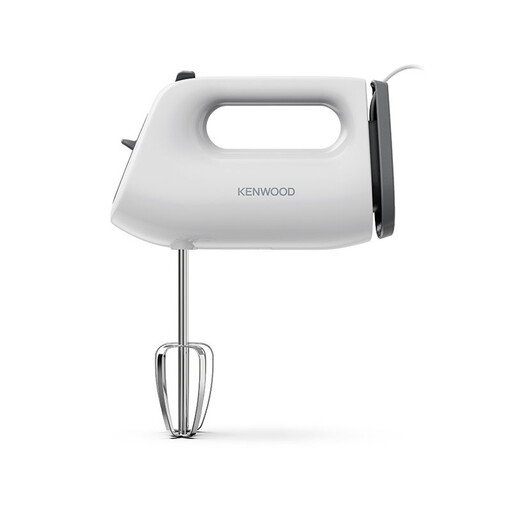
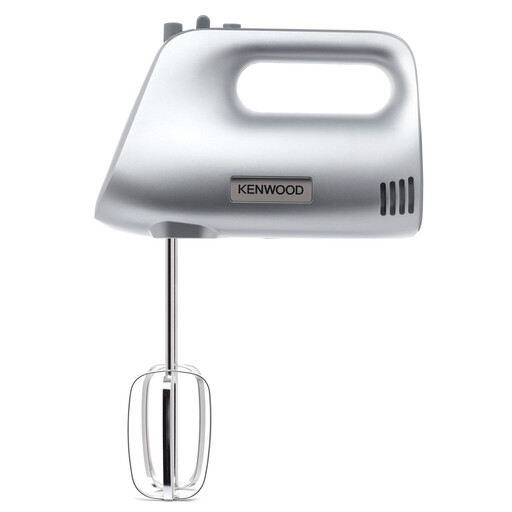
These two Kenwood models are conventional handheld choices for mixing cake batter in your own bowl. Check your batch size and allow for guiding the mixer; neither is presented here as a rotating-bowl or stand-mixer option.
 No image available
For cake batter mixed in your own bowl, this handheld model needs guiding throughout each batch.
Its product name specifies three speeds and twin beaters. Check the instructions to establish which parts are dishwasher safe; do not immerse the motor body. Confirm the plug and fuse suit UK use before buying.
 No image available
For cake batter in a bowl you choose, this handheld model lets you guide the mixing path but requires you to hold it for each batch.
Check its exact speed settings and included attachments against your recipe, and confirm the plug and fuse suit UK use before buying.
A bowl-combi hand mixer is worth considering for repeated batches if your recipe fits its bowl with room for mixing. Kenwood GB states that the Chefette HMP54.000SI has a 3.5 L bowl and can handle batter for up to 24 cupcakes; plan separate batches if your recipe exceeds a workable fill level.
Consider a stand mixer if your wider buffet preparation regularly includes thick dough or sustained heavier mixing. Electrical Safety First describes hand mixers as suited to softer batter and dough; a stand mixer also takes more counter or storage space.
Unplug it before cleaning and follow its instructions for the motor body and each removable part; do not assume every part is dishwasher safe. If a food business serves the cake, make equipment cleaning part of its allergen-management process, as advised by the Food Standards Agency.
If the buffet is operated by a food business, almond allergen information must be provided to consumers and allergens managed during preparation under Food Standards Agency guidance for England, Wales and Northern Ireland. Food Standards Scotland provides guidance for Scottish food businesses. A private, non-commercial gathering should not be treated as having the same food-business obligation.
Check that the appliance has a suitable UK three-pin plug and fuse, as Electrical Safety First advises for mixers. For conformity markings on goods supplied in Great Britain, apply current government guidance to the particular product rather than assuming that Great Britain's rules also cover Northern Ireland.