Space-conscious waffle makers
If you make waffle batter occasionally and put equipment away after use, a handheld model may suit your routine better than storing a mixer with a bowl stand. Check its dimensions and where the beaters will go.


For occasional waffle batter in a shared kitchen, start with a handheld mixer that has beaters, controllable speeds and tools you can remove for cleaning; a higher wattage figure alone does not settle the choice. A compact model keeps storage simpler, while extra attachments or a bowl format are worth considering when you also make other recipes or repeated batches. Agree how shared tools will be cleaned and stored, particularly where food allergies are a concern.
If you make waffle batter occasionally and put equipment away after use, a handheld model may suit your routine better than storing a mixer with a bowl stand. Check its dimensions and where the beaters will go.
When several people use the equipment, removable food-contact tools and an agreed cleaning routine matter alongside mixing features. For food businesses, GOV.UK guidance specifically calls for regular cleaning of utensils and cooking equipment.
If the mixer will also be used for whisking or dough, compare the tools supplied with the exact model. KitchenAid and Bosch list different attachment sets across their hand-mixer models, so the model name matters more than the brand alone.
Decide how you will mix the batter, clean the tools and store the appliance before paying attention to features intended for other recipes. The percentages below relate to consumers putting one of these needs first, not to how many people care about each feature at all.
| Concern | What to check | Who this matters to |
|---|---|---|
| Cleaning and cross-contact | Check how the beaters detach and follow the exact model's cleaning instructions. For a food business, make sure the appliance fits its cleaning and allergen procedures. | If I share equipment with someone who has a food allergy, I need a clear way to clean food-contact tools between uses. Around 31% of consumers put cleaning and cross-contact control first. |
| Batter control | Check the available speeds, how gently mixing starts and whether beaters are included. | When combining waffle-batter ingredients, I want to start gently and adjust the speed without relying on high-speed whipping. Controlled mixing comes first for around 31% of consumers. |
| Storage and handling | Compare the exact model's dimensions, weight and storage arrangement with the space available. | My cupboard space is shared, and I need to hold the mixer while it runs, so size and handling shape my choice. Around 25% of consumers prioritise storage and handling. |
| Other recipes and batches | Confirm the included tools; if considering a bowl model, check its capacity and where the complete appliance will be stored. | I also plan to whisk, work with dough or prepare repeated batches, so I need a tool set that covers those tasks. Around 13% of consumers put versatility or batch preparation first. |
A motor rating does not, by itself, show how two different hand mixers will handle waffle batter. Bosch lists 400 W for the MFQ2420BGB and 450 W for the MFQ4020GB, but those figures are model specifications, not comparative batter tests.
Check the exact mixer's speeds, supplied beaters, handling and tool ejection before treating wattage as a secondary detail.
KitchenAid lists beaters, a whisk, dough hooks and a mixing rod with its 5KHM9212. That range is useful only if your planned recipes call for it and shared users can keep track of the tools.
Choose an attachment set for the recipes you actually make, and agree where each food-contact tool goes after cleaning and drying.
GOV.UK's cited cleaning and allergen guidance addresses food businesses; sharing a household kitchen does not, on its own, establish that status.
If food is prepared as part of a food business, follow the applicable food-safety and allergen requirements. In a private household, agree a practical cleaning and allergy-aware sharing routine.
These manufacturer-listed models show different tool sets and formats; their specifications are not independent comparisons of waffle-batter results.
Bosch has handheld models to compare if you want stated speeds, detachable tools and an eject button.
KitchenAid lists both a five-speed handheld model and a nine-speed model with a larger accessory set.
Kenwood lists standalone hand mixers as well as the Chefette Compact mixer-and-bowl format.
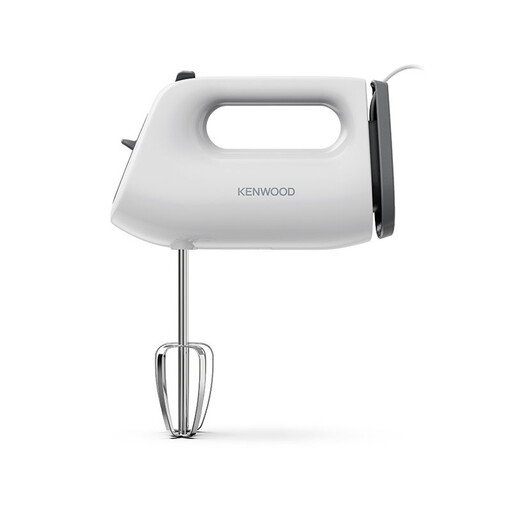
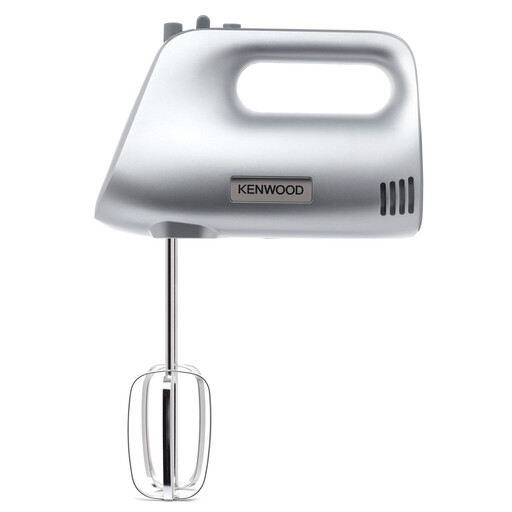
These two Kenwood handheld models are options to consider for waffle batter when mixing equipment and storage are shared. Compare their exact controls and cleaning instructions before choosing between them.
 No image available
For waffle batter where gradual mixing and shared clean-up matter, consider whether its three speeds and twin beaters suit your routine.
The stated motor rating is 300 W. Follow the exact manual when cleaning the mixer body rather than assuming it can be immersed or put in a dishwasher, and confirm suitability for UK mains use before buying.
 No image available
For waffle batter and other everyday mixes in a shared kitchen, compare this handheld model's controls and storage needs with the space you have.
Before choosing it, confirm the HMP30.A0SI variant's speed count, included tools, tool-ejection method, cleaning instructions and suitability for UK mains use.
Not on the strength of a wattage figure alone. Check whether the exact mixer includes beaters and speeds you can control comfortably; Bosch's published 400 W and 450 W ratings for two different models are specifications, not a comparative test of waffle-batter mixing.
Clean the removable food-contact tools between users and follow the exact appliance manual for both attachments and mixer body. For food businesses, GOV.UK says cleaning schedules must specify what is cleaned or disinfected, how often and with which products, and must cover utensils and cooking equipment.
Agree how food-contact tools will be cleaned and how avoidable cross-contact will be managed before sharing the mixer. GOV.UK's allergen-information and handling requirements cited here apply to food businesses; they do not, by themselves, establish the legal duties of a private household.
No: sharing a home kitchen alone does not establish that it operates as a food business. If food is prepared through a food business, the operator needs to follow the applicable hygiene and allergen requirements described by GOV.UK; the particular kitchen arrangement determines which guidance is relevant.
Confirm that the exact appliance is intended for UK mains use and comes with appropriate instructions before buying. GOV.UK describes electrical-equipment safety obligations for businesses placing products on the Great Britain market, but those obligations do not replace checking the appliance and following its own instructions.