Mess-conscious shared-kitchen baker
You add dry ingredients to red velvet batter and want to build up speed gradually rather than start with a burst that sends ingredients beyond the bowl.


Choose a hand mixer you can start slowly when adding dry ingredients to red velvet batter; low-speed or soft-start control helps you keep the mixture in the bowl. For a shared kitchen, a compact hand-held model makes sense when cupboard space is tight, while a bowl-and-stand model is worth considering if you regularly prepare larger batches and have room to store it. Check the controls and included tools on the exact model rather than relying on motor wattage alone.
You add dry ingredients to red velvet batter and want to build up speed gradually rather than start with a burst that sends ingredients beyond the bowl.
You make smaller batches and need to put the mixer, beaters and cable away neatly after using shared worktop space.
You prepare larger batches and value a bowl-and-stand arrangement that can keep mixing while you work with other ingredients nearby.
Check how the mixer starts when dry ingredients go into the bowl, then decide whether compact storage or hands-free batch preparation matters more in your shared kitchen.
| Concern | What to check | Who this matters to |
|---|---|---|
| Controlled starts | Check for a selectable low speed or soft start, and whether the supplied beaters are intended for cake batter. | When I add dry ingredients, I want time to bring them into the batter before increasing speed. Around 42% of consumers put controlled starts first for this need. |
| Compact storage | Check how the mixer, cable and supplied tools fit in the cupboard when put away. | Shared drawers are limited, so I need the appliance and its tools to stay together between baking sessions. Keeping storage compact comes first for around 33% of consumers. |
| Hands-free batches | Check the bowl capacity, whether it rotates, and the space needed to store the stand. | If I regularly make larger batches, I want the mixer to keep working while I prepare ingredients nearby. Hands-free preparation is the main concern for around 25% of consumers. |
A fast start can send dry ingredients or batter out of the bowl before they have combined.
Check the starting speed on the exact model. Begin slowly, then increase speed as the ingredients come together.
In a shared food-business kitchen, beater material does not replace cleaning and cross-contamination controls. The Food Standards Agency’s MyHACCP guidance addresses allergen control in shared facilities.
Follow the food business’s procedures for cleaning, separating and storing beaters, bowls and equipment after use.
A bowl-and-stand hand mixer can free your hands during a batch, but its bowl and stand need space alongside the mixer.
Check where the complete kit will go before choosing that format over a compact hand-held mixer.
Relevant if you are deciding between stored-together hand-held equipment and a bowl-and-stand format for larger batches.
Relevant if gradual speed control and a broader attachment set matter for the tasks you plan to do.
Relevant if you prefer a conventional hand-held mixer with staged speed control and dough hooks.
These hand-held Kenwood models are options to consider if you want to clear the shared worktop after mixing. If hands-free larger batches are your priority, compare their format with a bowl-and-stand mixer before choosing.
 No image available
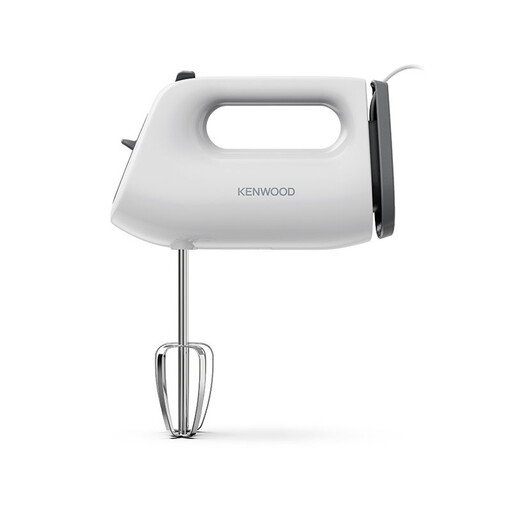
Consider this hand-held model if you want to bring dry ingredients into cake batter gradually and put the mixer away after use.
Its product name specifies three speeds and twin beaters. Before planning clean-up, check whether a splash guard is included and which parts can go in the dishwasher.
 No image available
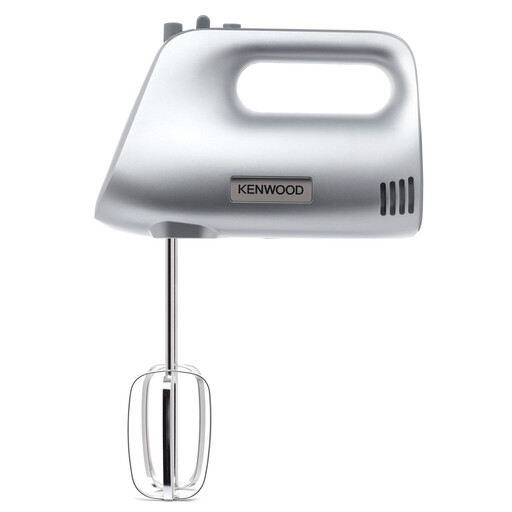
Consider this hand-held model if keeping mixing accessories organised in a shared kitchen is a priority.
Check its starting control and exact speed settings before relying on it for gradual batter mixing, and confirm which attachments come with the HMP30.A0SI.
Start at the lowest available speed and increase it once the dry and wet ingredients begin to combine. Kenwood says the Chefette’s slow-speed start is intended to reduce mess from dry ingredients; KitchenAid describes a soft start on its 5KHM9212. Check the control on the model you intend to buy.
Use beaters when the guidance for your mixer identifies them for cake batter. KitchenAid UK identifies its turbo or flex-edge beaters for cake and muffin batter, while describing its wire whisk for tasks such as whipping cream and eggs; follow the instructions for your exact model and attachment set.
It is worth considering if you regularly prepare larger batches and want the mixer to run while you work nearby, provided you have space for the complete kit. Kenwood GB lists a rotating 3.5 L bowl and detachable hand-mixer use for its Chefette HMP54.000SI; an occasional small batch may not justify storing the bowl and stand.
Cleaning and allergen cross-contamination controls need attention alongside the choice of mixer. The Food Standards Agency’s MyHACCP guidance addresses protecting food from allergen cross-contamination in shared facilities; use the food business’s procedures for equipment and utensils rather than treating any particular beater material as a substitute.