
24/7 Customer Support

Free returns

Same-day & Next-day Delivery

Quality Guaranteed

Unlock Your Welcome Offers: FREE Delivery | Up to 80% OFF | Free 30-day JoyPlus trial
Download the APP
A well-chosen set of hand tool sets can cover vehicle maintenance, household repairs and workshop jobs without filling every drawer with duplicate tools. However, buying by piece count alone can lead to wasted money. A 100-piece kit may contain many low-use bits while omitting the sizes or specialist tools you actually need.
Before comparing a ratchet set, spanner set or pliers kit, check three common pitfalls.
A large number on the box does not necessarily mean useful coverage. Some sets count adapters, screwdriver bits and storage accessories as separate pieces. Check the actual tool types and sizes, particularly if you need metric hand tools for cars, motorcycles, appliances or plumbing fittings used in the UK.
A smaller set with commonly used sizes can be more practical than a larger kit containing gaps in the range you require.
Standard-length tools can be difficult to use inside engine bays, behind appliances or beneath sinks. Look for design details such as:
For example, a 90-tooth ratchet requires a stated 4-degree movement to advance the mechanism while a 72-tooth design requires 5 degrees. These specifications are relevant when there is little room to swing the handle.
The material description should be specific. Chrome vanadium steel, heat treatment, drop forging and corrosion-resistant finishes are useful details to compare although they do not remove the need to use the tool within its intended capacity.
A polished finish can make grease easier to wipe away but it is not a substitute for sound jaw alignment, secure ratchet engagement or correctly sized fasteners. Avoid using pliers or an adjustable wrench as a replacement for a correctly fitting spanner where high torque is involved.
A versatile ratchet set commonly includes 1/4-inch, 3/8-inch and 1/2-inch drives. The smaller drive suits light mechanical work and compact fasteners; 3/8-inch is useful for general maintenance; and 1/2-inch is more suitable for larger fasteners when paired with compatible sockets.
A reversible mechanism lets you change tightening and loosening direction without removing the socket. A quick-release button can also make socket changes more convenient, particularly during repeated work.
A combination wrench set normally provides an open end and a ring end on each spanner. Check whether the set is metric, imperial or dual-scale. A 12-piece metric set covering 8–19 mm may suit common vehicle and household jobs while a broader SAE range may be useful for older machinery or imported equipment.
A ratcheting spanner set can reduce the need to lift and reposition the tool. A 72-tooth mechanism with a 5-degree working arc is a practical feature for tight spaces. Flex-head designs can provide up to 180-degree adjustment but the hinge should be kept clean and inspected for looseness.
For plumbing and general maintenance, compare the maximum jaw opening and adjustment method. Water pump pliers with serrated jaws can grip round, flat, square and hexagonal shapes but the workpiece should be positioned securely to reduce slipping.
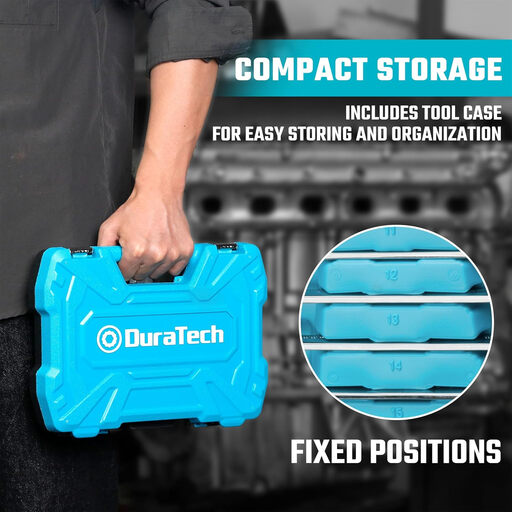
Storage also matters. A roll-up pouch is portable for site work while a rigid tool storage case can protect ratchets and sockets in a garage or workshop. Choose a layout that makes missing tools easy to spot.
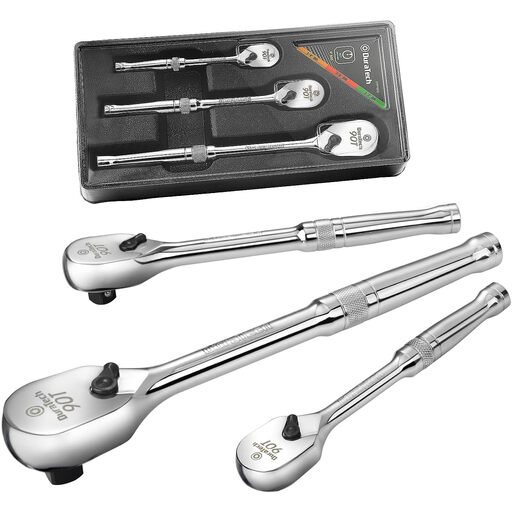
Why This Fits Their Persona: Three drive sizes provide a straightforward starting point for garage maintenance, flat-pack repairs and general DIY without buying a large mixed kit.
The stated 90-tooth mechanism needs a 4-degree movement and the enclosed head is described as dust-resistant for work around dirt and debris.
Includes 1/4-inch, 3/8-inch and 1/2-inch ratchets, a polished chrome alloy finish and a storage case.
Why This Fits Their Persona: Suitable for regular vehicle servicing and workshop maintenance where metric coverage, controlled access and organised storage are priorities.
The listing specifies 8–19 mm coverage, a 72-tooth mechanism and flex heads that tilt up to 180 degrees rather than relying only on a high piece count.
Chrome vanadium steel construction, 12 metric sizes and a storage case.
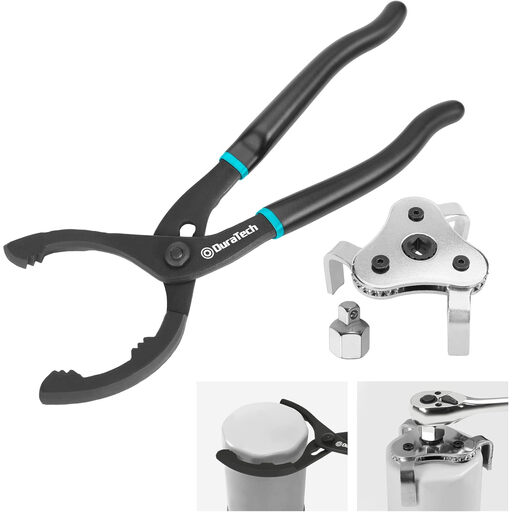
Why This Fits Their Persona: A focused choice for home mechanics, automotive repair technicians and workshop users who regularly service cars, motorcycles or trucks.
The set gives the stated 63–103 mm adjustment range for the three-jaw tool and includes a 300 mm plier for additional reach.
Two oil filter removal tools, heat-treated steel construction and adapters for 3/8-inch or 1/2-inch drives.
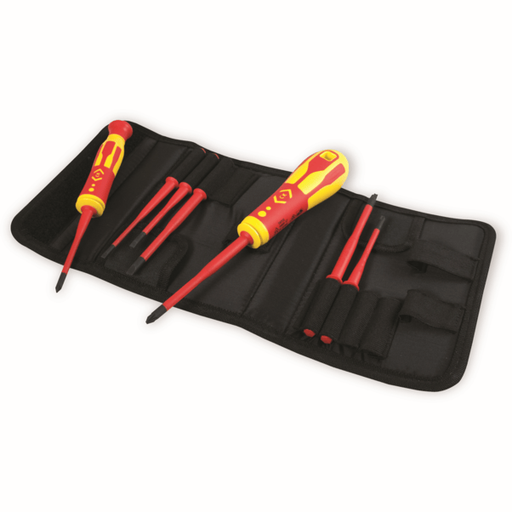
Why This Fits Their Persona: Designed for electrical work where recessed fixings and insulated screwdriver access are relevant considerations.
The listing specifies slim 1000V insulated blades and individual testing to 10,000V. Always inspect tools and follow site procedures before electrical work.
Quick-lock blade changes, MOD1 and MOD2 blades and access to recessed screws.
We have compiled a complete, real-time list of products that fully satisfy these strict selection criteria and UK safety regulations.
Even durable mechanic tools need basic maintenance. Wipe away oil, moisture and grit after use, then store tools in a dry place. Lightly oil moving ratchet or plier mechanisms where the manufacturer permits it. Check ratchets for secure engagement and remove any tool with cracked handles, damaged insulation, distorted jaws or excessive play.
Use safety glasses when cutting, gripping under tension or working beneath a vehicle. Insulated tools are not permission to work on live circuits; isolate electrical systems and follow appropriate workplace procedures.
For general UK household and DIY work, start with a ratchet and sockets, metric combination spanners, screwdrivers, combination pliers, long-nose pliers, side cutters and an adjustable wrench. Add plumbing tools, precision pliers or specialist automotive tools according to your regular tasks.
Chrome vanadium steel is commonly used for spanners, sockets and pliers because it can be heat-treated for strength and finished to resist corrosion. Check the specific tool’s construction, size range and intended use rather than relying on the material name alone.
A case offers structured protection and makes missing pieces easier to identify. A roll pouch is generally lighter and convenient for carrying spanners to a job site. For a home garage, choose the option that fits your storage space and keeps tools dry, organised and accessible.