
24/7 Customer Support

Free returns

Same-day & Next-day Delivery

Quality Guaranteed

Unlock Your Welcome Offers: FREE Delivery | Up to 80% OFF | Free 30-day JoyPlus trial
Download the APP
Buying hand tool sets can seem straightforward until you discover that a large piece count does not always mean better coverage. Some kits contain duplicate screwdriver bits while missing useful pliers, metric spanners or tools for awkward fasteners. Others look substantial online but use vague material descriptions, uncomfortable handles or storage cases that do little to protect the tools.
For UK homeowners, mechanics, plumbers, crafters and workshop users, the right choice depends on the jobs you actually perform. This guide explains the practical specifications to check and matches several options to different working profiles.
A 100-piece DIY tool set may include small hardware accessories, duplicate bits and items that rarely leave the toolbox. Before comparing quantities, check whether the set contains the essentials for your work: combination pliers, side cutters, long-nose pliers, screwdrivers, hex keys and an appropriate ratchet or spanner set.
For household repairs, a broad kit can be convenient. For mechanical or trade work, a smaller specialist set may offer more practical value.
A polished surface can help with cleaning and corrosion resistance, but it does not tell you everything about strength or longevity. Look for clear information about chrome-vanadium steel, alloy steel, heat treatment or drop forging. These details indicate how the tool has been made, although they do not remove the need to use the correct tool and avoid excessive force.
Pliers with a large opening are not automatically suitable for every task. Curved serrated jaws can grip pipes and fittings, while flat-nose and needle-nose designs are more appropriate for small components. Similarly, a standard ratchet may be difficult to use in a crowded engine bay, where a swivel head ratchet can provide more access.
For frequently used tools, consider heat-treated chrome-vanadium steel or alloy steel. These materials are commonly used for spanners, ratchets and pliers because they offer a balance of hardness and resistance to wear. A corrosion-resistant coating or polished finish can make cleaning easier, but tools should still be wiped dry and stored away from damp conditions.
For precision pliers, check whether the jaws are machined and hardened. The WORKPRO mini set lists jaws hardened to HRC55-65, a stated specification that suits controlled gripping and cutting of small components. It should not be interpreted as permission to cut materials beyond the tool’s intended capacity.
A useful pliers set should contain sizes that match the workpiece. Water pump pliers with quick adjustment are suitable for different pipe, nut and fitting diameters, while a larger jaw capacity can help with plumbing maintenance. Check the maximum opening rather than relying on phrases such as “large grip”.
For a metric combination spanner collection, examine the actual size range. A set covering common sizes is more useful than one with many pieces concentrated in a narrow range. For brake lines or tubing, a flare nut spanner has a different jaw profile from a standard open-ended spanner and can be the more appropriate option.
A ratchet’s tooth count affects its working arc. The WORKPRO 1/4-inch swivel head model has a 72-tooth mechanism and a stated 5° working arc, which can be useful where there is limited room to swing the handle. Its 270° flexible head is designed for access around awkward fasteners, although the compact 1/4-inch format is intended for lighter-duty applications than larger drive sizes.
For automotive hand tools, also consider whether you need a socket set, hose clamp pliers, an oil filter wrench or a flare nut spanner. These specialist tools are not interchangeable with general-purpose pliers.
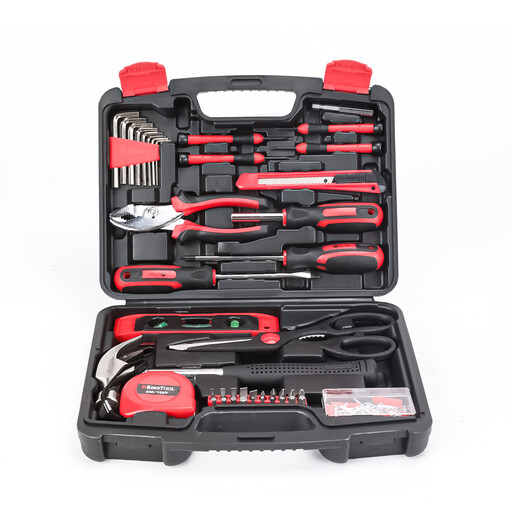
Why This Fits Their Persona: A practical starting point for UK households, rented properties, offices and students needing tools for furniture assembly, wall hanging and everyday maintenance.
The contents are itemised, rather than relying only on a high piece count. The case has individual slots for organisation.
Includes screwdrivers, bits, hex keys, combination pliers, a hammer, level, tape measure and storage case.
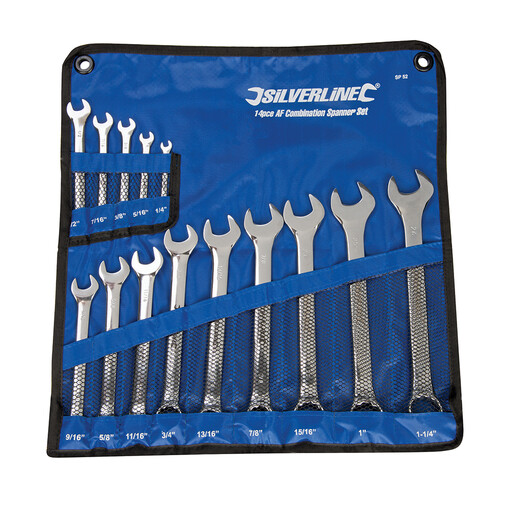
Why This Fits Their Persona: Suits workshop users and DIY buyers who prefer a defined spanner range with organised storage for regular mechanical tasks.
The set specifies its 14 sizes and provides a storage roll, avoiding an unclear assortment of duplicate tools.
Hardened and tempered drop-forged chrome-vanadium steel, 15° offset ends and sizes from 1/4" to 1-1/4".
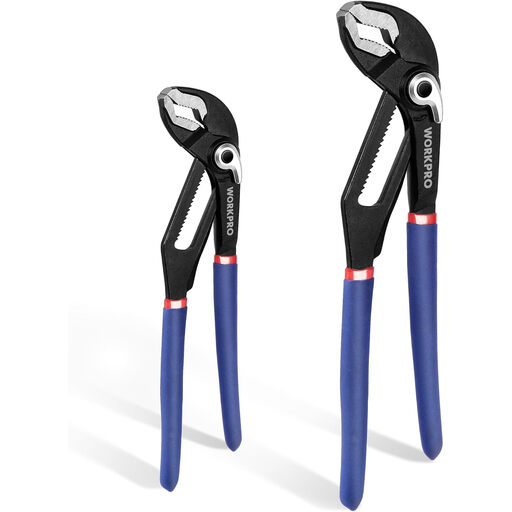
Why This Fits Their Persona: A suitable option for plumbing tools, maintenance work and general repairs involving pipes, fittings and differently shaped workpieces.
The product information states the jaw capacity, adjustment method and two handle lengths, making the working range easier to assess.
Includes 200mm and 250mm pliers, with curved serrated jaws and chrome-vanadium steel construction.
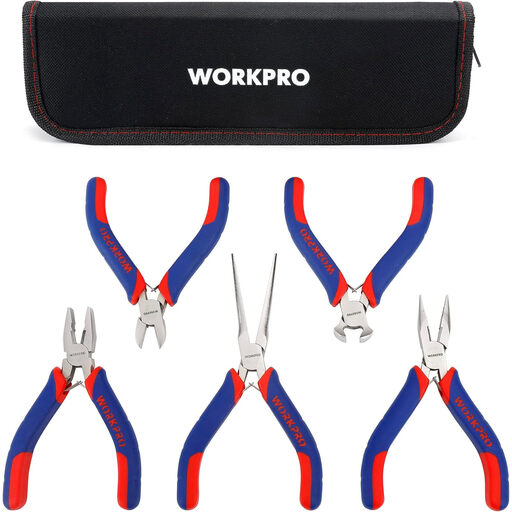
Why This Fits Their Persona: Designed around small-scale work such as jewellery making, electronics repair, model building and detailed crafts.
It specifies the individual plier types and includes a pouch, rather than presenting a generic “precision” label without details.
Five plier types, rubber non-slip handles, double spring strips and stated HRC55-65 hardened jaws.
We have compiled a complete, real-time list of products that fully satisfy these strict selection criteria and UK safety regulations.
Depending on your work, consider adding the following rather than buying another general-purpose kit:
For general UK household use, look for screwdrivers, bits, hex keys, a tape measure, combination pliers, side cutters, a hammer and a small selection of spanners or sockets. A storage case is useful if each tool has a defined location.
Chrome-vanadium steel is commonly used in hand tools and can be suitable for regular DIY when the tool is correctly sized and used within its intended purpose. Clean and dry tools after use, particularly in damp garages or sheds.
Avoid using pliers as hammers or spanners as levers. Select the correct size, keep cutting edges away from unsuitable materials and do not apply extensions unless the manufacturer permits it. Wipe tools after use, lightly oil moving joints where appropriate and store them in a dry case or toolbox.