
24/7 Customer Support

Free returns

Same-day & Next-day Delivery

Quality Guaranteed

Unlock Your Welcome Offers: FREE Delivery | Up to 80% OFF | Free 30-day JoyPlus trial
Download the APP
Choosing hand tools can look straightforward until a scraper bends, a wrench slips or a grout rake wears down halfway through a renovation. For UK homeowners, tradespeople, mechanics and gardeners, the right purchase depends less on impressive packaging and more on fit, materials, reach and safe use.
This guide highlights common buying pitfalls, explains the specifications worth checking and matches practical tools to different working situations.
A budget tool may appear economical, but a thin blade, poorly secured handle or unsuitable size can make it difficult to use. Replacing a damaged tool or buying a second one may cost more than choosing a suitable tool at the outset.
For occasional household jobs, a simple design may be sufficient. However, frequent renovation, vehicle servicing or garden maintenance calls for durable materials and a handle that remains comfortable during repeated use.
“Universal” does not always mean compatible with every job. An oil filter wrench may only accommodate a stated diameter range, while a pry bar that is too long may be awkward in a confined space. Before ordering, check:
A tool with strong materials can still be inconvenient if it lacks grip or is difficult to store. Soft-grip handles, protective covers, hanging loops and tool bags are practical features rather than decorative extras. They can help keep sharp or pointed tools organised between jobs.
Always use suitable gloves and eye protection where there is a risk of sharp edges, flying debris or material fragments. Check the product instructions before using a tool on unfamiliar surfaces.
The material should match the task. Hardened or heat-treated steel is useful where a tool must withstand torque, striking or leverage. Stainless steel can be appropriate for gardening hand tools exposed to damp soil and moisture, while tungsten carbide-edged tools are designed for abrasive tasks such as grout removal.
For scrapers, consider both the blade width and shaft construction. A 100 mm steel blade can cover a practical area for wallpaper, vinyl and tile work, while a long shaft may provide additional reach without requiring constant bending.
Length affects both control and force. A long-handle scraper can help reach wall surfaces and provide leverage when removing coverings. Pry bars are often more versatile when supplied in several sizes: a shorter bar suits restricted spaces, while a longer bar can provide more leverage when moving heavier objects.
In vehicle maintenance, a long handle may improve access, but clearance around the engine bay remains important. A low-profile oil filter wrench can be more useful than a larger tool when the filter is difficult to reach.
For automotive tools, measure the component before purchase. For example, a three-jaw oil filter wrench designed for 63–103 mm filters is not automatically suitable for a 110 mm filter. Another adjustable model may cover 70–110 mm, so the stated range should be compared with the vehicle manufacturer’s filter dimensions.
Look for secure jaws, non-slip handles and adjustment mechanisms that do not loosen easily under torque. For precision work, such as removing seals or O-rings, shaped hooks and an ergonomic handle can offer better control than improvised alternatives.
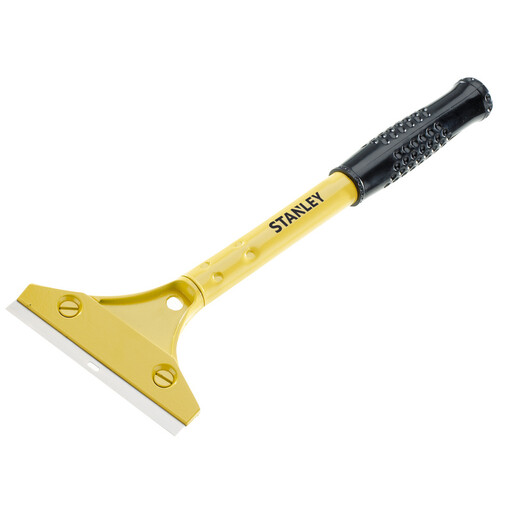
Why This Fits Their Persona: A practical choice for homeowners tackling wallpaper, vinyl, textured wallcoverings or ceramic tile work without purchasing several specialist tools.
Its stated 100 mm steel blade and 300 mm overall length provide more substance and reach than a small, lightweight scraper.
Steel blade and shaft; soft-grip handle; long-handle design for added reach and leverage.
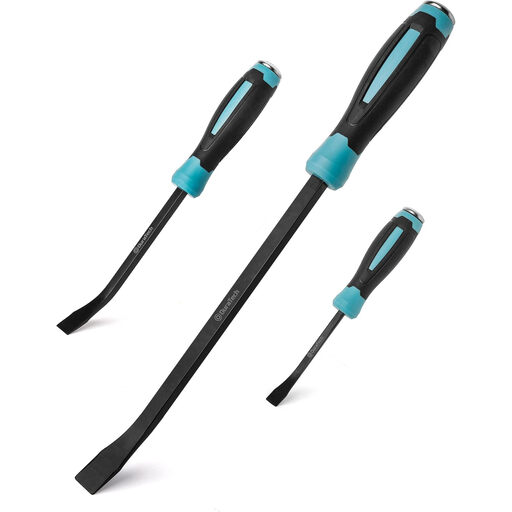
Why This Fits Their Persona: Suitable for workshop users and renovation projects where different working lengths are useful across skirting boards, tiles, nails and restricted areas.
Three lengths reduce the temptation to force one unsuitable bar into every job. The set includes 8-inch, 12-inch and 18-inch options.
Heat-treated steel construction; angled tips; metal striking caps; protective end caps supplied.
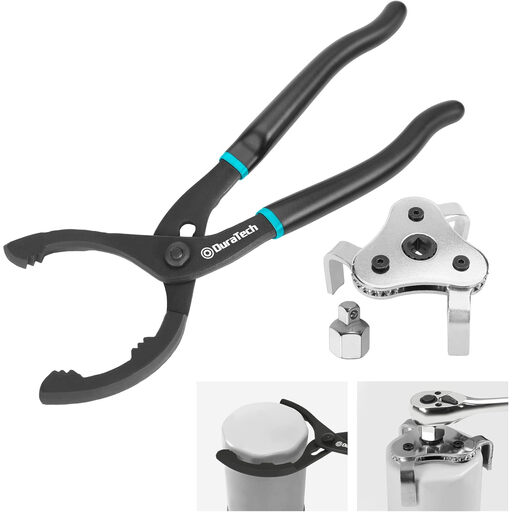
Why This Fits Their Persona: Designed for people servicing cars, motorcycles, trucks or farm equipment who need more than one oil filter removal method.
The set combines 12-inch pliers with a three-jaw wrench covering 63–103 mm, helping buyers match the tool to different filters.
Heat-treated steel; adjustable three-jaw design; adapters for 3/8-inch and 1/2-inch drives.
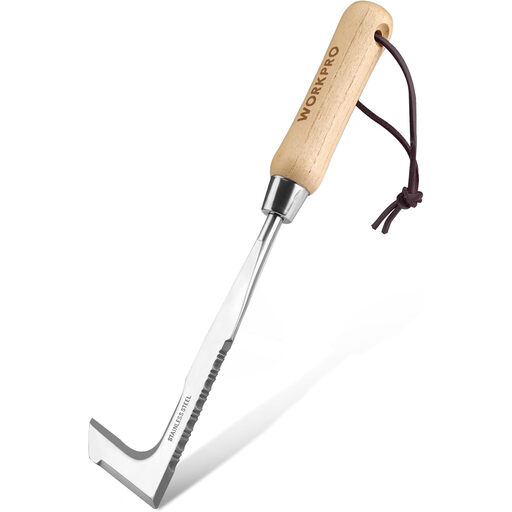
Why This Fits Their Persona: Useful for clearing weeds and moss from paving joints as well as handling crevice-cleaning tasks around outdoor surfaces.
It uses a shaped weeder and serrated edge rather than relying on a blunt, single-purpose head for every garden task.
Stainless steel construction; 31.5 cm length; wooden handle; protective cover and hanging strap.
For tile renovation, a Vitrex Grout Rake uses a tungsten carbide grit-edged blade and nylon handle for removing old or discoloured grout. For vehicle repairs, the WORKPRO Universal Oil Filter Wrench covers 70–110 mm filters, while the WORKPRO Automotive Pick and Hook Set contains straight, 45-degree, 90-degree and full-hook shapes for seals, hoses and O-rings.
A wheel nut removal kit can be reserved for damaged or locking wheel nuts. Check the contents, drive size and whether the kit is intended for manual or pneumatic use before purchase. For personal grooming rather than workshop use, a dermaplaning tool should be treated as a separate category: follow the supplied instructions, avoid contact with the eyes and do not share blades.
We have compiled a complete, real-time list of products that fully satisfy these strict selection criteria and UK safety regulations.
A useful starting kit may include a scraper, claw hammer, screwdrivers, pliers, adjustable spanner, utility knife and tape measure. Add a pry bar, grout rake or automotive tool only when the task requires it. Prioritise comfortable grips, clear dimensions and safe storage.
Lifespan depends on workload, force, moisture and storage. Wipe steel tools clean after use, dry gardening tools before storing and keep sharp edges covered. Do not use a scraper or pry bar as a substitute for a tool designed for striking, cutting or lifting beyond its stated purpose.
Not always. Occasional jobs may only require a straightforward DIY tool. A professional workshop tool or multi-piece set becomes more practical when you regularly service vehicles, renovate rooms or maintain a large garden, particularly where compatibility and repeated use are important.