
24/7 Customer Support

Free returns

Same-day & Next-day Delivery

Quality Guaranteed

Unlock Your Welcome Offers: FREE Delivery | Up to 80% OFF | Free 30-day JoyPlus trial
Download the APP
Whether you maintain a car on the drive, repair a leaking fitting or assemble furniture at home, the right hand tools can make a job safer and more manageable. The challenge is separating useful specifications from marketing language that does not explain how a tool will perform in a real UK garage, workshop or utility room.
This guide covers the key checks for buying DIY tools, plumbing tools, automotive hand tools and general workshop equipment, followed by product recommendations matched to different users.
A longer handle may provide more leverage, but it can be difficult to control in a confined space. Similarly, a large jaw opening does not automatically mean a wrench will grip every fastener securely. Check the tool’s working range, jaw profile and access requirements rather than relying on length alone.
Descriptions such as “heavy duty” or “professional” are not enough on their own. Look for specific materials, including chrome vanadium steel, heat treatment and corrosion-resistant finishes. These details help indicate how the tool is constructed, although correct use and storage still affect service life.
Water pump pliers are designed to grip pipes and irregular shapes; they are not a substitute for a correctly sized spanner. Hose clamp pliers are intended for flexible hoses and should not be used on hard, reinforced or high-pressure lines. Using a tool outside its intended application can damage both the tool and the workpiece.
For frequently used mechanics’ tools, heat-treated chrome vanadium steel offers a practical balance of hardness and toughness. A black oxide, chrome or black chrome finish can help resist surface corrosion, particularly when tools are stored in garages or transported in vehicles.
Handles also matter. Resin, PP/TPR or textured rubber grips can improve control and comfort, but they do not make a tool suitable for live electrical work. Always isolate electrical circuits and use equipment specifically rated for electrical applications where required.
An adjustable wrench should open widely enough for the nuts, bolts or fittings you regularly handle while maintaining a close fit. A loose jaw can round fastener edges. Laser-marked metric scales are useful for setting the approximate opening, but the fit should always be checked directly on the fastener.
For water pump pliers, compare the maximum jaw opening and adjustment mechanism. Push-button designs allow quick positioning, while a clear tooth pattern can help grip round, square, flat and hexagonal shapes.
A ratchet wrench set with more teeth needs less handle movement to engage the next position. This is useful in engine bays, cabinets and other restricted areas. For example, a 90-tooth ratchet requires a stated 4-degree movement, while a 144-tooth ratcheting combination spanner requires a 2.5-degree swing arc.
Drive size should match the work. 1/4-inch drives suit smaller fasteners, 3/8-inch is versatile for general automotive jobs and 1/2-inch is more suitable for larger fasteners, provided the required torque is within the tool’s specification.
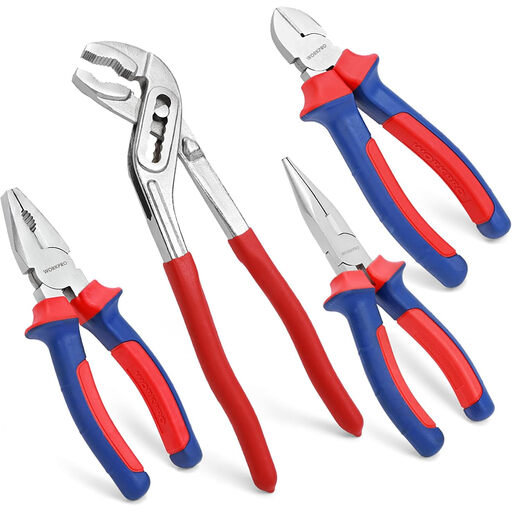
Why This Fits Their Persona: A practical starting point for household repairs, light plumbing tasks and general DIY work without buying each type of plier separately.
The four dedicated tools avoid relying on one oversized adjustable tool for every task, with each plier suited to a different type of grip or cut.
Includes combination, long-nose, side-cutting and 244mm water pump pliers, with alloy steel construction and non-slip resin handles.
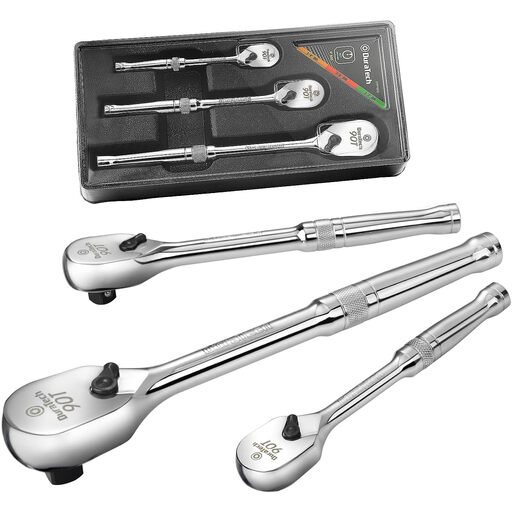
Why This Fits Their Persona: Suitable for users building a more organised automotive or workshop setup with three commonly used drive sizes.
The set states its tooth count and movement requirement, so buyers can assess access in restricted areas instead of judging the ratchet by appearance alone.
Includes 1/4-inch, 3/8-inch and 1/2-inch ratchets, with 90-tooth gearing, reversible direction and a storage case.
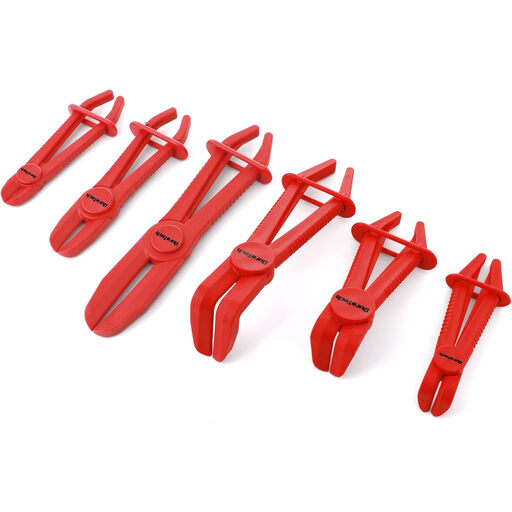
Why This Fits Their Persona: A focused option for vehicle maintenance involving flexible brake, fuel, coolant or radiator hoses.
The product clearly specifies flexible-hose use and excludes hard, reinforced or high-pressure lines, helping prevent an unsuitable purchase.
Six straight and angled sizes cover stated ranges from 0–25mm and 3–64mm; reinforced nylon is non-conductive and heat-resistant.
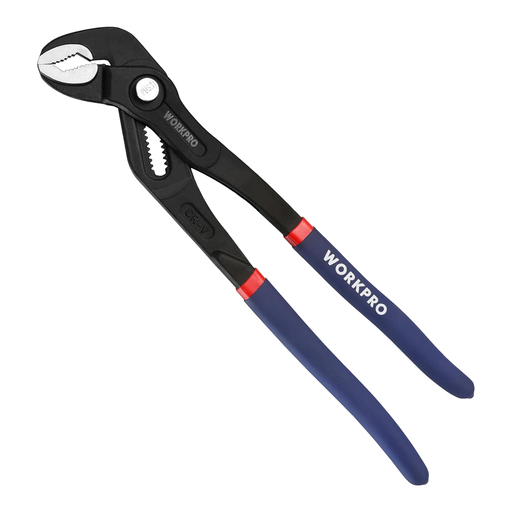
Why This Fits Their Persona: The longer handle and wide opening suit plumbers, tradespeople and workshop users handling larger fittings.
Its stated 50mm maximum opening gives a clear sizing reference, while the push-button adjustment avoids slow, imprecise repositioning.
Made from heat-treated chrome vanadium steel, with toothed jaws, quick-release adjustment and ergonomic plastic handles.
We have compiled a complete, real-time list of products that fully satisfy these strict selection criteria and UK safety regulations.
A general pliers set, adjustable wrench, screwdriver selection and ratchet set cover many household and light maintenance tasks. If you work on vehicles, add metric sockets and a 3/8-inch ratchet. For plumbing, water pump pliers and a suitable pipe-gripping tool are useful, but check the fitting size and surface finish first.
They can be useful where a standard spanner cannot be lifted and repositioned easily, particularly in narrow spaces. Check the included metric sizes, tooth count and swing arc. A ratcheting combination spanner set does not replace a torque wrench when a manufacturer specifies a precise tightening value.
Service life depends on material, workload, storage and correct handling. Heat-treated steel tools kept dry and used within their stated capacity may remain serviceable for a long period. Replace any tool with cracked handles, rounded jaws, damaged teeth or a ratchet that slips under normal use.