
24/7 Customer Support

Free returns

Same-day & Next-day Delivery

Quality Guaranteed

Unlock Your Welcome Offers: FREE Delivery | Up to 80% OFF | Free 30-day JoyPlus trial
Download the APP
Buying hand tools can seem straightforward until a saw struggles with the material, pliers slip under load or a square gives inconsistent markings. For UK homeowners, tradespeople and makers, the main challenge is matching each tool to the job rather than paying for features that will not be useful.
This guide explains the specifications worth checking, common purchasing traps and suitable options for cutting, gripping, measuring, marking and detailed craft work.
A longer blade or larger handle does not automatically make a tool more suitable. A 550mm handsaw may be useful for broad timber cuts, but a compact junior handsaw can be easier to control inside a cupboard, toolbox or confined work area. Likewise, large water pump pliers may offer a wider opening but can be cumbersome for small fittings.
Consider the working space, material and frequency of use before choosing dimensions.
Many cutting tools are designed for specific materials. Mitre shears and trim cutters may handle softwood, PVC, rubber seals and moulding, but they are not intended for hard metal or thick hardwood. Tile nippers are designed for controlled nibbling of tiles, not general gripping.
Using a tool outside its stated capacity can damage the blade or jaws and create a safety risk. Always check the maximum cutting diameter, material guidance and jaw construction.
Soft-grip handles and spring mechanisms can make repetitive work more manageable, but they do not replace suitable construction. For frequent use, check the tool’s steel type, heat treatment, coating and adjustment mechanism. A comfortable handle is useful only when the working parts remain stable and correctly aligned.
For saws, teeth per inch (TPI) helps indicate the likely cutting action. A universal hand saw with 8 TPI is suited to general timber cutting and faster material removal. A fine handsaw with 11/12 TPI or a junior handsaw with 12 TPI is more appropriate for plywood, MDF, chipboard, laminates and other man-made sheet materials where a cleaner finish matters.
A coated blade can reduce friction, while a rigid steel blade can help control flex during longer cuts. These features should be assessed alongside blade length and the material being cut.
For plumbing tools, look at the maximum opening, jaw profile and adjustment method. Water pump pliers with a quick-release button can be faster to set than traditional groove-joint designs. A precision tooth pattern should grip the workpiece without requiring excessive force, while chromium-vanadium steel is commonly selected for strength and corrosion resistance.
For craft work, precision pliers sets should include the jaw shapes you actually need, such as needle-nose, flat-nose, combination and side cutters. Hardened jaws are useful for repeated gripping and cutting of small components, but these tools are not a substitute for insulated electrical tools when working near live circuits.
Measuring and marking tools need clear, durable graduations. A combination square with metric and imperial scales can support 90-degree and 45-degree checks, depth measurements and layout work. Look for a secure clamp, a readable ruler and a head that does not shift during marking.
For woodworking, carpentry squares with stainless-steel rulers, engraved scales and adjustable components can support repeatable layout. However, a square is a measuring instrument, not a lever or striking tool. Store it dry and check that its locking mechanism is fully secured before use.
The following selections cover common requirements across DIY tools, woodworking tools, plumbing tools and specialist craft tasks. Product suitability is based on the listed specifications and intended use.
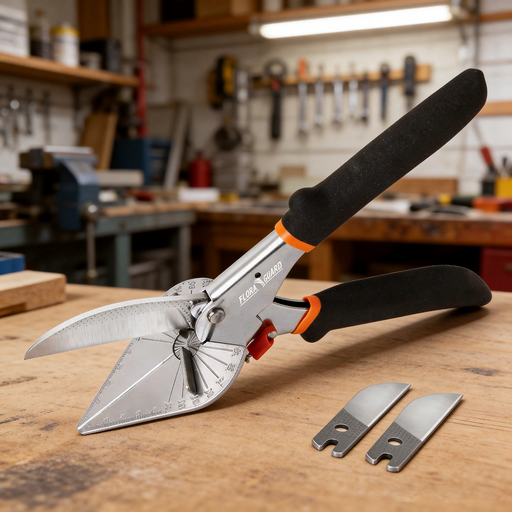
Why This Fits Their Persona: A practical option for homeowners tackling trim, PVC strips, rubber seals and small moulding projects around the house.
The 45° to 135° scale makes the cutting range visible, while the product guidance clearly limits use to designated soft materials.
SK5 steel replaceable blades, two spare blades, non-slip PPC handle and rotating safety lock.
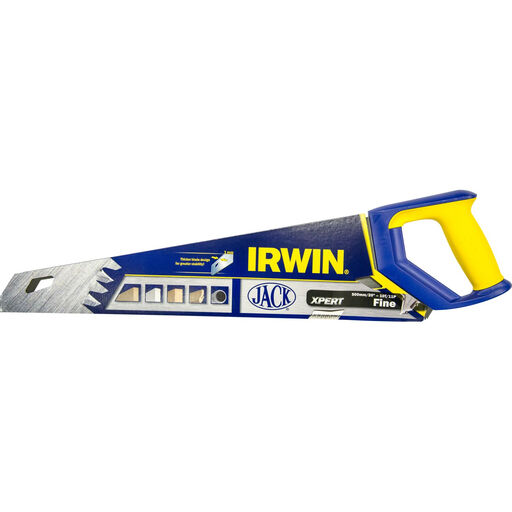
Why This Fits Their Persona: Suitable for joiners, carpenters and DIY users who prioritise controlled cutting and a neat finish on sheet materials.
Its 11/12 TPI specification identifies it as a fine-cut saw rather than a general-purpose rough-cut blade.
550mm blade, soft-grip handle and fine teeth intended for plywood, MDF, chipboard and laminates.
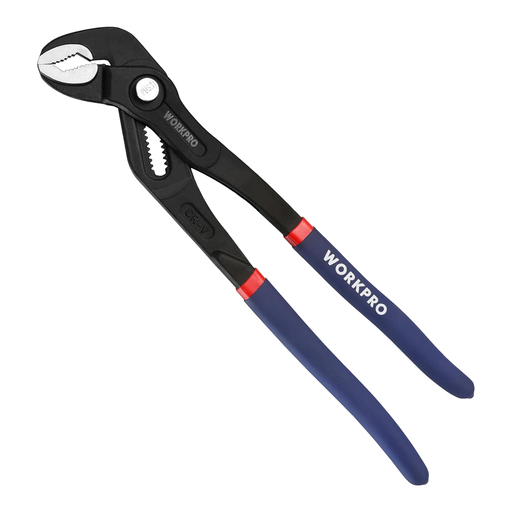
Why This Fits Their Persona: Designed for plumbing, pipe fitting and mechanical tasks where adjustable gripping is needed.
The stated 50mm maximum opening and push-button adjustment help buyers match the tool to pipe and fitting dimensions.
Heat-treated Cr-V steel, toothed jaws, ergonomic handles and quick-release adjustment.
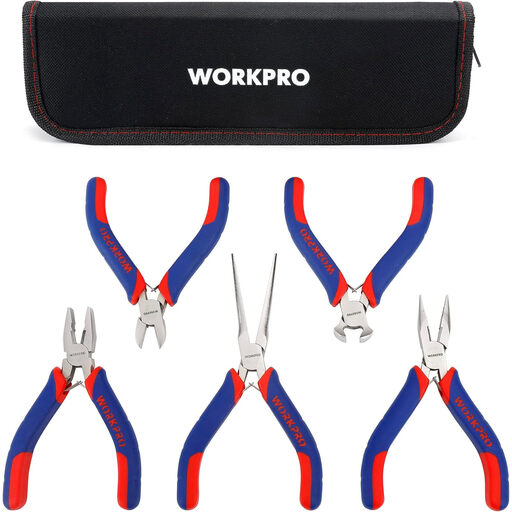
Why This Fits Their Persona: A compact choice for jewellery making, electronics repair, model building and detailed craft work in limited spaces.
The five-piece format shows exactly which jaw types are included, avoiding vague claims about an all-purpose pliers kit.
Five specified pliers, HRC55-65 hardened jaws, double spring strips and a 600D nylon pouch.
We have compiled a complete, real-time list of products that fully satisfy these strict selection criteria and UK safety regulations.
A practical starting selection includes a universal hand saw, combination pliers, long-nose pliers, a tape measure, a combination square, screwdrivers and protective eyewear. Add specialist tools such as tile nippers, leather hole punch pliers or mitre shears only when the project requires them.
Lifespan depends on workload, storage, material choice and maintenance. Heat-treated steel tools can remain serviceable for extended periods when used within their capacity. Blades and cutting edges are consumable parts, so their condition should be checked regularly rather than judged by the tool’s age.
Not necessarily. A tool is suitable when its dimensions, material and design match the task. A household pliers set may cover occasional repairs, while a tradesperson may need individual plumbing tools, fine handsaws or specialist woodworking tools selected for repeated use. Compare specifications and intended applications before comparing price alone.