
24/7 Customer Support

Free returns

Same-day & Next-day Delivery

Quality Guaranteed

Unlock Your Welcome Offers: FREE Delivery | Up to 80% OFF | Free 30-day JoyPlus trial
Download the APP
A handheld garment steamer can make a work shirt, school uniform or holiday outfit presentable in minutes, without setting up an ironing board. However, choosing one based only on wattage or phrases such as “powerful steam” can lead to disappointing results.
The most useful comparison points are steam output, heat-up time, water-tank capacity, handling and safety features. A compact travel clothes steamer may suit occasional touch-ups, while a larger handheld clothes steamer can be more practical for several garments at once.
A higher wattage number does not automatically mean faster wrinkle removal. Wattage indicates the appliance’s electrical power, but the result also depends on steam delivery, plate design and how consistently steam reaches the fabric.
For example, a 900W model producing up to 18g/min may be more suitable for light clothing than an 800W model with a different heating and steam system. Compare continuous steam rate and heat-up time alongside wattage, rather than relying on one figure.
A compact tank helps reduce weight, but it may require refilling during a longer session. Tanks around 85–100ml are convenient for one or several quick touch-ups. A 150–300ml tank is more appropriate when steaming multiple shirts, dresses, curtains or thicker fabrics.
Check whether the tank is detachable. Removing it for refilling is generally more convenient than carrying the complete appliance to the sink.
Some portable garment steamers are described for global use or 220V outlets, but UK shoppers should check the voltage, plug type and seller information before ordering. A suitable UK plug or approved adaptor may be necessary.
Steam plates and steam outlets become extremely hot. Never use a fabric steamer on clothing while it is being worn, and always unplug it before filling, emptying or cleaning. Follow the garment care label, particularly for items marked dry-clean only or unsuitable for steam.
Steam rate is usually shown in grams per minute (g/min). A higher continuous figure can help steam penetrate creases more consistently, although technique and fabric thickness still matter.
A quick heat-up steamer is useful for rushed mornings. The Philips 3000 Series STH3010/76 is listed with 1000W power, up to 20g/min continuous steam and approximately 30 seconds of heating. The Philips 1000 Series STH1010/10 is listed at 900W, up to 18g/min and approximately 35 seconds.
These times are suitable for quick preparation, but wait for the ready indicator before use. Moving the steamer slowly down a hanging garment normally gives more even coverage than repeatedly pressing one area.
A portable garment steamer should be comfortable to hold for several minutes. Weight, handle shape, cord length and tank placement can affect balance as much as the external dimensions.
For travel, a foldable garment steamer can take up less space in a suitcase. A smaller tank may be acceptable if you only need to refresh one or two outfits. For household use, a 260ml or 300ml tank can reduce interruptions, although the appliance may be heavier.
Look for clear guidance about ironable fabrics and always follow the care label. A heat-controlled steam plate or constant-temperature panel may make operation more straightforward, but no appliance should be treated as suitable for every textile without checking the garment instructions.
A brush attachment can help separate fibres on thicker garments and may be useful for upholstery, depending on the manufacturer’s instructions. Vertical steaming is convenient for hanging clothes, while horizontal capability can be helpful when an appliance is designed for use on a stable, heat-resistant surface.
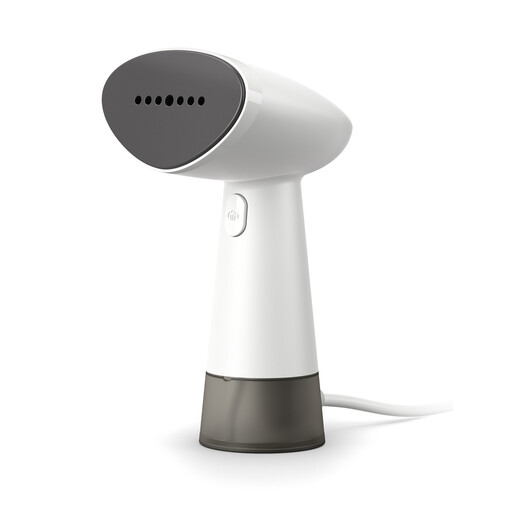
Why This Fits Their Persona: A compact option for students, flat-sharers and households needing occasional shirt or dress touch-ups without an ironing board.
Its listed 35-second heat-up, detachable 85ml tank and ready indicator provide clear practical specifications instead of relying only on broad performance language.
900W power, up to 18g/min continuous steam, compact dimensions and an included heat-resistant glove.
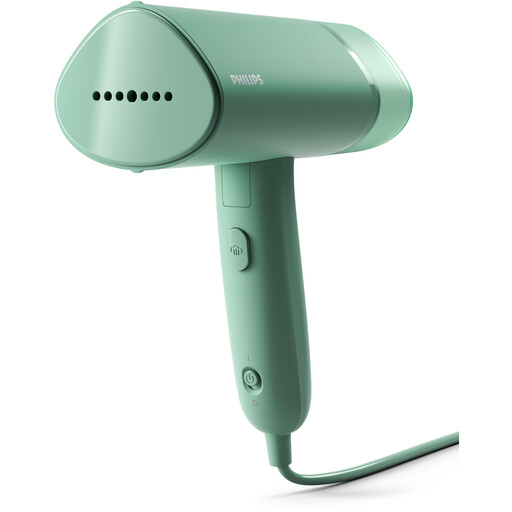
Why This Fits Their Persona: Suitable for professionals who want a compact appliance for regular home use, business clothing and travel packing.
The listing specifies a 100ml detachable tank, 30-second heat-up, 20g/min steam rate and foldable frame, making key trade-offs easier to assess.
1000W power, 2m cord, storage pouch and a steam plate listed for ironable fabrics.
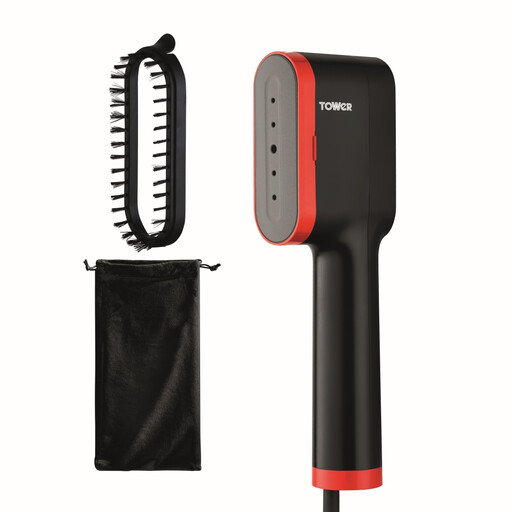
Why This Fits Their Persona: A larger-tank choice for households steaming several garments, thicker fabrics or occasional curtains and upholstery.
Its 260ml tank addresses frequent-refill concerns, while anti-drip, automatic shut-off and overheat protection are listed as separate features.
1400W power, ceramic soleplate, brush attachment, locking steam trigger and 1.9m cord.
We have compiled a complete, real-time list of products that fully satisfy these strict selection criteria and UK safety regulations.
Running cost depends on power rating, usage time and your electricity tariff. A handheld steamer may be used for shorter touch-ups, but a 1400W model draws more power while operating than a 900W model. Compare the appliance’s wattage with how long you expect to use it rather than assuming one format always costs less.
No. Use it only on fabrics permitted by the garment care label. Products may be listed as suitable for ironable fabrics, but delicate, coated, structured or dry-clean-only garments require extra caution. Keep the steamer moving and test an inconspicuous area first.
Lifespan depends on frequency of use, water quality, storage and maintenance. Empty the tank after each session, follow the manufacturer’s cleaning guidance and store the appliance dry and cool. A detachable tank, clear safety instructions and a suitable warranty can make ongoing ownership more manageable.