
24/7 Customer Support

Free returns

Same-day & Next-day Delivery

Quality Guaranteed

Unlock Your Welcome Offers: FREE Delivery | Up to 80% OFF | Free 30-day JoyPlus trial
Download the APP
A handheld garment steamer can make work shirts, dresses and school uniforms look presentable without setting up an ironing board. It is also useful for refreshing curtains, upholstery and other hangable fabrics. However, attractive claims such as “instant results”, “powerful steam” and “suitable for every fabric” do not always tell you whether a model will suit daily life in a UK home.
Before choosing a clothes steamer, look beyond headline wattage. The water tank, steam rate, handling design and safety features often have a greater effect on convenience than a large power figure printed on the box.
A 1,600W or 3,000W rating may suggest strong performance, but wattage mainly indicates the electrical power used by the heating element. It does not, by itself, confirm steam consistency, heat-up time or how comfortably the appliance can be handled.
Check the stated continuous steam rate, where available, as well as the tank capacity and operating instructions. A device that produces steam steadily may be more useful for everyday touch-ups than one with a high wattage but inconvenient water management.
Small tanks can keep a portable garment steamer compact, but they may require refilling during a full outfit or several garments. A larger tank adds weight and can make a handheld steamer less comfortable to hold vertically.
Also check whether the tank is detachable, whether it has a clear maximum-fill line and whether the manufacturer provides guidance on water and descaling. Emptying residual water after use can help reduce mineral build-up, particularly where local tap water is hard.
Steam is hot, and fabrics vary in their tolerance of heat and moisture. Always read the garment care label, keep the appliance moving and test an inconspicuous area first. Avoid steaming clothes while they are being worn. Delicate trims, coated fabrics, leather and materials marked as unsuitable for ironing may need different care.
A brush attachment can help separate fibres on thicker fabrics, but it does not remove the need to follow the care label.
A steam rate, measured in grams per minute, indicates the volume of steam produced over time. It is useful for comparing products when the figures have been measured under similar conditions, although real-world results also depend on the fabric and movement technique.
A quick heat-up is helpful before work, lectures or travel. For example, the Philips 3000 Series listing specifies a 1,000W heating system, an approximately 30-second heat-up time and steam output of up to 20g/min. The Tower model lists 1,400W power and a 20g/min steam rate.
For occasional touch-ups, a 100ml tank may be adequate and keeps the appliance compact. A 260ml or 300ml tank may be more suitable for steaming several garments, although the extra water increases the overall weight.
A foldable clothes steamer is particularly practical for small flats, student rooms and suitcases. Consider the folded dimensions, supplied pouch, cord length and whether the handle remains comfortable during vertical steaming.
Some models use a heated steam plate or ceramic soleplate, while others are designed mainly to work with steam held near the fabric. A ceramic soleplate may glide smoothly, but it should still be used according to the garment instructions.
Useful features include:
If you are looking for a steam iron for clothes, remember that a handheld garment steamer is designed primarily for vertical de-creasing. It may not create the sharply pressed trouser crease that a conventional iron and ironing board can provide.
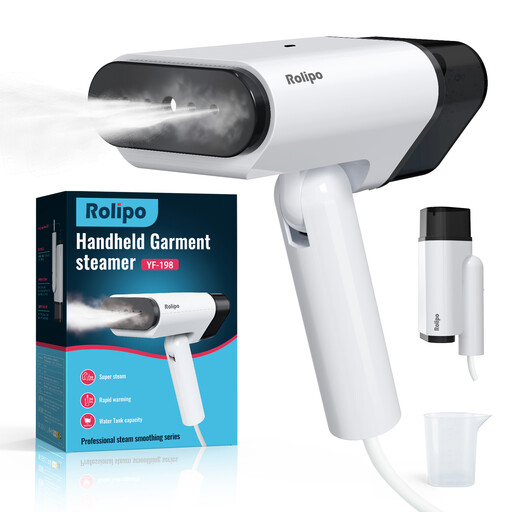
Why This Fits Their Persona: Its foldable design and one-button operation suit students, occasional users and shoppers who want a straightforward portable clothes steamer for home, office or travel.
The foldable format addresses storage and luggage concerns, while the integrated anti-leak tank is listed to help reduce spills during use and transport.
Foldable and portable design; simple one-button control; suitable for vertical steaming according to the product description.
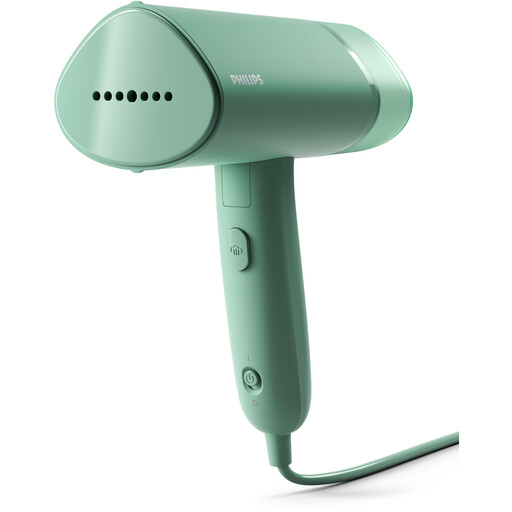
Why This Fits Their Persona: This compact option is suited to commuters and frequent travellers who want quick outfit touch-ups and organised storage.
The stated 30-second heat-up time and detachable 100ml tank make preparation and refilling more predictable than relying on vague “fast” claims.
Foldable frame; storage pouch; 2m cord; stated steam output of up to 20g/min. Check plug and voltage compatibility before travel.
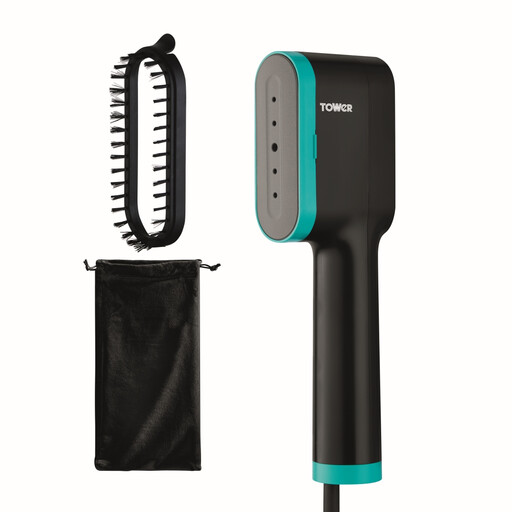
Why This Fits Their Persona: A 260ml tank and vertical steaming function make this a practical choice for households handling multiple garments, curtains or upholstery.
Its stated 20g/min steam rate, anti-drip system and ready light provide clearer practical information than wattage alone.
1,400W power; ceramic soleplate; locking steam trigger; automatic shut-off and overheat protection.
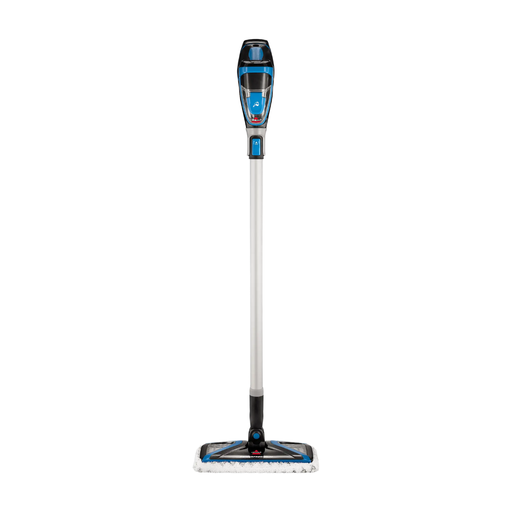
Why This Fits Their Persona: This is more than a fabric steamer: it suits households wanting one appliance for floors, tiles, windows, sinks, ovens and upholstery as well as selected garment touch-ups.
Its 3-in-1 format makes the broader cleaning purpose clear, avoiding the assumption that a clothes-only appliance will handle household surfaces.
1,500W heating element; 300ml tank; 7.6m power cord; multiple attachments with on-board storage. Follow surface compatibility instructions.
We have compiled a complete, real-time list of products that fully satisfy these strict selection criteria and UK safety regulations.
A handheld steam cleaner designed for tiles or ovens may have different attachments and heat output from a clothes steamer. Do not assume that a multipurpose appliance is suitable for every garment or household surface; follow its manual and test delicate materials first.
Running cost depends on wattage, heating time and how long the appliance is used. A lower-wattage model may use less electricity per minute, while a quicker appliance may reduce total operating time. Compare the rated power with your typical session rather than judging cost from wattage alone.
Lifespan varies with construction, frequency of use, water quality and maintenance. Empty the tank after each session, follow the manufacturer’s cleaning guidance and avoid adding detergents, oils or vinegar unless the manual specifically allows them. Stop using any unit that leaks or has a damaged cable.
It can handle hanging garments, quick wrinkle removal and fabric refreshing without an ironing board. An iron remains more suitable for crisp seams, collars and flat pressing. Choose according to the finish you need and the amount of storage space available.