
24/7 Customer Support

Free returns

Same-day & Next-day Delivery

Quality Guaranteed

Unlock Your Welcome Offers: FREE Delivery | Up to 80% OFF | Free 30-day JoyPlus trial
Download the APP
A handheld garment steamer can make creased shirts, dresses and jackets easier to prepare, but choosing the wrong model may leave you with repeated refills, damp patches or insufficient steam. UK shoppers often compare wattage and price first, yet these figures do not tell the whole story.
The most common buying pitfalls are:
A practical buying decision starts with how, where and how often you plan to use the appliance.
Power is normally shown in watts, while steam output is listed in grams per minute (g/min). Wattage indicates the electrical input used by the heating system; steam output gives a more direct indication of how much steam reaches the fabric.
For occasional use, an 800W clothes steamer may be sufficient for a blouse, shirt or dress. Models with higher output can be more suitable for thicker fabrics, multiple garments or regular household use. For example, the Tower model below lists 1400W and 20g/min, while the DSP standing garment steamer lists 2000W and 40g/min.
Check the manufacturer’s fabric guidance before steaming delicate materials. Hold the nozzle at the recommended distance and avoid leaving hot steam in one place.
A 150ml to 300ml tank keeps a portable clothes steamer relatively compact, which is useful for travel, university accommodation or office storage. The trade-off is more frequent refilling.
For a household handling several garments at once, a larger tank reduces interruptions. The DSP KD6019 has a stated 2.1-litre water tank, placing it in a different category from a handheld steam iron.
Also check whether the unit supports vertical and horizontal steaming. Vertical steaming is convenient for hanging clothes, curtains and some upholstery. Horizontal operation can be helpful when refreshing a garment on a flat surface, provided the instructions allow it and the tank is designed to prevent leaking.
A steamer should be comfortable to hold for the length of a garment. Look for:
A brush can help separate fibres and guide steam through heavier clothing, but it does not replace correct fabric care. Empty the tank after use, allow the appliance to cool fully and follow the manufacturer’s cleaning instructions to reduce mineral build-up.
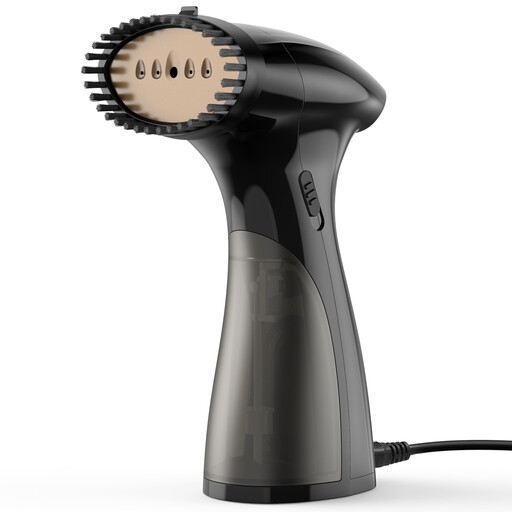
Why This Fits Their Persona: Its 0.8kg body and 150ml tank suit students, office workers and occasional users who want a compact appliance for a few garments at a time.
The stated 150ml tank makes its capacity clear, avoiding the assumption that every portable model is designed for a full laundry load. It also lists vertical and horizontal use with leak-free 360° operation.
800W rated power, one-button control, bristle brush attachment and a stated one-year limited warranty.
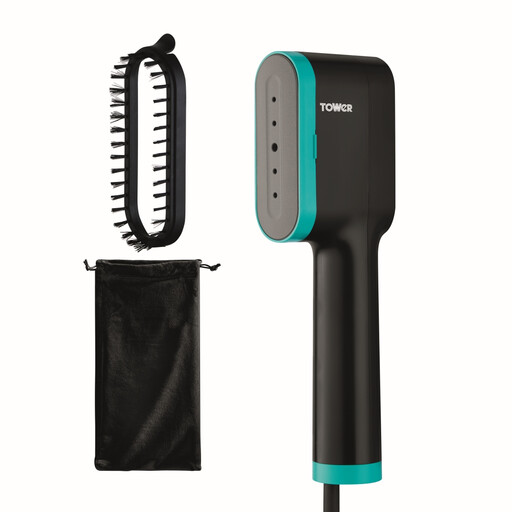
Why This Fits Their Persona: This option suits households and professionals wanting a handheld steamer with a larger tank and several built-in convenience features.
Its listed 260ml tank is more substantial than many travel-focused designs, while the 20g/min steam rate provides a measurable comparison point rather than relying only on phrases such as “powerful steam”.
1400W power, ceramic soleplate, locking steam trigger, brush attachment, automatic shut-off and anti-drip design.
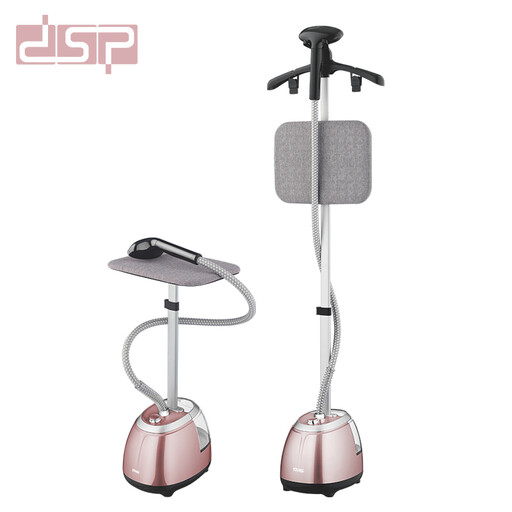
Why This Fits Their Persona: Its standing format and large tank are aimed at families or users steaming several garments, curtains and heavier fabrics in one session.
The 2.1L capacity addresses the frequent-refill problem, while 10 steam settings provide more control than a single-output travel clothes steamer.
2000W rated power, stated 40g/min steam output, 30-second heat-up, stainless steel nozzle, trouser clip and hanger system.
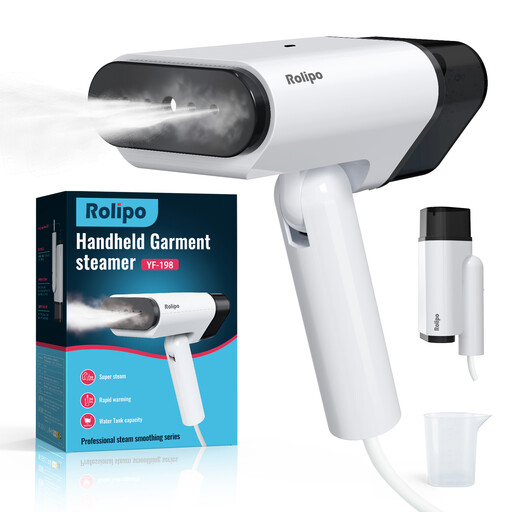
Why This Fits Their Persona: The foldable design is suited to suitcases, overnight bags and compact storage in a UK office, student room or small flat.
Its stated foldable format and integrated anti-leak water tank directly address luggage space and spill concerns. Confirm destination voltage and plug requirements before overseas travel.
Foldable construction, one-button operation, portable proportions and suitability for home, office and travel use.
Hang garments securely and keep the steam head moving over the fabric. Do not steam clothing while wearing it, direct steam towards people or animals, or use the appliance near electrical equipment. Check the care label first, especially for silk, sequins, coated fabrics and materials that may react to heat or moisture.
For UK use, select a model supplied with a suitable UK plug and electrical rating. The product instructions should take priority over general advice. Disconnect the appliance before cleaning, empty unused water after it cools and store it where children cannot reach the hot nozzle.
A clothes steamer with brush can be useful for coats and upholstery, but test an inconspicuous area first. Steam may refresh the appearance of some fabrics, but it should not be treated as a substitute for washing or professional cleaning.
We have compiled a complete, real-time list of products that fully satisfy these strict selection criteria and UK safety regulations.
Running cost depends on wattage, heating time and how long the appliance is used. A lower-wattage model may use less electricity per minute, while a higher-powered unit may reach operating temperature sooner. Compare the rated wattage with your typical session rather than assuming one appliance will always cost less.
Lifespan varies with build quality, frequency of use, water quality, storage and maintenance. Empty the tank after every session, follow descaling guidance and avoid operating the steamer without sufficient water. A damaged cord, plug, tank or steam outlet is a reason to stop using the appliance.
It can replace an iron for many hanging garments and quick crease removal, particularly shirts, dresses, jackets and curtains. However, a steam iron with a flat soleplate is generally more practical for pressing seams, cuffs and sharp creases. Choose a handheld garment steamer for convenience and vertical use, or consider both appliances if your household needs to cover both tasks.