
24/7 Customer Support

Free returns

Same-day & Next-day Delivery

Quality Guaranteed

Unlock Your Welcome Offers: FREE Delivery | Up to 80% OFF | Free 30-day JoyPlus trial
Download the APP
A handheld garment steamer can be a practical alternative to setting up an ironing board, particularly when you need to prepare workwear before the morning commute, refresh an outfit in a student room or smooth clothes in a hotel. However, attractive claims such as “powerful steam”, “fast heating” and “suitable for all fabrics” do not always tell you whether a model will suit your routine.
Before buying a clothes steamer, watch for three common pitfalls:
Power is measured in watts, while steam output is generally shown in g/min. A 1,200W handheld garment steamer producing up to 22g/min, for example, may provide a useful balance between quick heating and everyday wrinkle removal. Higher output can help with thicker fabrics, but it may also increase water consumption.
For occasional touch-ups, around 15–22g/min may be sufficient. If you regularly steam cotton, linen or multiple garments, consider a model with a higher output or a standing garment steamer with a larger boiler and tank.
A short heat-up time is valuable when you are dressing for work or preparing clothes before travelling. Models in this selection heat in approximately 30–45 seconds, although actual performance can vary with mains conditions and usage.
Tank capacity affects how long you can work before stopping. Compact travel models may hold around 100–150ml, while a handheld steamer with a 260ml tank can support longer sessions. For a family laundry load, a standing model with a tank of 1.8 litres or more is generally more practical.
Look for a comfortable grip, stable water tank and a soleplate or nozzle designed for controlled movement. A ceramic or glide-style soleplate may make horizontal use easier, while a brush attachment can help separate fibres on heavier fabrics.
Always check the garment care label first. Steam should not be directed at clothes being worn, people, animals, electrical sockets or appliances. For UK households, confirm that the product is supplied for 220–240V mains electricity, has the appropriate UK plug arrangement and includes clear safety and maintenance instructions. Empty the tank after use where the manufacturer recommends it, particularly in areas with hard water.
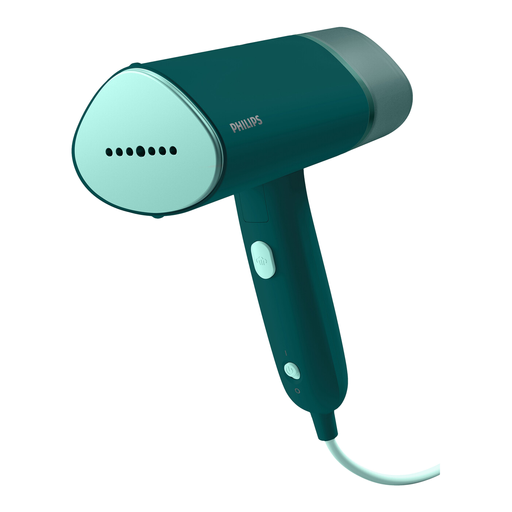
Why This Fits Their Persona: Its compact, lightweight format is suitable for everyday touch-ups in a flat, office or student accommodation without requiring an ironing board.
The compact design is paired with clearly stated mains operation and suitability for ironable fabrics, making it easier to assess for routine use rather than relying only on broad marketing language.
Compact handheld body; designed for home use and travel; no ironing board required.
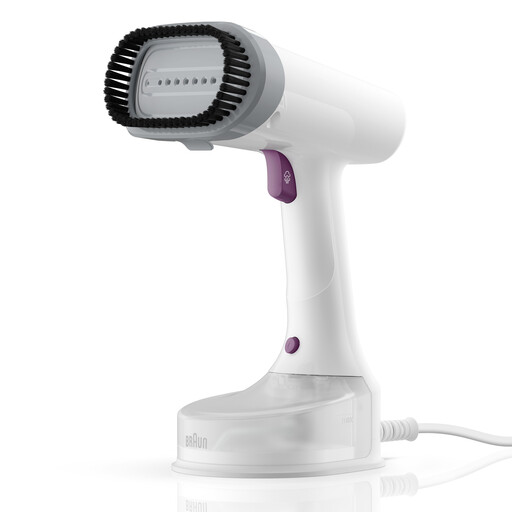
Why This Fits Their Persona: It suits shoppers who want a handheld clothes iron with both vertical and horizontal steaming options for shirts, pockets, buttons and quick flat-surface touch-ups.
Its published 45-second heat-up time, 150ml tank and 22g/min steam rate make the key performance trade-offs visible before purchase.
1200W power; up to 22g/min continuous steam; FreeGlide 3D soleplate; Smart iCare temperature technology.
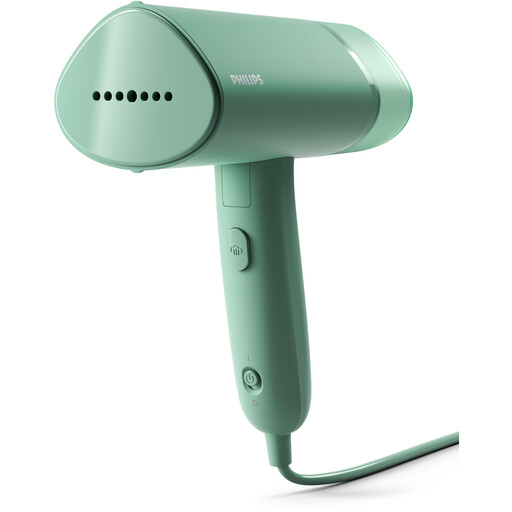
Why This Fits Their Persona: The foldable format, 100ml detachable tank and supplied storage pouch are convenient for business trips, holidays and small wardrobes.
The stated 220V compatibility and 30-second heat-up time help travellers check electrical suitability and preparation time before packing.
Foldable design; 1000W power; up to 20g/min continuous steam; 2m power cord and storage pouch.
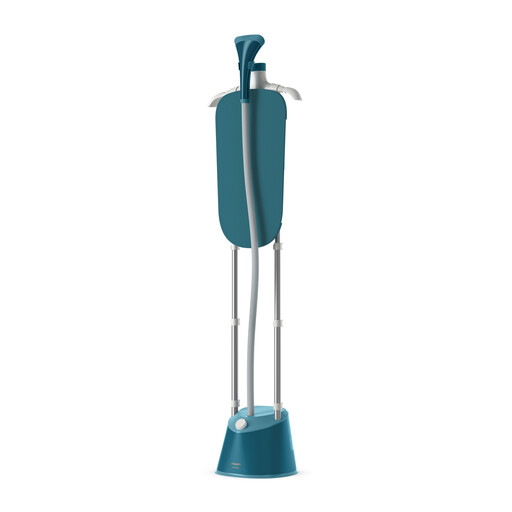
Why This Fits Their Persona: This standing garment steamer is suited to households preparing several garments at once, where a compact handheld tank would require repeated refilling.
The 1.8-litre detachable tank and three steam settings address the hidden compromises of short sessions and limited fabric control.
1800W power; up to 36g/min steam output; adjustable poles; integrated StyleBoard and Easy Rinse maintenance system.
We have compiled a complete, real-time list of products that fully satisfy these strict selection criteria and UK safety regulations.
A fabric steamer is designed for wrinkle removal and garment refreshing, not as a replacement for every ironing task. Sharp trouser creases and heavily pressed cotton may still require a traditional steam iron for clothes and a stable ironing board.
Running cost depends on wattage, steaming time and electricity tariff. A lower-powered model may use less electricity per minute, while a faster appliance may complete the task sooner. Compare the rated wattage and your likely session length rather than assuming one appliance will always cost less.
Lifespan depends on frequency of use, water quality, storage and maintenance. Emptying the tank after use, following descaling guidance and avoiding liquids other than those specified by the manufacturer can help reduce deposits and wear. Stop using any appliance with a damaged cord, leaking tank or unusual overheating.
It can replace an iron for many hanging garments and quick touch-ups, particularly shirts, dresses and jackets. A handheld garment steamer may be less suitable when you need crisp seams, firm trouser pleats or highly pressed collars. For those tasks, a handheld clothes iron or conventional steam iron may provide more direct pressure.