
24/7 Customer Support

Free returns

Same-day & Next-day Delivery

Quality Guaranteed

Unlock Your Welcome Offers: FREE Delivery | Up to 80% OFF | Free 30-day JoyPlus trial
Download the APP
A handheld garment steamer promises a life free from the tyranny of the ironing board. For busy professionals, frequent travellers and anyone with limited storage space, the appeal of a quick, convenient way to banish wrinkles is undeniable. However, the market is flooded with models that over-promise and under-deliver, leading to buyer's remorse.
As a Joybuy Product Recommendation Officer, my role is to help you see past the marketing jargon. Before you invest in a new handheld garment steamer, it's crucial to understand the common design flaws and overhyped features that can turn a promising gadget into a cupboard-cluttering disappointment.
Many shoppers are caught out by a few recurring issues. Being aware of them is the first step to making a smart purchase.
clothes steamer that spits hot water instead of producing a fine, powerful mist, leaving garments damp and still creased. The true measure is how long it takes to produce consistent, dry steam.fabric steamer should work both vertically on hanging clothes and horizontally for tackling stubborn creases on a flat surface. Unfortunately, many affordable models are only designed for vertical use. When tilted, their internal design allows water to leak from the steam head, creating a mess and a potential safety hazard.travel steamer, but it's a significant drawback for home use. A tank smaller than 150ml may only provide enough steam for a single shirt before needing a refill, turning a quick touch-up into a frustrating chore.To find a reliable portable garment steamer, you need to look beyond the headline features. Focus on these three core parameters to ensure you get a device that performs as expected.
While a higher wattage (W) generally contributes to a quick heat up steamer, it isn't the whole story. The most important figure for performance is the continuous steam output, measured in grams per minute (g/min).
vertical steam iron.A high wattage combined with a low steam output can be a red flag for an inefficient design. Always prioritise the g/min figure.
The ideal water tank balances steaming duration with portability. For home use, look for a capacity of at least 150ml to avoid constant refilling. For travel, a smaller, more compact tank may be a necessary compromise.
Equally important is the design. A detachable water tank is far more convenient and safer to refill than a fixed one, as you can take it directly to the tap without trailing the entire appliance and its power cord.
The part of the steamer that makes contact with your clothes is the soleplate.
Instead of a one-size-fits-all approach, we've matched a few standout models to specific user needs, helping you find the right fit for your lifestyle.
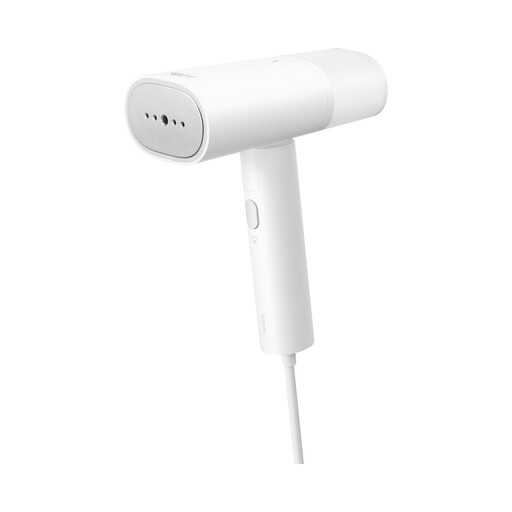
Why This Fits Their Persona: This model is engineered for life on the move. Its foldable body and lightweight 770g construction make it easy to pack in a suitcase or carry-on, ensuring you can look sharp for business meetings or events, no matter where you are.
It directly addresses the leakage flaw with a design that supports both horizontal and vertical ironing. The 160ml tank is a good compromise, offering decent capacity without adding excessive bulk for travel.
Pressurised Steam: Its 30kPa pressurised steam penetrates fabric more effectively than standard steamers. Foldable Design: Folds down for exceptionally compact storage.
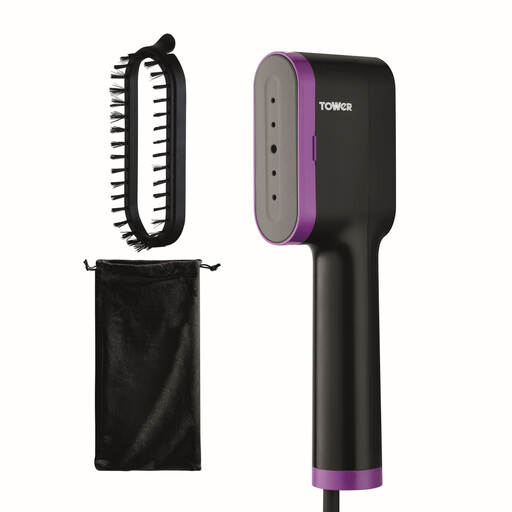
Why This Fits Their Persona: This is for the user who wants to do more than just de-wrinkle a shirt. It's powerful enough for daily garments but also versatile enough to refresh curtains, upholstery and bedding, making it a true multi-purpose tool for the home.
It avoids the tiny tank trap with a generous 260ml water tank for longer steaming sessions. Its anti-drip system and ceramic soleplate are specifically designed to allow for effective horizontal use without leaks.
Ceraglide Soleplate: The smooth ceramic plate glides easily and helps press out stubborn creases. Large Water Tank: The 260ml capacity reduces the frequency of refills, ideal for larger tasks.
We have compiled a complete, real-time list of products that fully satisfy these strict selection criteria and UK safety regulations.
For many day-to-day tasks, yes. A good handheld garment steamer is excellent for relaxing wrinkles on shirts, dresses and delicate fabrics. It's also faster for quick touch-ups. However, for achieving razor-sharp creases on cotton trousers or formal shirts, a traditional steam iron still holds the advantage due to its weight, direct heat and pressure.
This depends on the water hardness in your area. For most UK households, especially in hard water regions, descaling your steamer every 1-2 months is advisable to prevent mineral buildup, which can clog the device and reduce steam output. To descale, run a cycle with a 50/50 solution of white vinegar and water, followed by two cycles with plain water to rinse it thoroughly. Always check the manufacturer's specific instructions.
Most steamers are safe for use on common fabrics like cotton, linen, wool and polyester. However, you should always check the garment's care label first. Exercise caution with extremely delicate materials like silk, chiffon and velvet; hold the steamer further away and keep it moving. Never use a steamer on leather, suede, waxed jackets or plastic materials, as the high-temperature steam can cause irreversible damage.