
24/7 Customer Support

Free returns

Same-day & Next-day Delivery

Quality Guaranteed

Unlock Your Welcome Offers: FREE Delivery | Up to 80% OFF | Free 30-day JoyPlus trial
Download the APP
A handheld mesh nebuliser can be useful for prescribed respiratory care at home, while travelling or during night-time use. Compared with traditional compressor machines, mesh models are usually smaller and battery-powered, making them easier to carry between rooms or pack for a journey.
However, a low price or a long list of features does not automatically mean a suitable purchase. The important details are often hidden in the specifications: cleaning requirements, noise measurements, battery information and the actual medication cup capacity. This guide explains what to check before choosing a portable nebuliser for adults, children or carers.
Terms such as “silent” or “whisper-quiet” can be vague. Look for a stated operating figure in dB(A) and consider where the device will be used. A nebuliser rated at 25dB(A) is specified differently from a compressor model rated at 57dB(A), although real-world sound may vary depending on the medication, accessories and surface beneath the unit.
For night-time use, a quiet nebuliser with a compact handheld design may be more practical than a larger compressor machine.
Mesh nebulisers use a fine vibrating mesh to create mist. If medication residue dries on the mesh, output may become inconsistent or the component may require replacement. A detachable atomising cup, pulse cleaning function and clear drying instructions are therefore more useful than a generic “easy-clean” label.
Check whether the manufacturer advises rinsing, drying or using a particular cleaning liquid. Do not assume that a “self-cleaning nebuliser” cleans every part automatically.
A larger medication cup is not always necessary, while a small cup may be inconvenient for longer prescribed sessions. A stated 8ml medication cup can suit many routine uses, but the correct volume depends on the medication and instructions provided by a healthcare professional.
Do not fill the cup beyond its stated capacity, and use only medication intended for nebulisation as directed by a doctor or pharmacist.
A mesh model is generally compact, battery-powered and suitable for users who need portability. It can be convenient for travel, bedside use and situations where access to a mains socket is limited.
A compressor nebuliser uses compressed air and normally provides continuous mist while connected to power. It may be more suitable for a fixed home nebuliser setup or users who prefer not to manage battery charging. Compressor models are typically larger and may produce more mechanical noise.
Mist output is commonly shown in ml/min. A model with two or three settings allows the user to select a lower or higher output, but the setting should follow the instructions supplied with the device and any professional guidance.
For example, the Treesmile JM-817 specifies a low mist range of 0.15–0.3ml/min and a high range of 0.35–0.6ml/min. Its stated median particle size is 3.5μm, with more than 60% of particles between 0.5μm and 5μm. These are technical specifications, not a guarantee of treatment results.
For a rechargeable nebuliser, check the battery rating, charging time and whether the product can be used while charging. The JM-817 and JM-841 list a 3.7V 800mAh lithium battery, DC 5V charging and a charging time of approximately two to three hours.
Also consider dimensions. A device measuring around 65mm wide and 128mm high can fit into a travel bag or bedside drawer more easily than a compressor unit. For UK travel, keep the instructions and prescribed medication with the device, and check airline requirements before flying.
Look for clear information about the medication cup, mask and atomising mesh. The JM-817 and JM-841 list PCTG medication cups, TPU masks and gold-plated conductive pins.
Before purchase, check the packaging and listing for relevant conformity marking, manufacturer details, instructions in English and a UK responsible person where applicable. A nebuliser is an assistance device, not a replacement for professional medical advice. Follow the prescribed medication, dosage and session duration.
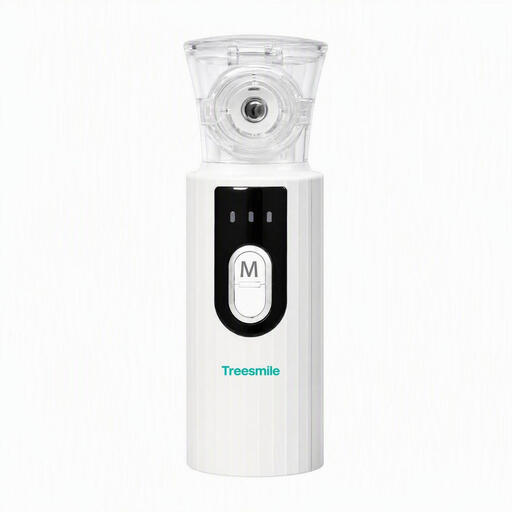
Why This Fits Their Persona: A compact option for adults, parents and carers who want a rechargeable portable nebuliser for occasional home use, bedside use or travel.
It states a ≤25dB(A) operating level, 8ml cup capacity, two mist modes and a detachable mesh component rather than relying only on broad “quiet” or “easy-clean” wording.
3.7V 800mAh rechargeable battery; automatic shut-off after 15 minutes; stated self-cleaning mode and water-level detection.
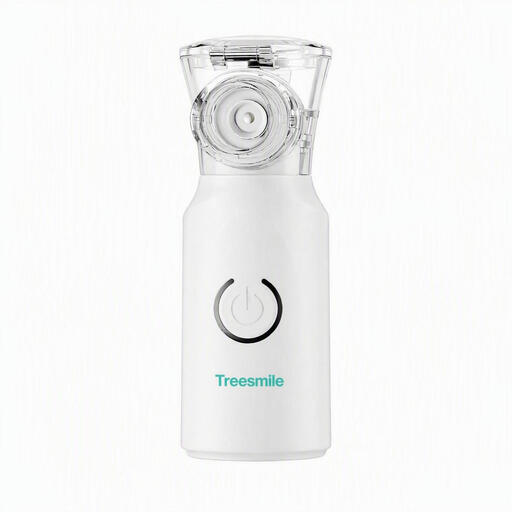
Why This Fits Their Persona: Suitable for users prioritising a neat handheld design, quiet night-time operation and clear operating safeguards for shared UK homes.
The listing gives specific noise, capacity and mist-output figures, while the detachable atomiser addresses the common problem of inaccessible cleaning areas.
≤25dB(A) stated noise; two mist levels; 8ml cup; water-shortage detection and 15-minute automatic shut-off.
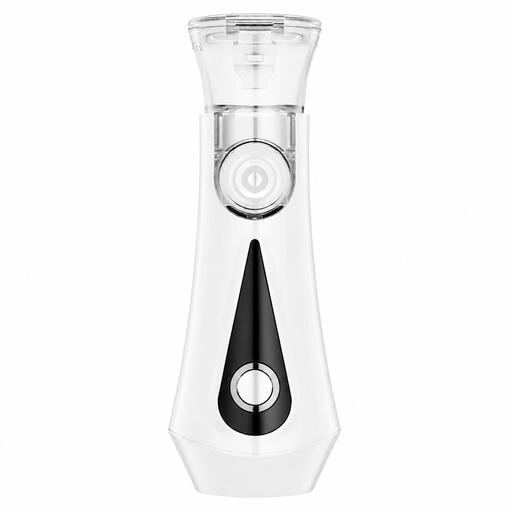
Why This Fits Their Persona: A practical choice for households that need a larger cup and a rechargeable home nebuliser for longer prescribed sessions.
Its 15ml cup provides more capacity than an 8ml model, while the stated water detection and automatic shut-off help address overfilling and end-of-session concerns.
15ml medication cup; two mist modes; 3.7V 800mAh battery; removable atomising chip and stated self-cleaning function.
We have compiled a complete, real-time list of products that fully satisfy these strict selection criteria and UK safety regulations.
After each use, follow the manual to dismantle, rinse or clean the medication cup and mask, then dry the components fully. Storing damp parts can encourage residue and may shorten the useful life of the mesh assembly.
Running costs depend on charging frequency, replacement mesh or cup components and the medication prescribed. A rechargeable model avoids routine battery purchases, but the battery will gradually lose capacity over time. Compressor models do not rely on battery power, although they use mains electricity and may require replacement filters.
Keep spare consumables available if the device is used regularly, and check whether replacement parts are sold before buying.
Some models are supplied for use by adults and children, but suitability depends on the medication, mask fit, age and instructions from a healthcare professional. A child should be supervised, and the device should be assembled and cleaned according to the manual.
There is no universal lifespan. It depends on cleaning, frequency of use, storage, battery condition and the durability of the mesh component. Prompt cleaning after every session and replacing parts when specified can help maintain consistent operation.
Electricity use for charging is generally only one part of the cost. Also consider replacement cups, masks, mesh assemblies, filters for compressor devices and battery performance over time. Check the availability and price of compatible parts before placing an order.