
24/7 Customer Support

Free returns

Same-day & Next-day Delivery

Quality Guaranteed

Unlock Your Welcome Offers: FREE Delivery | Up to 80% OFF | Free 30-day JoyPlus trial
Download the APP
In a world of mass-produced accessories, a handmade crystal bracelet offers a unique blend of personal style and mindful intention. Whether you are drawn to the vibrant colours of natural stones or the symbolic meanings they hold, choosing the right piece can feel like a significant decision. Many people seek out this type of spiritual jewellery not just for its beauty, but as a daily reminder of their personal goals, from enhancing focus to inviting a sense of calm.
Navigating the market can be confusing, with countless designs and claims. This guide is designed to offer practical advice, helping you understand what to look for in a quality piece. We will explore some key considerations and present a few of our top recommendations to help you find a bracelet that resonates with you, or to select a thoughtful luxury crystal gift for someone special.
Finding the perfect bracelet involves more than just picking a pretty colour. Here are a few key factors to consider to ensure you select a piece you will treasure.
Different crystals are traditionally associated with various qualities and energies. While these are symbolic, reflecting on what you hope to cultivate can guide your choice. For instance, an amethyst bracelet UK shoppers often seek is linked with clarity and calm, making it a popular choice for those needing a bracelet for focus and concentration. Similarly, a citrine bracelet for luck is often chosen by individuals hoping to attract abundance and positivity. Researching these traditional meanings can add another layer of personal significance to your jewellery.
The quality of a handmade crystal bracelet lies in its details. Look for bracelets made from a natural stone bracelet design, as they showcase the unique patterns and inclusions of each gem. Pay attention to the construction; many feature a durable elastic cord for a comfortable, one-size-fits-most design. An original DIY beaded bracelet style ensures that no two pieces are exactly alike, offering a truly personal accessory that stands out from factory-made items.
Comfort is key. Most elasticated bracelets are designed to fit a standard wrist size, often around 19cm, but it is always wise to check the product specifications. Also, consider the maintenance required. Natural crystals are durable but should be treated with care. It is generally recommended to avoid direct contact with perfumes and harsh chemicals and to store your bracelet separately to prevent scratches.
Here are a few standout handmade crystal bracelets, each with a unique design and character.


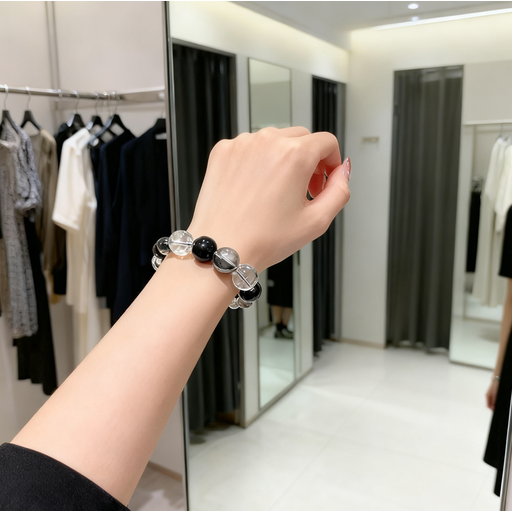
If our recommendations have inspired you but you have not found the perfect match, or if you wish to explore other stones and designs, there is a wider world of crystal accessories to discover. From different gems to varied styles, finding the right piece is a personal journey.
Explore our full collection to find the one that speaks to you. [Discover our complete range of Crystal Accessories](https://www.joybuy.co.uk/explore/crystal-accessories/YO9v2zhD)
1. Which wrist is correct for wearing a crystal bracelet? Traditionally, the left hand is considered the "receiving" hand, ideal for absorbing the energy of crystals like amethyst or citrine. The right hand is the "giving" hand, used for releasing energy or protecting against negativity. However, there are no strict rules. The most important factor is to wear it where it feels most comfortable and right for you.
2. How should I care for my handmade crystal bracelet? To maintain its beauty, avoid exposing your bracelet to harsh chemicals like perfume, chlorine or cleaning agents. Wipe it gently with a soft, slightly damp cloth to clean it. When not in use, store it in a separate pouch or box to prevent the natural stones from being scratched by other jewellery.
3. Can I wear several different crystal bracelets at the same time? Yes, many people enjoy stacking multiple bracelets to combine their aesthetic appeal and symbolic meanings. When doing so, consider how the different stones feel together. It is also a good idea to be mindful of the bracelets rubbing against each other, as harder stones can scratch softer ones over time.