Choose a lens for the smallest soap detail you need to show before choosing a camera body. Sony specifies 1:1 reproduction for its E 30mm F3.5 Macro, Nikon specifies 1:1 for its NIKKOR Z MC 50mm f/2.8, and Canon lists up to 1:2 for its RF 35mm F1.8 MACRO IS STM. If wider styled scenes matter more than life-size details, consider how you will frame and light each shot; for very close work, check whether the lens leaves enough room for your lighting.
Who needs which setup?
Soap makers documenting fine details
If stamped logos, swirls, botanicals or cut edges need to fill your portfolio images, start with a lens that reaches the reproduction scale you need. Sony and Nikon each specify 1:1 reproduction for the macro lenses discussed here.
Makers building a repeatable tabletop portfolio
If you photograph several soaps from overhead or low angles, consider how easily you can repeat your framing and lighting. Canon and Nikon describe vari-angle screens on the EOS R50 and Z50II, respectively; a screen does not replace consistent lighting and colour settings.
Craft creators shooting photos and process clips
If your portfolio also includes cutting or wrapping clips, check the camera body’s video features after settling on a lens for your still images. Canon lists UHD 4K 30p for the EOS R50, while Nikon describes video recording for the Z50II.
What matters when choosing?
Start with the smallest detail you want to photograph, then consider how you will repeat your tabletop shots and whether you will record process clips.
| Concern | What to check | Who this matters to |
|---|
| Small details and texture |
Check the exact lens’s maximum magnification and its compatibility with the camera body. A macro label alone does not establish 1:1 reproduction. |
If I want stamps and fine surface texture to fill the image, lens magnification comes before extra body features. Around 42% of consumers would put fine-detail reproduction first. |
| Repeatable tabletop shots |
Check whether the screen suits your shooting angles and whether the lens leaves room for your lighting arrangement. |
When I photograph several soaps, I need framing and colour I can keep consistent from one shot to the next. For around 33% of consumers, that repeatable workflow would be the primary concern. |
| Photos and process clips |
Check video features if you will use them, without overlooking the lens needed for still close-ups. |
If I also film cutting or wrapping, I want one camera to handle both kinds of content. That combined photo-and-video need would come first for around 25% of consumers. |
Buying pitfalls to avoid
-
Assuming every macro-labelled lens reaches 1:1
Sony specifies 1:1 for the E 30mm F3.5 Macro and Nikon specifies 1:1 for the NIKKOR Z MC 50mm f/2.8. Canon specifies up to 1:2 for the RF 35mm F1.8 MACRO IS STM, which produces a different reproduction scale.
Check maximum magnification for the exact lens. Make 1:1 a requirement only if life-size images of small details matter to your portfolio.
Choosing the wrong reproduction scale could mean needing another lens for your smallest details.
-
Choosing a kit before checking its lens
Nikon describes the Z50II 16-50mm kit lens as a walkaround zoom and identifies the separate NIKKOR Z MC 50mm f/2.8 as its 1:1 macro option.
Check the exact kit contents, lens mount and magnification before deciding that a camera package covers your close-up work.
-
Overlooking space for lights near the soap
Sony states a minimum working distance of 2.4 cm for its E 30mm F3.5 Macro. Working that close can restrict where you place lighting around a tabletop subject.
Plan a shot of your smallest detail and compare working-distance specifications if you need more space around the soap.
-
Assuming charging equipment comes with every kit
Canon UK Store states that a USB-C charger is not included with its cited EOS R50 package; contents can depend on the package selected.
Check the exact box-contents list and charging requirements before checkout.
You may need a compatible charger for a package that does not include one.
Relevant camera and lens brands
Sony
An E-mount route pairing the APS-C ZV-E10 II with the E 30mm F3.5 Macro for small soap details.
- Sony specifies approximately 26.0 megapixels for the ZV-E10 II sensor and 1:1 magnification for the E 30mm lens.
- The lens’s stated 2.4 cm minimum working distance leaves little space between the lens and subject at its closest working position.
Nikon
A Z-mount route combining the Z50II’s vari-angle screen with a separate macro lens for detailed tabletop photographs.
- Nikon specifies 1:1 reproduction for the NIKKOR Z MC 50mm f/2.8.
- The Z50II 16-50mm kit zoom is a different lens; check the package if life-size close-ups are essential.
Canon
An RF-mount route combining the EOS R50 with the RF 35mm F1.8 MACRO IS STM for close-ups and wider styled scenes.
- Canon lists a vari-angle touchscreen for the EOS R50 and up to 1:2 magnification for the RF 35mm lens.
- The cited lens does not reach the 1:1 reproduction specified for the Sony and Nikon macro lenses discussed here.
Joybuy cameras for portfolio work
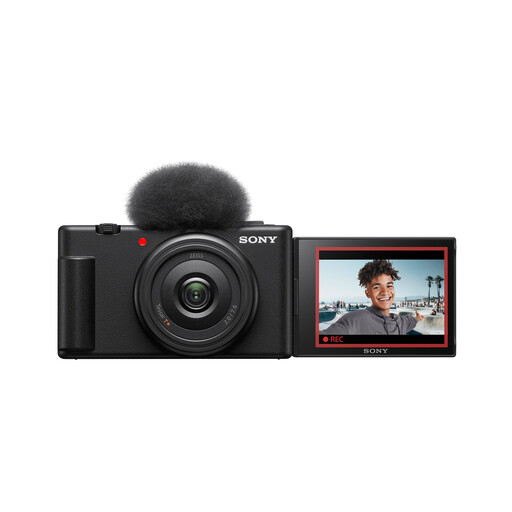
This compact camera is a choice to consider for wider tabletop photographs and process clips. Check its close-focus capability before relying on it for tiny soap details.
 No image available
Sony ZV-1F compact vlog camera with 1-inch sensor and ultra-wide lens
Consider this camera for wider soap arrangements or process clips rather than assuming it can fill the frame with tiny details.
Its listed lens is fixed; check its close-focus capability against the smallest feature you plan to photograph.
View on Joybuy
Frequently asked questions
Do I need a true macro lens for handmade soap?
Choose a 1:1 macro lens if small stamps, swirls or cut-edge textures need to occupy much of the image. Sony and Nikon specify 1:1 for the lenses discussed here; Canon specifies up to 1:2 for its RF 35mm F1.8 MACRO IS STM, which may suit larger close-ups.
Does a vari-angle screen help with tabletop photographs?
Yes, it can make overhead and low-angle framing easier when the camera is awkward to view from behind. For a consistent portfolio, also keep your lighting and white-balance approach repeatable; the screen alone cannot do that.
Should I choose a standard kit zoom or a macro lens?
If life-size soap details are central to your portfolio, establish which macro lens you need before choosing a kit. Nikon identifies the NIKKOR Z MC 50mm f/2.8 as a 1:1 lens, whereas its Z50II 16-50mm kit contains a walkaround zoom.
What if a camera bought from a UK trader is faulty?
Keep your order record and evidence of the fault, then contact the seller promptly. GOV.UK provides guidance on faulty goods; a retailer’s change-of-mind returns policy is separate from remedies for faulty goods.


