
24/7 Customer Support

Free returns

Same-day & Next-day Delivery

Quality Guaranteed

Unlock Your Welcome Offers: FREE Delivery | Up to 80% OFF | Free 30-day JoyPlus trial
Download the APP
Whether you're capturing meeting minutes, outlining your next great novel or organising your university lecture notes, the right notebook can make all the difference. But with so many options available, choosing the perfect hardcover notebook can feel overwhelming. From paper weight to page layout, the details matter. This guide is designed to cut through the clutter, offering practical advice to help you find a notebook that not only meets your needs but also feels great to use.
We'll explore what to look for when buying and share some of our top recommendations for professionals, students and journaling enthusiasts across the UK.
Finding the ideal notebook comes down to understanding your specific requirements. Here are a few key factors to consider before making your choice.
The size of your notebook dictates its portability and writing space. An A5 lined journal (approximately 14.8 x 21 cm) is a popular choice for its balance of usability and convenience. It’s compact enough to slip into a tote bag or backpack, making it ideal for taking notes on the go, daily journaling, or as a professional notebook for work meetings.
In contrast, an A4 wirebound notebook (approximately 21 x 29.7 cm) offers a much larger canvas. This makes it an excellent option for student notebooks, where extensive note-taking is common, or for professionals who need ample space for mind-mapping, project planning and detailed reports.
The paper itself is arguably the most important feature. Paper weight is measured in grams per square metre (GSM). A standard notebook might use 70-80 GSM paper, which is fine for ballpoint pens. However, for a smoother writing experience with minimal ink bleed-through, especially if you use fountain pens or markers, look for paper that is 100 GSM or higher.
The layout is just as crucial. While lined pages are a classic for writing, you might also consider an undated planner. This format provides the structure for monthly and weekly planning without being tied to specific dates, offering great flexibility for long-term projects or academic years.
The binding affects both the notebook's durability and how it lies flat when open. Wirebound notebooks are practical because they can be folded back on themselves and lie completely flat. This is useful when desk space is limited.
Traditional case-bound hardcover notebooks offer excellent durability and a classic, professional aesthetic. They are built to last, protecting your notes for years to come, which makes them a solid choice for archiving important information or for use as a personal journal.
Here are a few standout options that cater to different needs, from flexible planning to everyday note-taking.
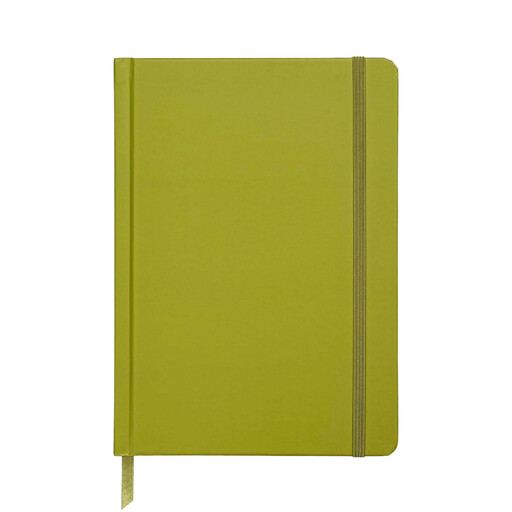
Why It Stands Out: The key strength of this planner is its flexibility. The undated 18-month design means you can start organising your life or projects at any point in the year without wasting a single page. It features a durable hardcover and is filled with high-quality 100g offset paper, which provides a smooth surface for writing and helps prevent ink from showing through.
Pros:
Who is it for? This is an excellent choice for individuals who want a structured yet flexible system for goal tracking, project management or daily scheduling. It’s perfect for those whose planning needs don't align with a standard calendar year.
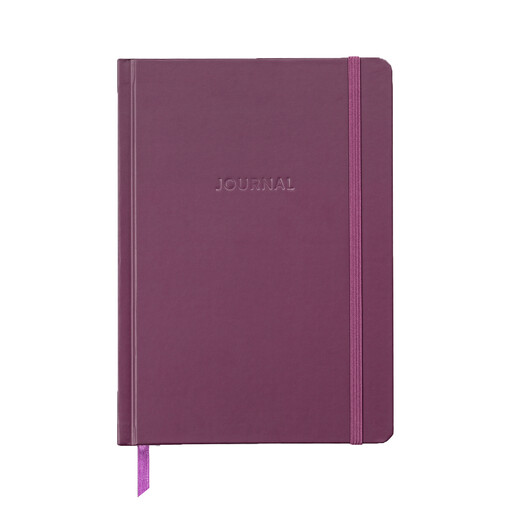
Why It Stands Out: This notebook combines everyday functionality with a touch of elegance. The textured hardcover, available with various finishes, gives it a distinctive and premium feel. Inside, the 96 sheets of 100g cream ruled paper offer a superior writing foundation, minimising ghosting and bleed-through. It’s a classic A5 lined journal elevated for modern use.
Pros:
Who is it for? Ideal for professionals seeking a smart notebook for meetings, writers who appreciate quality paper or anyone looking for a sophisticated journal. Its attractive design also makes it a thoughtful and practical gift.
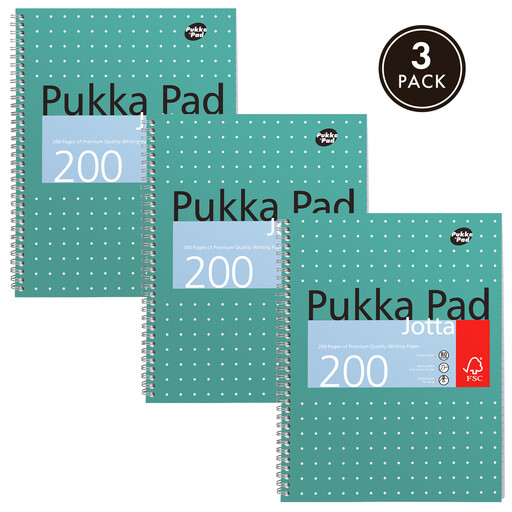
Why It Stands Out: The Pukka Pad Jotta is a staple for a reason. Its most practical feature is the perforated margin, which allows each of the 200 pages to be torn out to a true A4 size. Combined with the 4-hole punching, this makes filing notes incredibly simple and tidy. The wirebound format allows the notebook to lie perfectly flat, maximising writing comfort.
Pros:
Who is it for? This is a highly practical choice for university students who need to organise notes for different modules and professionals who frequently archive handwritten documents. It’s built for volume, organisation and efficiency.
While these selections cover a range of popular needs, the world of stationery is vast. If you're still searching for the perfect fit, whether it's a different size, a unique page layout or a specific cover design, there are many other options to discover.
Explore our full collection of writing notebooks to find the right tool for your thoughts, plans and ideas.
What is the difference between 80 GSM and 100 GSM paper? GSM stands for Grams per Square Metre and indicates the weight and thickness of the paper. 80 GSM is a common, good-quality weight suitable for everyday writing with ballpoint or gel pens. 100 GSM paper is noticeably thicker and more durable. It provides a more premium feel and is better at preventing ink from bleeding or "ghosting" (appearing on the other side), making it a preferred choice for fountain pen users.
Is an A5 or A4 notebook better for work? This depends entirely on your job and workflow. An A5 notebook is highly portable, perfect for carrying between meetings or on a commute. An A4 notebook offers more space for in-depth notes, diagrams or project planning. Many professionals use both: an A4 for their main desk and an A5 for meetings and travel.
What are the benefits of an undated planner? An undated planner offers complete flexibility. You can begin using it at any time of the year without wasting pages, which often happens with dated planners if you start mid-year. They are also ideal for tracking projects with non-standard timelines, managing academic schedules or for those who only need to plan on certain days or weeks.