
24/7 Customer Support

Free returns

Same-day & Next-day Delivery

Quality Guaranteed

Unlock Your Welcome Offers: FREE Delivery | Up to 80% OFF | Free 30-day JoyPlus trial
Download the APP
Choosing Harringtons dog food is not simply a matter of picking a flavour your dog enjoys. The range includes dry kibble, wet trays, grain-free recipes, puppy food, senior dog food and small breed formulas, with differences in ingredients, texture, pack size and feeding guidance.
The wrong choice can lead to wasted food, unsuitable portions or digestive upset during a sudden change. Marketing language can also make similar recipes appear very different. Use the following checks to compare products more objectively.
Words such as “natural”, “superfoods” and “high meat” describe positioning, but they do not replace the statutory product information. Check whether the food is labelled as a complete pet food for your dog’s life stage. A complete food is intended to provide the nutrients required when fed as directed, whereas a complementary product should not be used as the sole diet.
Look at the full composition and analytical constituents rather than focusing only on front-of-pack wording. For example, adult dry recipes in the range commonly list protein, fat, fibre and ash values, alongside added vitamins and trace elements.
Grain-free dog food avoids ingredients such as maize, barley, oats or rice, but it is not automatically suitable for every dog with digestive or skin concerns. Grain-free recipes may still contain several animal proteins, oils or other ingredients that an individual dog does not tolerate.
Harringtons Superfoods Adult Salmon with Vegetables and the puppy grain-free recipes are labelled hypoallergenic and grain-free, but the product information also notes that some recipes are made on lines handling grain. If your dog has a diagnosed allergy or ongoing symptoms, discuss dietary changes with a vet rather than relying on packaging claims alone.
A 12kg bag may offer practical value for a larger adult dog, but it is a costly mistake if your dog refuses the food. Smaller 1kg or 1.7kg packs can be more sensible when introducing a new recipe, especially for small breeds or dogs with uncertain preferences.
Wet food has a different storage challenge. Opened trays should be refrigerated and used within the period shown on the label, commonly 72 hours for the wet multipacks listed here.
Select food according to the label, not just your dog’s age in human terms.
The Harringtons Small Adult Rich in Turkey & Rice provides a feeding guide for small dogs and is labelled as complete food for adult small breed dogs. Do not assume a small kibble recipe is suitable for puppies, senior dogs or larger breeds unless the label says so.
Harringtons dry dog food is convenient to measure, store and use for regular meals. Listed adult recipes include lamb, chicken, turkey, beef and salmon varieties, with pack sizes such as 1.7kg, 4kg and 12kg.
Harringtons wet dog food contains substantially more moisture. The Salmon 8 × 400g trays list 75–76% moisture, while the dry Adult Rich in Salmon & Potato recipe lists 21% protein and 10% fat on its analytical declaration. These percentages should not be compared directly without accounting for moisture.
Wet food can be served alone when labelled complete, or mixed with dry food. If combining formats, reduce the dry portion so the total daily calories do not gradually increase.
Check the named protein source and the proportion in the composition. The Adult Rich in Salmon & Potato recipe lists salmon and meat meals at 28%, including dried salmon and freshly prepared chicken. The Adult Rich in Lamb & Rice 12kg recipe lists lamb and meat meals at 28%.
Feeding tables are starting points rather than fixed prescriptions. Adjust portions for your dog’s body condition, age and activity level, count treats as part of daily intake and provide fresh drinking water. Introduce a new food gradually over around 3–7 days to reduce the chance of digestive upset.
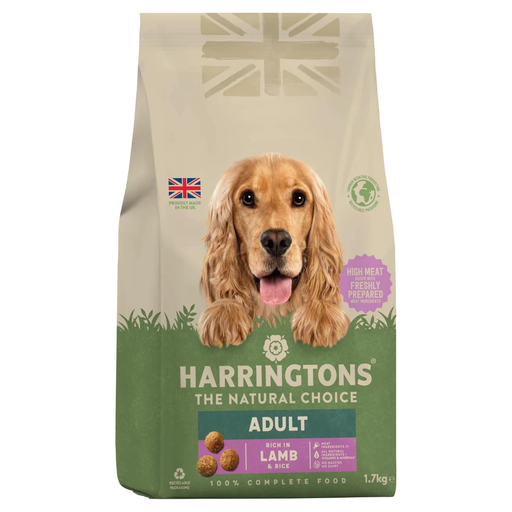
Why This Fits Their Persona: A manageable 1.7kg pack lets first-time buyers introduce a complete adult recipe without committing to a large bag.
The composition and analytical declaration are visible, so shoppers can check the lamb content, 21% protein and 11% fat rather than relying on front-of-pack claims.
Complete adult food; includes lamb and meat meals, rice, salmon oil and prebiotic FOS.
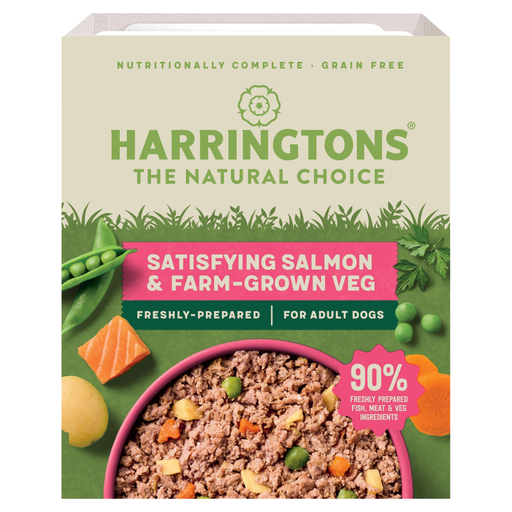
Why This Fits Their Persona: This wet tray suits owners looking for a grain-free format with a clearly stated fish-and-vegetable composition and convenient single-tray serving.
The tray lists 76% moisture and gives a clear storage instruction after opening, helping prevent incorrect portion or storage assumptions.
Steam-cooked format; 90% freshly prepared fish, meat and vegetable ingredients stated in the listing.
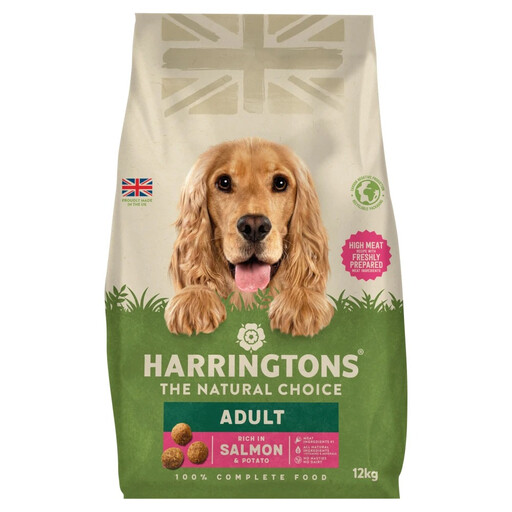
Why This Fits Their Persona: The 12kg format is practical for larger or active households that already know their dog accepts a salmon-based adult recipe.
Its ingredient and nutrient figures can be checked before purchasing in bulk, rather than choosing solely on the promise of a large bag saving money.
28% salmon and meat meals listed; 21% protein, 10% fat and added salmon oil.
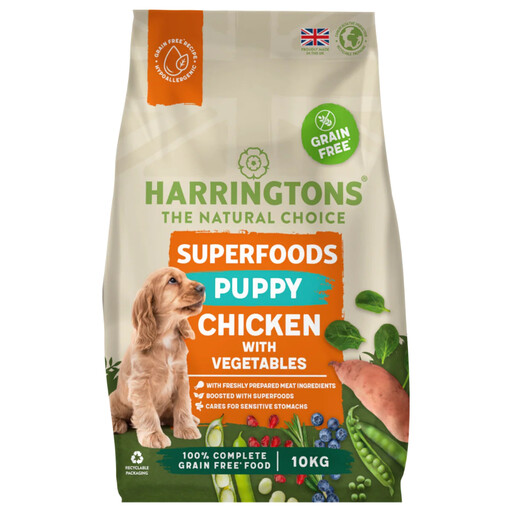
Why This Fits Their Persona: A puppy-specific, grain-free recipe with smaller kibble is designed for owners feeding a growing dog rather than adapting adult food.
The label identifies it as puppy food and provides age-based feeding instructions, reducing the risk of using an adult maintenance recipe during growth.
Lists 30% protein and 14% fat; includes chicken, sweet potato and added vitamins and minerals.
We have compiled a complete, real-time list of products that fully satisfy these strict selection criteria and UK safety regulations.
Some Harringtons recipes are grain-free and labelled hypoallergenic, but suitability depends on the individual dog and the complete ingredient list. Introduce any new food gradually. Persistent vomiting, diarrhoea, itching or appetite changes require veterinary advice.
Mix a small amount of the new food with the existing food, increasing the proportion over approximately 3–7 days. Follow the pack’s feeding guide, adjust for activity and body condition and keep fresh water available.
Cost depends on the product price, daily portion, your dog’s size and the food’s moisture content. Dry food is generally easier to store and measure, while wet food can provide variety and moisture. Compare the cost per daily feeding amount rather than the price of one pack alone.