
24/7 Customer Support

Free returns

Same-day & Next-day Delivery

Quality Guaranteed

Unlock Your Welcome Offers: FREE Delivery | Up to 80% OFF | Free 30-day JoyPlus trial
Download the APP
Driving with standard halogen bulbs can often feel like a compromise, especially on poorly lit British roads or during a sudden downpour. The dim, yellowish light can reduce visibility and cause eye strain, while the dated look doesn't match the crisp aesthetic of modern vehicles. If you're looking for a significant improvement in both safety and style, upgrading to LED bulbs is a practical solution.
As the Joybuy Product Recommendation Officer, my role is to help you navigate the options. This guide focuses on HB4 9006 LED bulbs, a popular choice for fog lights and headlights. We'll break down the essential features to look for and provide some clear recommendations to help you make an informed choice for your car, SUV or truck.
Making the right choice goes beyond just picking the brightest bulb. Here are a few key factors to consider to ensure you get a reliable and effective upgrade.
The most noticeable difference after an LED upgrade is the light output. Modern LED bulbs offer a substantial increase in brightness over old halogen technology. Look for bulbs that provide a clean, clear beam pattern. The colour of the light is measured in Kelvin (K). Many drivers prefer 6500K white car bulbs as they produce a crisp, daylight-white light that improves contrast and makes it easier to spot hazards on the road. This type of bright car headlight upgrade can make a significant difference in night-time and poor-weather driving.
For many UK drivers, a straightforward DIY installation is a priority. The ideal choice is a set of plug and play 9006 bulbs that feature a 1:1 halogen replacement design. This means the LED bulb has the same dimensions and connection points as your original halogen bulb, allowing it to fit directly into the housing without any modifications, cutting or complex wiring.
Additionally, many modern vehicles use a CAN bus (Controller Area Network) system to monitor the car's electronics. Because LEDs use less power than halogens, the system can mistakenly think a bulb has failed, triggering a dashboard error. To prevent this, look for bulbs advertised as CAN bus error free LED, which have built-in technology to communicate correctly with your vehicle's computer.
A key advantage of LED technology is its longevity. Many high-quality LED bulbs are rated for an exceptionally long operational life, with 50000 hour car bulbs being a common standard. This longevity is heavily dependent on effective heat management. LED chips produce heat, and if not dissipated properly, it can lead to reduced brightness and premature failure. Look for bulbs with robust cooling systems, such as those with high-speed mini fans or advanced aviation-grade aluminium heat sinks, which work to draw heat away from the critical components.
Based on features that matter to UK drivers—such as straightforward installation, reliable performance and improved visibility—here are a few options to consider.
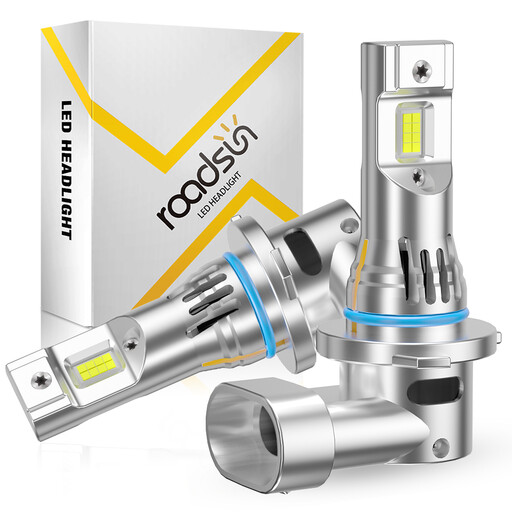
Why It Stands Out: This Roadsun bulb is specifically geared towards being a powerful LED fog light bulb upgrade. It uses CSP lighting chips to produce a bright, daylight-like beam designed to cut through fog and rain effectively. The combination of a high-speed turbo fan and an aluminium housing provides an active cooling system to maintain performance and longevity.
Pros:
Who is it for? Drivers who prioritise maximum visibility in adverse weather conditions and want a durable, flicker-free fog light solution.
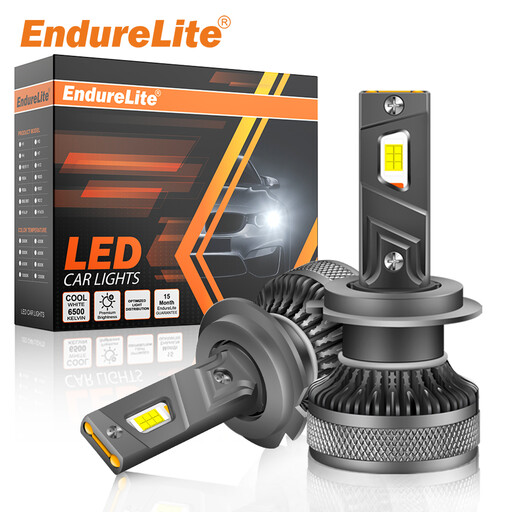
Why It Stands Out: The ENdureLite combo pack focuses on delivering a balanced upgrade. It offers a significant brightness increase over stock bulbs while maintaining the same physical size, which helps ensure the beam pattern remains focused and doesn't create glare for oncoming traffic. Its CANbus ready design makes it a solid choice for a wide range of modern vehicles.
Pros:
Who is it for? Vehicle owners looking for a reliable, all-around bright car headlight upgrade that is easy to install and broadly compatible.
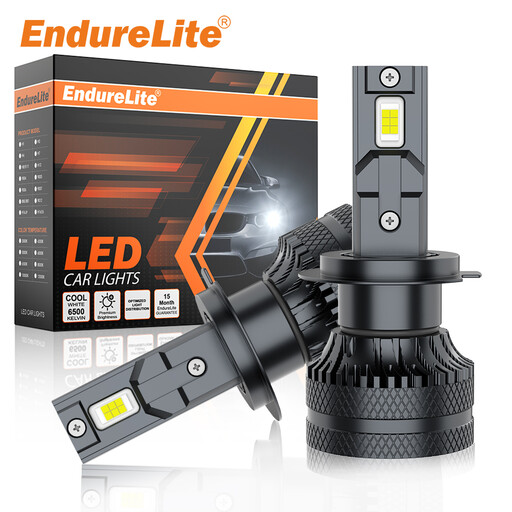
Why It Stands Out: This ENdureLite model places a strong emphasis on its beam pattern precision. By using a 1:1 halogen filament positioning design, it aims to create an ultra-focused beam with 360-degree illumination, minimising dark spots and glare. The built-in CANbus and compact, driverless design make for a very streamlined installation process.
Pros:
Who is it for? Drivers who are particularly concerned with achieving a precise, glare-free beam pattern while still benefiting from a simple installation and high brightness.
The recommendations above represent a strong starting point, but every vehicle and driver has unique needs. If you're searching for different specifications or lighting solutions for other parts of your vehicle, you can find more choices in our broader category.
Explore our full range of Light Fan with Bulb products to find the perfect fit for your car.
Yes, HB4 and 9006 are interchangeable terms for the same type of bulb fitting. You will often see them listed together, as in "HB4/9006". They have the same base and will fit in the same socket, so if your vehicle manual specifies one, the other will also be compatible.
This depends on your vehicle. Many modern cars, particularly European models, use a CAN bus system that monitors bulb function. Since LEDs draw less power, this system might interpret the lower power draw as a burnt-out bulb and display an error. To avoid this, it is highly recommended to choose CAN bus error free LED bulbs, which include circuitry to prevent these warnings.
The HB4/9006 fitting is most commonly used for fog lights. However, some vehicle models also use it for their low-beam headlights. It is essential to check your vehicle's owner's manual or inspect the original bulb to confirm the correct fitting for your headlights and fog lights before purchasing. Using the wrong bulb type can result in an improper fit and an unsafe beam pattern.