What matters when choosing?
Decide whether the main job is maintaining a separate copy, moving files frequently, keeping an archive at a desk or handing off a few files. Which? distinguishes backup-oriented HDD use from the generally faster transfers offered by SSDs.
Portable HDD
Choose when: A separate copy of laptop folders or a photo collection matters more than frequent fast transfers.
Trade-off: Which? identifies HDDs with long-term backup use but says SSDs are generally faster.
Portable SSD
Choose when: You regularly transfer large files and carry the drive between locations.
Trade-off: A quoted transfer speed depends on the particular drive, host and cable; physical-protection claims are model-specific.
Desktop external storage
Choose when: A large archive will mostly stay at one desk rather than travel with a laptop.
Trade-off: Check the exact model’s power connection; Seagate specifies USB-C power delivery of at least 15W for its cited One Touch desktop drive.
USB flash drive
Choose when: You only need to carry files for occasional hand-offs.
Trade-off: Apple Support advises against keeping a Mac Photos library on a USB flash drive; occasional transfers are not a recurring backup plan.
| Concern |
What to check |
Who this matters to |
| Backup capacity |
Compare the size of the files you need to keep with drive capacity, then choose a backup routine that includes the right folders. |
If I need a separate copy of a growing photo collection, capacity and a repeatable backup matter more than peak speed. Around 31% of consumers put that backup need first. |
| Transfer and portability |
Check the drive and host ports, the cable and any conditions attached to a model’s speed or protection claims. |
When I move large projects often, I want a drive I can carry without making each transfer the main interruption. Roughly 39% of consumers prioritise frequent transfer and portability. |
| Device and format fit |
Match the format to a Mac Photos library or cross-device file exchange; check mobile connectors and power needs separately. |
If my photos must live on an external Mac volume, or files must move between devices, I need the chosen format to fit that job. About 15% of consumers make compatibility their primary concern. |
| Occasional hand-offs |
Check the receiving device’s connector and format support; keep a separate plan for any files that need backing up. |
For an occasional document transfer, I value a compact way to hand files over rather than an archive drive. Around 15% of consumers put limited-transfer convenience first. |
Joybuy product choices
These choices cover portable SSDs for regular transfers, a portable HDD for keeping files separately, and a USB flash drive for limited hand-offs. Pick the route that matches the job before comparing individual drives.
 Image unavailable
Samsung Portable SSD T7 2 TB, grey
Consider this portable SSD if you regularly move files between locations and need 2 TB of storage.
The product name specifies USB Type-C 3.2 Gen 2. Check your computer’s port and the format needed for any Mac Photos-library use.
View on Joybuy
 Image unavailable
Lexar ES4 Portable SSD with Magnetic Set, 2TB
Consider this portable SSD if you need to move a sizeable collection and want to assess its magnetic attachment option for an iPhone 15 or 16 series phone.
The product name specifies USB 3.2 Gen 2 and quotes up to 1,050 MB/s read and 1,000 MB/s write. Magnetic attachment depends on the described case or ring; check your phone’s storage format and power requirements separately.
View on Joybuy
 Image unavailable
Samsung T7 Shield MU-PE1T0S 1TB, black
Consider this portable SSD for frequent transfers if 1TB meets your storage needs and the model’s stated physical-protection features are relevant to how you carry it.
It specifies USB Type-C 3.2 Gen 2. Samsung says its quoted maximum speeds require a compatible host and cable with UASP enabled, and that damage related to its resistance claims is not covered under warranty. Check the format before using it for a Mac Photos library.
View on Joybuy
 Image unavailable
Western Digital Elements portable 4TB drive, black
Consider this portable HDD when the main job is keeping a separate local copy of a sizeable photo or file collection rather than repeatedly moving large projects.
The product name specifies 4TB and USB 3.0. Check the format needed for your Mac workflow, and set up a backup routine for the folders that matter.
View on Joybuy
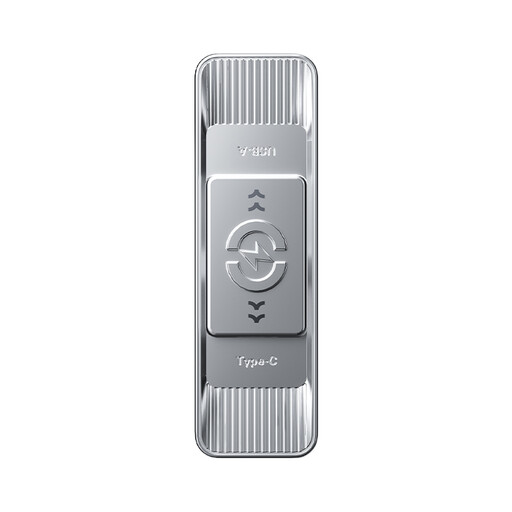 Image unavailable
MOVESPEED YSUSP05-512GSR 512GB USB flash drive
Consider this flash drive for occasional file hand-offs between devices with suitable connections, not as the home for a Mac Photos library.
The product name specifies USB 3.2 Gen 1 and Type-C interfaces, with a quoted 570 MB/s read figure. Check the receiving device’s connector and format support.
View on Joybuy
Common questions
Can an external drive back up Windows files and photos?
Yes, if you configure a backup to copy the files you need. Microsoft Support says File History can regularly back up Windows libraries, including Pictures, to an external drive or network location; add other folders if they also need protecting.
What format does an external Mac Photos library need?
Apple Support specifies APFS or Mac OS Extended (Journaled) for a drive holding a Mac Photos library. It also says not to use that device for Time Machine backups or put the library on a USB flash drive.
Can I use one drive with both Mac and Windows?
For file exchange, Apple Support identifies ExFAT as a Windows-compatible format. That does not make it suitable for every Mac task: an externally stored Photos library requires APFS or Mac OS Extended (Journaled), so decide which job the drive must do before formatting it.
Can I connect external storage directly to an iPhone?
Yes, when the storage meets Apple’s connection, partition, format and power requirements. Apple Support says an iPhone-connected device must have a single data partition and a supported format; you may need an adapter, and some external hard drives need external power or a powered hub.
What should I do with an old external drive?
Remove your personal data before passing on the drive, and check your local authority’s electrical recycling instructions before disposing of it. GOV.UK identifies the UK waste electrical and electronic equipment rules, while Oxfordshire County Council advises residents in its area not to put electrical items in general waste.


