Who needs which features?

Close-detail home mechanics

If you work on a drivetrain, brake, puncture or cable near home, look for light you can aim down at your hands and spread across the nearby parts. Compare runtime at a setting you would actually use, rather than relying on the brightest setting alone.

Wet-weather evening repairers

If repairs may happen outside in rain or mud, check the exact model’s ingress rating and charging instructions. A lockout is also worth checking if the torch travels in a bag, where accidental activation could drain its battery.

Ride-home repairers

If you might cycle away after the repair, pack separate bicycle lighting. Department for Transport guidance for Great Britain requires lights on a cycle used between sunset and sunrise; a head torch is supplementary task lighting.

What should you check?

Start with how the torch lights the parts in front of you, then consider power for an extended repair, exposure to weather and what you are willing to carry.

Concern Buying check Who this matters to
Close-up visibility Look for downward tilt and a flood, mixed or adjustable beam. If colour distinction matters, check the exact model’s colour rendering index (CRI). When I am tracing a cable or inspecting nearby components, I need to see the work area rather than a distant spot. Around 31% of consumers put close-detail visibility first.
Runtime and backup power Compare runtime at a useful working setting, and check whether the torch accepts spare cells or only its own rechargeable battery. If a puncture or brake adjustment takes longer than planned, I want light that will last or a compatible spare battery I can carry. Roughly 31% of consumers prioritise sustained or backup power.
Rain and dirt Read the exact model’s IP rating and charging instructions; do not assume the rating applies during charging. Working outside in rain or mud makes protection against exposure my main concern. Around 23% of consumers place weather resilience first.
Weight for occasional use Compare the stated weight and whether the included battery arrangement suits your kit. I repair my bike after dark only occasionally and want a torch that is easy to keep in my bag. About 15% of consumers put low carried weight first.

Mistakes to avoid

  • Choosing by peak lumens alone

    A brief boost setting tells you little about the beam shape or how long a useful repair setting will last. A narrow distance beam may also leave nearby parts outside the lit area.

    Compare the exact model’s beam options, tilt and rated runtime at the setting you expect to use. Treat manufacturer runtimes as ratings under stated conditions, not a promise for every battery age or temperature.

  • Relying on the head torch for the ride home

    Department for Transport guidance says a cycle used in Great Britain between sunset and sunrise must have a white front light, red rear light and red rear reflector. A head torch does not replace lighting fitted to the cycle.

    Carry or fit the required bicycle lights separately, and use the head torch for the repair.

  • Treating an IP rating as permission to charge in rain

    An ingress rating describes a model-specific test boundary. It does not establish that its charging connection can be used wet or that damaged battery equipment remains safe.

    Follow the exact model’s charging instructions, keep charging equipment dry unless those instructions expressly permit otherwise, and stop using equipment with visible battery, cable or housing damage.

  • Putting a worn-out torch or cell in household rubbish

    UK guidance from the Office for Product Safety and Standards directs consumers to recycle batteries and electrical products rather than discard them with household rubbish.

    Use an appropriate battery collection point for removable cells. If the battery cannot be removed, take the head torch to an electrical-waste collection point.

Relevant brands to consider

Ledlenser

The HF6R WORK is a work-oriented option for close inspection where adjustable lighting and a stated colour-rendering specification matter.

  • Ledlenser UK specifies an adjustable spot-to-flood beam, CRI 80, 45° tilt, IP68, 134 g weight and eight hours at 200 lumens for the HF6R WORK.
  • Its battery is integrated. If you need to restore power with ordinary spare cells during a repair, check a different battery arrangement.

Petzl

The ACTIK CORE is a lightweight outdoor option for occasional repairs when rechargeable power with an AAA fallback appeals.

  • Petzl specifies an 88 g weight, mixed wide and focused beam, downward tilt, USB-C-rechargeable CORE battery and compatibility with three AAA/LR03 batteries.
  • Petzl does not include a USB-C cable with this model. If faithful colour distinction is central to your repair work, check for a stated CRI before choosing.

Fenix

The HM65R-T V2.0 is relevant to frequent repairs in exposed locations where a removable rechargeable cell is useful.

  • Fenixlight UK lists separate cool-white and warm-white beams, IP68, 80° tilt, USB-C charging and an included removable 3,400 mAh 18650 cell. Each beam has a stated 24-hour mode at 130 lumens.
  • Its trail-running design and high-output settings do not, by themselves, establish comfort or beam suitability for close work. Check the fit and working modes you need.

Black Diamond

The Spot 400-R is a compact rechargeable outdoor option with settings for nearby work and viewing further ahead.

  • Black Diamond Europe specifies proximity and distance modes, dimming, a battery meter, IP67 and a 100 g weight for the Spot 400-R.
  • It uses micro-USB charging. Confirm current UK availability and the charging connection you want before choosing this model.

Head torches on Joybuy

These AAA-powered Energizer head torches are options for keeping hands free during occasional bicycle repairs. Check their beam controls and runtime at your intended setting against the work you expect to do.
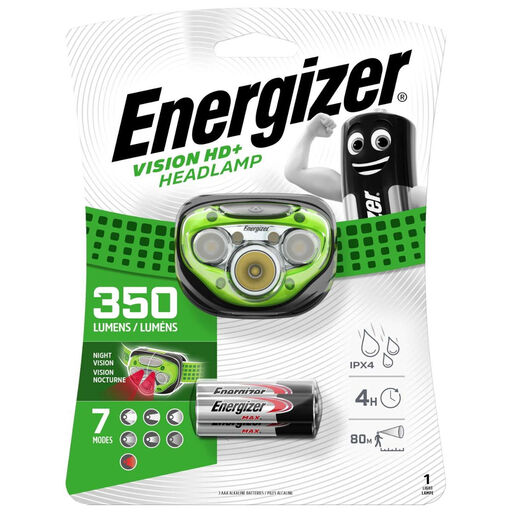
Energizer Vision 350-lumen head torch with three AAA batteries

Energizer Vision 350-lumen head torch with 3 AAA batteries

Consider this for occasional hands-free repairs if an AAA-powered torch suits your bicycle kit.

The product title states 350 lumens and includes three AAA batteries. Before choosing it for detailed or extended work, check the beam settings and runtime at the brightness you intend to use.

View on Joybuy
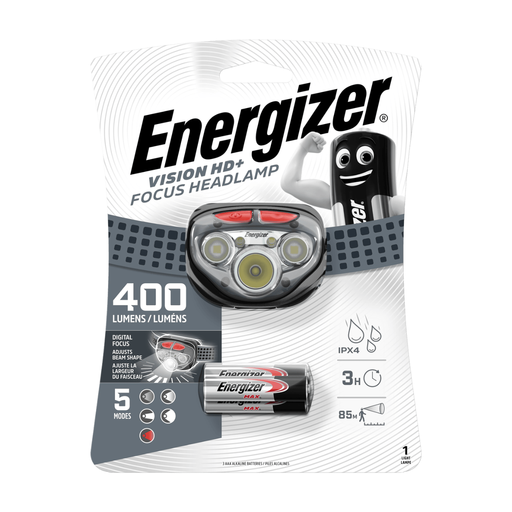
Energizer Vision 400-lumen head torch with three AAA batteries

Energizer Vision 400-lumen head torch with 3 AAA batteries

Consider this for occasional hands-free repairs if you prefer to keep AAA batteries in your kit.

The product title states 400 lumens and includes three AAA batteries. The higher stated lumen figure alone does not establish a more suitable close-up beam; compare the working settings and runtime before deciding.

View on Joybuy

Common questions

How bright should a head torch be for bicycle repairs?

Choose a useful close-range beam and a setting that lasts for the repair, rather than a particular peak-lumen figure. Ledlenser UK rates the HF6R WORK at eight hours on its 200-lumen setting, while Fenixlight UK states 24-hour, 130-lumen modes for the HM65R-T V2.0; these are ratings for those models and settings, not brightness requirements for every repair.

Do I need a high-CRI head torch?

A stated colour rendering index matters most when your repair depends on distinguishing colours accurately; it is separate from brightness. Ledlenser specifies CRI 80 for the HF6R WORK, while its own guidance points to CRI 90 or above for professional colour-critical work. For a straightforward puncture repair or adjustment, also weigh beam spread, tilt and runtime.

Can a head torch replace bicycle lights for the ride home?

No: for cycling in Great Britain between sunset and sunrise, Department for Transport guidance requires a white front light, red rear light and red rear reflector on the cycle, with further reflector requirements where applicable. Use the head torch as additional repair lighting, not in place of the required bicycle equipment.

What should I do with a worn-out rechargeable head torch?

Take the torch to an electrical-waste collection point rather than putting it in household rubbish. UK guidance from the Office for Product Safety and Standards also directs consumers to recycle batteries; if a battery is removable, use an appropriate battery collection point for it.