What matters when choosing?
For an unlit path, start with how the beam covers your footing and the route ahead. Then check whether the power arrangement, fit and weather protection suit the walks you actually take.
| Concern |
What to check |
Who this matters to |
| Beam and path visibility |
Look for wide, mixed or adjustable coverage and usable lower settings. Check how the lamp tilts when worn with your usual hat or hood. |
I want to see uneven ground without losing sight of where the path goes; around 42% of consumers put balanced visibility first. |
| Runtime and backup power |
Compare the stated runtime at the setting you expect to use. Confirm the battery type and which cells or charging accessories are included. |
If my walk takes longer than planned, I need enough power for the return; roughly 33% of consumers prioritise power resilience. |
| Rain, fit and controls |
Check the exact model’s IP rating and wet-use instructions. Consider headband adjustment, tilt and whether you can operate the controls with gloves. |
In persistent rain, I want a torch that stays aimed at the path and is manageable with gloves; about 25% of consumers put wet-weather handling first. |
Brands to consider
These product-line examples illustrate different beam, power and weather-protection choices; check the specifications of the particular model you intend to buy.
Petzl
Petzl’s outdoor head-torch range includes a mixed-beam, rechargeable-and-AAA option relevant to walkers balancing nearby footing with forward visibility.
- Petzl lists the ACTIK CORE with a wide or mixed beam, adjustable light, USB-C charging and compatibility with its CORE rechargeable battery or three AAA/LR03 cells.
- The ACTIK CORE charging cable and AAA cells are not included; confirm which power accessories you need.
Ledlenser
The HF6R Core is an integrated rechargeable option for walkers who can charge regularly and want to compare stated weather protection and mode-specific runtimes.
- Ledlenser lists adjustable focus, a tilting head, a battery-status indicator and IP68 protection for the HF6R Core.
- Its integrated battery is not a replaceable-AAA backup; compare the stated runtime at the output setting you expect to use.
Black Diamond
Black Diamond’s Spot 400 offers a choice between standard AAA cells and a compatible rechargeable pack, with separate proximity and distance modes.
- Black Diamond lists three-AAA operation, an optional BD 1500 rechargeable battery, a battery meter and a lock mode for the Spot 400.
- The BD 1500 pack is not included. The Spot 400 product information also gives conflicting IP ratings, so verify the current rating before selecting it for a particular level of wet exposure.
Joybuy head torches for path walking
These Energizer Vision head torches are AAA-powered choices for walkers considering replaceable cells. Compare their stated output variants, then check beam coverage, runtime at your intended setting and fit against your route.
 No image available
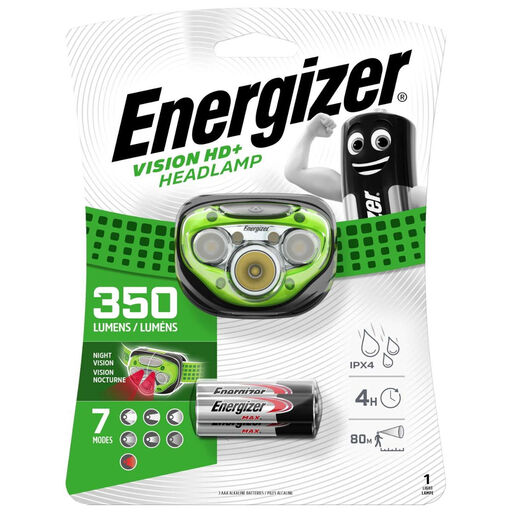
Energizer Vision Headlamp 350 Lumens + 3×AAA Batteries
Consider this variant if you want a head torch supplied with replaceable AAA cells for an unlit-path walk. The product title states 350 Lumens and 3×AAA batteries; compare the beam coverage and runtime at your intended setting before choosing it for your route.
View on Joybuy
 No image available
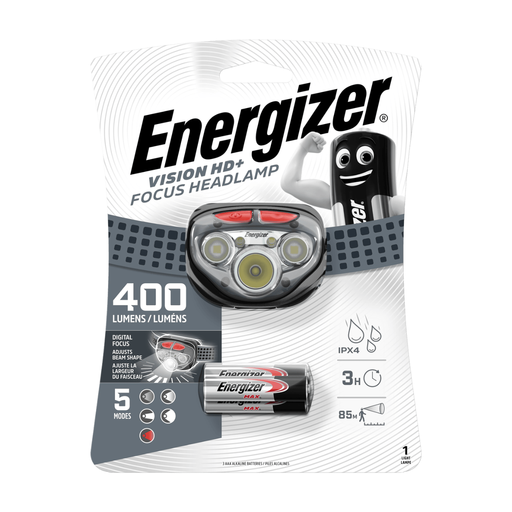
Energizer Vision Headlamp 400 Lumens + 3×AAA Batteries
Consider this AAA-powered variant if its beam and settings suit the mix of nearby footing and forward route visibility you need. The product title states 400 Lumens and 3×AAA batteries; do not use the output figure alone to judge runtime or beam coverage.
View on Joybuy
 No image available
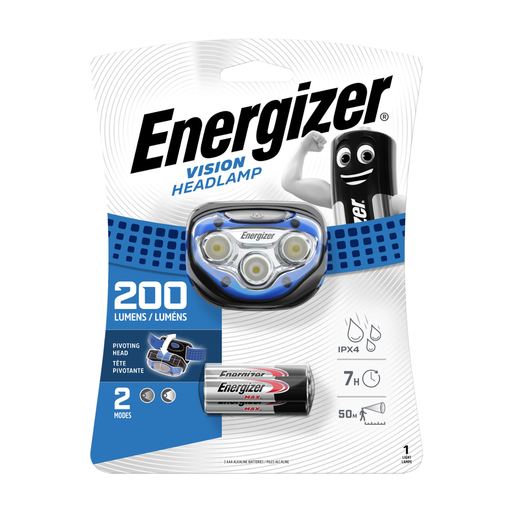
Energizer Vision Headlamp 200 Lumens + 3×AAA Batteries
Consider this variant if you want a head torch supplied with replaceable AAA cells and its lighting suits your path. The product title states 200 Lumens and 3×AAA batteries; check that its beam illuminates both nearby footing and enough of the route ahead.
View on Joybuy
Common questions
Do I need the highest-lumen head torch for an unlit path?
No particular lumen figure suits every unlit path. Choose a beam that covers your footing and the route ahead, and compare runtime at a setting you would actually walk with; maximum output alone does not establish either.
Should I choose rechargeable or AAA power?
Rechargeable-only power can suit regular walks when you can charge reliably beforehand; choose a model that also accepts AAA cells if carrying replaceable backup power matters to you. Check the exact box contents, since Petzl excludes the ACTIK CORE charging cable and AAA cells, while Black Diamond does not include the Spot 400’s optional rechargeable pack.
How much does a water-resistance rating matter?
It matters more if you expect frequent rain or sustained wet exposure, but the rating must apply to the exact model you buy. Ledlenser lists IP68 for the HF6R Core; Black Diamond gives conflicting IP descriptions for the Spot 400, making its current specification worth checking before relying on a particular rating.
Should I check for UKCA or CE marking?
Check the marking and documentation applicable to where the head torch will be supplied. The Office for Product Safety and Standards’ Great Britain electrical-equipment guidance, amended in March 2025, says recognition of certain goods meeting EU requirements, including CE marking, has been extended indefinitely; it does not make the Great Britain position a single rule for Northern Ireland, where provisions differ under the Windsor Framework.
What should I do with spent head-torch batteries?
Take spent batteries to an appropriate battery collection point rather than putting them in household rubbish. GOV.UK advises that electrical products bearing the crossed-out wheelie-bin symbol should also be collected separately; where practical, tape lithium-battery terminals before recycling.


