What matters when choosing
For a noisy-home rehearsal, check the earcup design first, then whether you can follow vocal cues and use the headphones comfortably with your equipment.
| Concern |
What to check |
Who this matters to |
| Household-noise isolation |
Confirm closed-back, over-ear construction and assess the seal on your own head. |
When household sounds mask the accompaniment, I need to follow the track without continually turning it up. Around 42% of consumers put isolation first. |
| Vocal cues and detail |
Look for a recording or monitoring use case; try familiar backing tracks if you can. |
To practise an entrance or harmony, I need to pick out the relevant cues within the mix. Vocal detail is the primary concern for around 33% of consumers. |
| Fit and connection |
Check comfort over rehearsal length, cable reach, plug type and compatibility with your source. |
If the headphones become uncomfortable or cannot connect conveniently, a longer session is harder to sustain. Around 25% of consumers place practical fit and connection first. |
Joybuy products
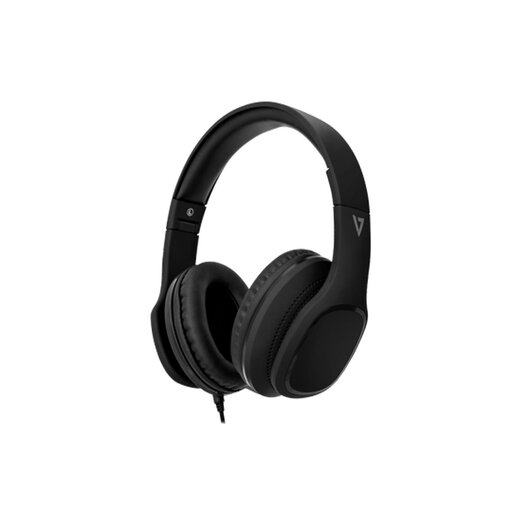
This wired over-ear option is relevant if you want to assess a headphone for noisy-home rehearsal. Confirm its closed-back construction and suitability for monitoring before choosing it for backing-vocal work.
 No image available
V7 HA701-3EP Wired Over-Ear Headphones, 40 mm Drivers
A wired over-ear option to consider if household noise distracts you from the backing track; check how its fit and sound work in your room.
The product name specifies 40 mm drivers and an inline MEMS microphone. Confirm the connection to your playback device and whether the earcups are closed-back if studio-style isolation is important to you.
View on Joybuy
Common questions
Closed-back or open-back headphones for a noisy home?
Start with closed-back over-ear headphones when household noise competes with your backing track. Audio-Technica and Shure describe ambient- or background-noise isolation for relevant closed-back monitoring models, though the fit and result will depend on the exact headphone.
Do I need a headphone amplifier?
Not necessarily: check the chosen headphone’s specifications and try it with the output you will use. Sony specifies the MDR-7506 at 24 ohms with a 3.5 mm plug and adapter, but impedance alone cannot guarantee adequate listening level from every device.
How do I avoid raising the volume when the house is noisy?
Reduce room noise where practical and use a comfortable seal rather than relying on volume to mask distractions. The World Health Organization notes that hearing risk rises with louder sound and longer exposure, so keep both level and listening time in mind.
What should I check on wired headphones over time?
Inspect the cable and ear pads for wear, avoid pulling on the cable and keep the headphones dry. Replacement options vary by model: Shure specifies a detachable locking cable for the SRH840A.


