Private, attentive recital listeners
If you listen in a quiet room and want to follow instrument placement and the recording’s sense of space, an open-back design is worth auditioning. It is a less practical starting point when you need isolation.


For attentive piano-recital listening in a quiet, private room, consider an open-back wired headphone; choose a closed-back design when background noise or listening around other people makes isolation more important. Check the exact headphone’s connection and your source’s output guidance before buying, and use familiar recordings to judge piano sound rather than treating an impedance or frequency-response figure as a sound-quality score.
If you listen in a quiet room and want to follow instrument placement and the recording’s sense of space, an open-back design is worth auditioning. It is a less practical starting point when you need isolation.
If other people are nearby or room noise interrupts the music, start with a closed-back design and assess its fit and isolation. Sony and Audio-Technica describe isolation as a feature of their respective MDR-M1 and ATH-M50x closed-back models.
If you move between a laptop, audio interface and hi-fi system, check the exact headphone’s plug, cable arrangement and impedance against each source’s documentation. Try the fit for a full-length programme where possible; comfort is personal.
Consider when: You can listen privately in a quiet room and want to explore a spacious presentation. beyerdynamic describes a wider stereo image for its open DT 900 PRO X than for its closed DT 700 PRO X.
Trade-off: An open construction is not the isolation route; a manufacturer’s description cannot establish how you will hear a particular piano recording.
Consider when: Shared space, background noise or privacy makes isolation a priority. Sony describes acoustic isolation for the MDR-M1, while Audio-Technica describes ambient-noise isolation for the ATH-M50x.
Trade-off: Isolation does not establish whether a particular model’s piano tone or fit will suit you; compare the exact model where possible.
| Concern | What to check | Who this matters to |
|---|---|---|
| Presentation in a private room | Confirm the open-back construction and, if possible, audition familiar recital recordings. | In a quiet room, I can concentrate on the piano and want to hear how the recording places it in the space. Around 42% of consumers put this private-listening presentation first. |
| Isolation and privacy | Check for a closed-back design and assess its fit in your intended listening space. | When other people or background noise interrupt a recital, I need the headphones to make listening more practical. For around 33% of consumers, isolation is the primary concern. |
| Connections and long-session use | Compare the exact plug and supplied cable with your source; check its headphone-output guidance and try the fit. | If I use several devices or sit through a long programme, an awkward connection or uncomfortable fit matters before subtle sound preferences. Source compatibility and sustained use come first for around 25% of consumers. |
An open design may not meet a need for isolation or privacy. beyerdynamic contrasts the wider stereo image it describes for the open DT 900 PRO X with the isolation of its closed DT 700 PRO X.
Decide where you will listen before shortlisting a construction: start with closed-back models if nearby people or noise are the deciding constraint.
Impedance and quoted frequency-response endpoints do not tell you whether you will prefer a headphone’s piano tone, dynamics or fit.
Use specifications to identify the exact model and check your setup, then listen to familiar recordings where an audition is possible.
Manufacturer specifications list different arrangements: Sennheiser specifies a 300-ohm impedance for the HD 600, while beyerdynamic specifies 48 ohms and detachable cables for the DT 900 PRO X. Neither impedance figure alone establishes compatibility with your source.
Check your device’s headphone-output guidance, socket and the exact model’s supplied connections before ordering.
A connection that does not fit your setup may require a suitable adapter or cable.
The World Health Organization identifies listening level, duration and frequency of exposure as factors in hearing risk. Turning up a long recital to overcome background noise adds to that exposure.
Reduce room noise where possible, consider isolation when the setting calls for it, and keep both level and listening time in mind.
These model lines illustrate different construction and connection choices; a brand name alone does not determine the right headphone for a piano recording.
The wired, open-back HD 600 is a reference-style option to consider for private listening.
The open, over-ear DT 900 PRO X is relevant to listeners weighing spatial presentation against isolation.
The MDR-M1 provides a closed-monitor route for listeners prioritising isolation.
The open ATH-R70x and closed ATH-M50x address different listening-room needs.
These headphones are options to examine if room noise, an over-ear fit or a particular connection affects your recital listening. They should be assessed against the open-back and closed-back decision above; their listings do not establish a preferred piano sound.
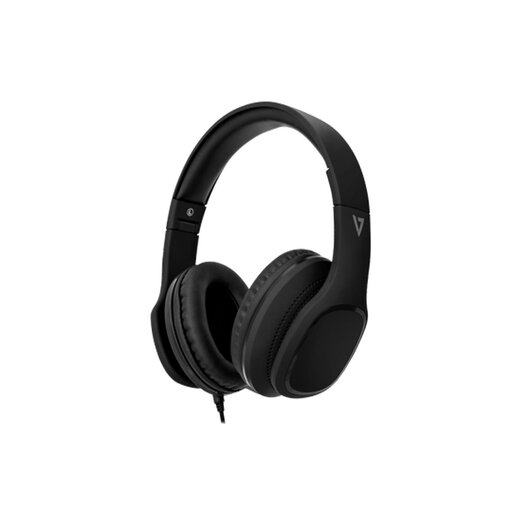 No image available
Consider this model if you want an over-ear wired option; check whether its fit and isolation suit the room where you listen.
The product name specifies 40 mm drivers and an inline MEMS microphone. Check the connection against your source before buying.
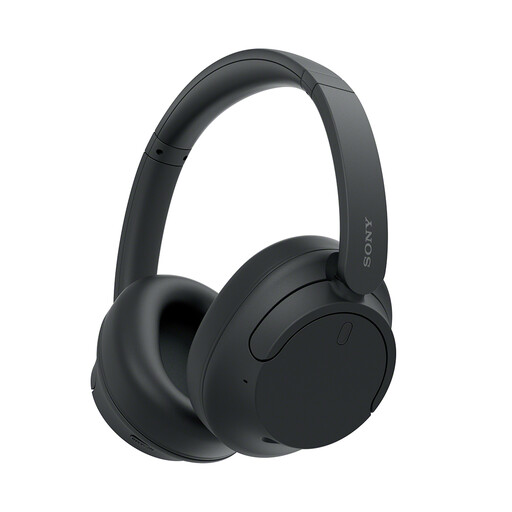 No image available
Consider this model if reducing distractions is important, but assess its fit and sound with familiar piano recordings rather than assuming noise cancellation determines recital quality.
If you intend to listen through a cable, confirm the connection arrangement with your source.
No image available
If background noise affects your listening, compare this model’s available modes and fit with the conditions in your room.
For wired listening, confirm the cable and connection path required by both the headphones and your source.
Open-back headphones are worth considering for attentive listening in a quiet private room; closed-back headphones are the more relevant starting point when isolation or privacy matters. beyerdynamic describes a wider stereo image for its open DT 900 PRO X than for its closed DT 700 PRO X, which it describes as providing isolation. Auditioning the exact model remains important for judging piano sound.
Match the exact headphone’s plug, cable arrangement and impedance to the source manufacturer’s output guidance. Sennheiser specifies 300 ohms for the HD 600, beyerdynamic 48 ohms for the DT 900 PRO X and Audio-Technica 470 ohms for the ATH-R70x; those figures alone do not predict loudness or sound quality.
Keep listening level and duration in mind together, and reduce competing room noise where possible rather than simply turning up the headphones. The World Health Organization identifies sound level, exposure duration and frequency as factors in hearing risk.
Faulty or misdescribed headphones may give rise to remedies that are distinct from a retailer’s change-of-mind returns policy. Citizens Advice explains these rights for purchases in England and provides directions to separate advice for Scotland, Wales and Northern Ireland; use the guidance for the nation where your purchase is covered.