
24/7 Customer Support

Free returns

Same-day & Next-day Delivery

Quality Guaranteed

Unlock Your Welcome Offers: FREE Delivery | Up to 80% OFF | Free 30-day JoyPlus trial
Download the APP
Navigating the breakfast cereal aisle can feel like a chore. Shelves are packed with boxes making bold claims about health, energy and nutrition. But how do you separate a genuinely good choice from clever marketing? Many of us have bought a "healthy" cereal only to find it leaves us hungry an hour later or is packed with more sugar than a biscuit.
As a Joybuy Product Recommendation Officer, my role is to help you see past the hype. Before you add another box to your basket, let's look at the common pitfalls that lead to disappointing breakfast choices.
To make a smarter choice, focus on the facts on the nutrition label. Here are the three key parameters to analyse for any box of breakfast cereals & oats.
Fibre is essential for a satisfying breakfast that keeps you full until lunchtime. It aids digestion and helps to regulate blood sugar levels. When checking a label, look for the "Fibre per 100g" value.
Products based on wholegrain cereals like porridge oats or rolled oats are typically excellent sources of fibre.
This is perhaps the most important figure to check. Look for the "Carbohydrates (of which sugars)" line. In the UK, a product is considered high in sugar if it contains more than 22.5g of total sugars per 100g. While some sugars are naturally present in ingredients like fruit, many cereals have high levels of added sugar. A lower number here is almost always a better sign for a daily breakfast food.
If you lead an active lifestyle or find that typical cereals don't keep you full, looking for a high protein cereal can be a game-changer. Protein contributes to the maintenance of muscle mass and is more satiating than carbohydrates or fats. A cereal with over 10g of protein per 100g can be considered a good source and will provide more lasting energy.
Based on these practical criteria, we've matched some options to different needs. These selections stand out for their transparent ingredients and balanced nutritional profiles, helping you avoid the common traps.

Why This Fits Their Persona: For those with busy mornings, this instant porridge is ready in minutes. The "Big Bowl" sachet is a more realistic portion size, providing a substantial, warming start without the need for measuring. It's a perfect base for adding your own fruit or seeds.
This original variety contains no added sugar, directly countering the "healthy halo" trap. The pre-portioned sachet also prevents the portion size illusion.
Made with 100% British wholegrain rolled oats. It's a high-fibre blank canvas you can customise to your taste.

Why This Fits Their Persona: This is a purpose-built high protein cereal for those looking to fuel an active day. It provides a significant protein boost from plant-based sources to support muscle maintenance and keep you feeling fuller for longer.
It delivers on its primary promise with 19g of protein per 100g while being very low in sugar (4.7g per 100g). This avoids the trap of "protein" products that are also loaded with sugar.
High in both protein (19g/100g) and fibre (9.9g/100g). Made with 92% wholegrain wheat, ensuring it's a nutritionally dense option.
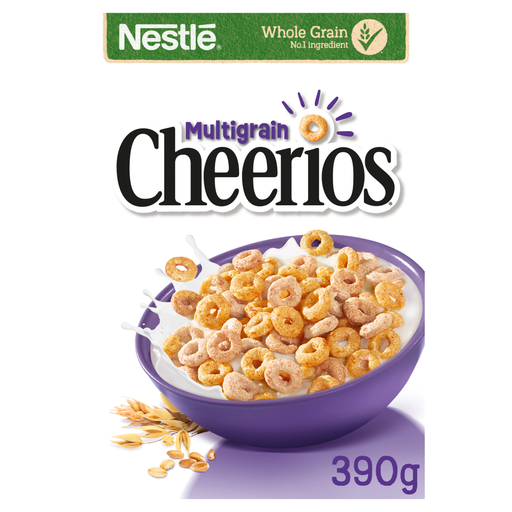
Why This Fits Their Persona: A popular choice for families, Cheerios offers a balance of taste that appeals to children and a nutritional profile that parents can feel good about. It's fortified with essential vitamins and minerals, making it a straightforward choice for a nutritious family breakfast.
It avoids the "made with wholegrain" deception by clearly stating its composition: a blend of three wholegrain flours (oat, wheat and barley) are the main ingredients. The sugar content is moderate and clearly labelled.
High in fibre (9.6g/100g) and fortified with 7 vitamins and 2 minerals, including Iron and Vitamin D. Contains no artificial colours or flavours.
We have compiled a complete, real-time list of products that fully satisfy these strict selection criteria and UK safety regulations.
Granola can be a part of a healthy diet, but it requires careful selection. Many commercial granola products are very high in sugar and fat, which can turn a seemingly healthy breakfast into a high-calorie meal. Check the "of which sugars" and "fat" content per 100g. Look for options with a higher ratio of oats, nuts and seeds to sugar and oil. Alternatively, making your own at home gives you full control over the ingredients.
These are all forms of porridge oats, but they differ in processing, which affects cooking time and texture.
Oats are naturally gluten-free, but they are often grown or processed alongside wheat, barley and rye, leading to cross-contamination. If you have coeliac disease or a gluten sensitivity, you must choose oats that are certified gluten-free oats. This certification ensures they have been produced in a controlled environment to prevent cross-contamination. Always look for a clear "gluten-free" statement on the packaging, like on the Morrisons Free From Gluten Free Oats.