
24/7 Customer Support

Free returns

Same-day & Next-day Delivery

Quality Guaranteed

Unlock Your Welcome Offers: FREE Delivery | Up to 80% OFF | Free 30-day JoyPlus trial
Download the APP
Finding suitable healthy hydration drinks in the UK can be more complicated than it appears. Supermarket shelves and online listings include electrolyte drinks, coconut water, sparkling water, flavoured water and sugar-free drinks, but similar-looking products can have very different ingredients, portion sizes and storage requirements.
A multipack may seem economical, yet it can be poor value if the flavour is unpopular, the bottles are impractical to carry or the drink contains more sugar than expected. Use the following checks before buying for home, work, school, sport or outdoor activities.
Coconut water and fruit-based drinks can contain naturally occurring sugars, even when they have no added sugar. For example, the listed nutrition for several coconut water products is around 19–22 kcal and approximately 4.5–5.3g carbohydrate per 100ml.
That does not make them unsuitable, but it means the serving size matters. A 1-litre carton can contain considerably more carbohydrate than a small glass. Always compare the per 100ml and per serving figures rather than relying on front-of-pack wording.
Sugar-free flavoured water may still contain sweeteners, acids, preservatives and flavourings. Highland Spring Sugar Free Strawberry Still Flavoured Water, for instance, lists sucralose, citric acid, potassium sorbate and natural flavourings, while providing 1 kcal and 0g sugar per 100ml.
Read the full ingredients list if you are avoiding particular sweeteners, preservatives or allergens. “No added sugar” and “sugar-free” are useful descriptions, but they do not mean the same thing as plain water.
A 1-litre bottle can work well in a shared fridge, but it is less convenient for a school bag or gym kit. Conversely, individual 300–600ml bottles or cans may be easier to distribute but create more packaging per litre.
For families and regular users, calculate the total pack volume, not just the number of units. Also check whether opened products need refrigeration and how quickly they should be consumed.
For everyday hydration, compare drinks using the nutrition panel:
If choosing drinks for school and sports, check the total sugar in the quantity likely to be consumed, not merely the product’s marketing description.
Electrolyte drinks may contain minerals such as sodium, potassium, magnesium or chloride. Genki Forest Alien Electrolyte Water, for example, lists potassium chloride and salt among its ingredients, alongside vitamins B6 and E.
Electrolyte drinks can be convenient around exercise or hot outdoor activities, but their suitability depends on the activity, duration and individual circumstances. They are not automatically preferable to water for ordinary desk work, commuting or meals. Avoid treating product descriptions as medical advice, and check the label for sweeteners, caffeine and allergen information.
Choose pack size around real usage:
Packaging also matters. Highland Spring states that its bottles use 100% recycled PET excluding the cap and label, while Cano Water uses resealable aluminium cans. Recyclability depends on local collection arrangements, so check your council’s guidance before making an environmental comparison.
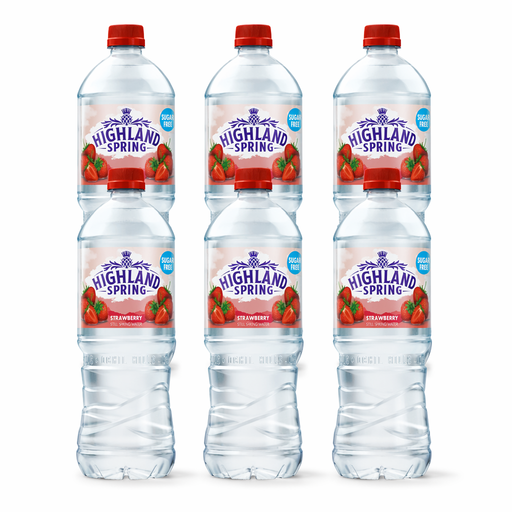
Why This Fits Their Persona: The six 1.25-litre bottles provide a larger household format for lunches, fridges and daily use, without added sugar.
The label gives clear nutrition values of 1 kcal and 0g sugar per 100ml, while the ingredient list identifies sucralose and potassium sorbate.
1.25-litre bottles; strawberry flavour; 0g sugar per 100ml.

Why This Fits Their Persona: Six 1-litre bottles suit dinners, entertaining and chilled home serving where mineral composition and carbonation are priorities.
It is clearly listed as natural mineral water with carbon dioxide, and the nutrition panel records 0 kcal and 0g sugar per 100ml.
Six 1-litre bottles; 0 kcal; no sugar; suitable with meals.

Why This Fits Their Persona: The 600ml bottles are easy to allocate for school, commuting, gym sessions and outdoor activities where a flavoured electrolyte drink is preferred.
The listing identifies potassium chloride, salt, erythritol and sucralose, allowing shoppers to assess the formula instead of relying only on the word “electrolyte”.
15 × 600ml bottles; white peach flavour; listed electrolytes and vitamins B6 and E.
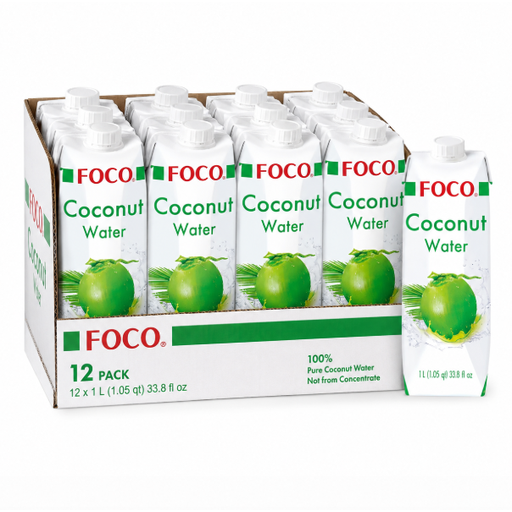
Why This Fits Their Persona: A 12-litre case is suited to larger households, smoothie preparation and shoppers who prefer storing long-life drinks at home.
The ingredient declaration is 100% coconut water, while the nutrition panel shows 21 kcal and 5.0g sugar per 100ml.
100% coconut water; 1-litre cartons; UHT-processed for ambient storage before opening.
For zero-sugar meals and everyday refreshment, sparkling water such as Highland Spring Sparkling Spring Water 8×500ml or Cano Water Sparkling Resealable 12×500ml may be more suitable than sweetened soft drinks. For portable fruit flavour, still flavoured water offers a lighter alternative, but check the sweetener and allergen information.
If you prefer smaller coconut water servings, JiaGuoyuan 100% NFC Coconut Water 350ml × 12 provides ready-to-drink cans. For a larger family format, Grace 100% Coconut Water Prisma 1L and Kara Coconut Water 1L × 6 are alternatives to compare by ingredients, sugar and storage instructions.
We have compiled a complete, real-time list of products that fully satisfy these strict selection criteria and UK safety regulations.
They can be convenient during prolonged exercise or hot outdoor activities, but plain still or sparkling water may be adequate for many ordinary activities. Compare sodium, potassium, sugar, sweeteners and serving size before buying. People with specific dietary or medical requirements should seek appropriate professional advice.
Some coconut waters contain fewer calories than conventional sugary soft drinks, but they still contain naturally occurring sugars. Check the nutrition panel per 100ml and consider how much you drink in one sitting.
Follow the product label. Many coconut waters require refrigeration and consumption within 24–72 hours after opening. Sparkling water should generally be resealed and chilled to retain carbonation, while flavoured still water may have a shorter recommended period once opened.